



Victorian Barrel Armchair
A victorian barrel armchair wraps you in a curved, enclosed embrace, offering deep comfort through nineteenth-century joinery and rich upholstery.
Victorian Barrel Armchair
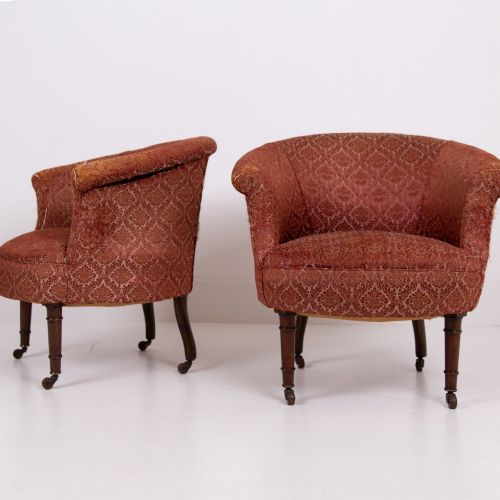
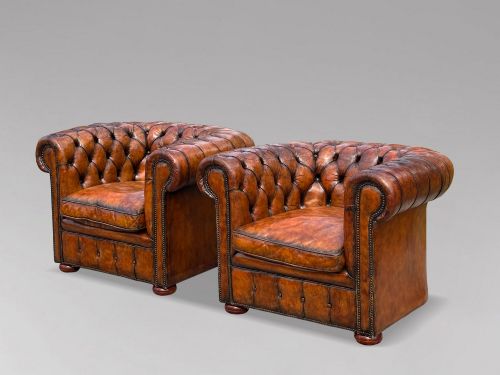
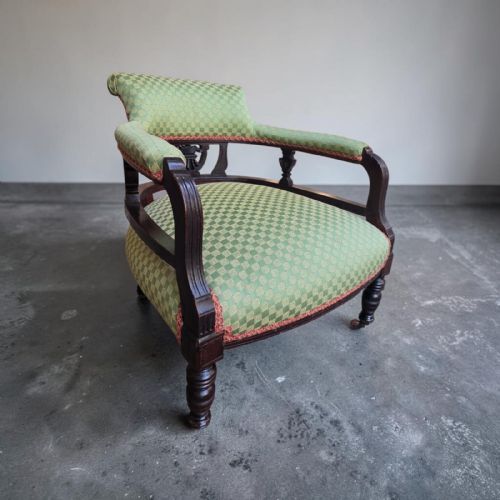
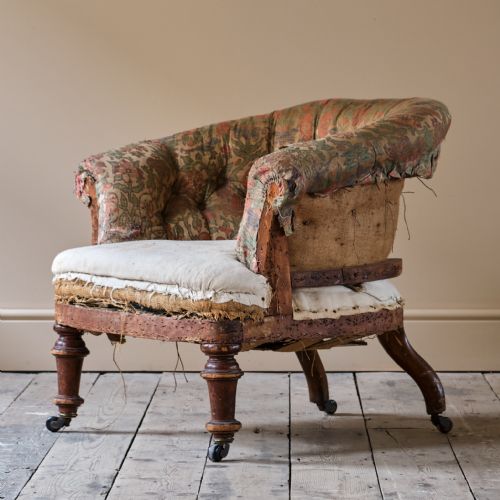
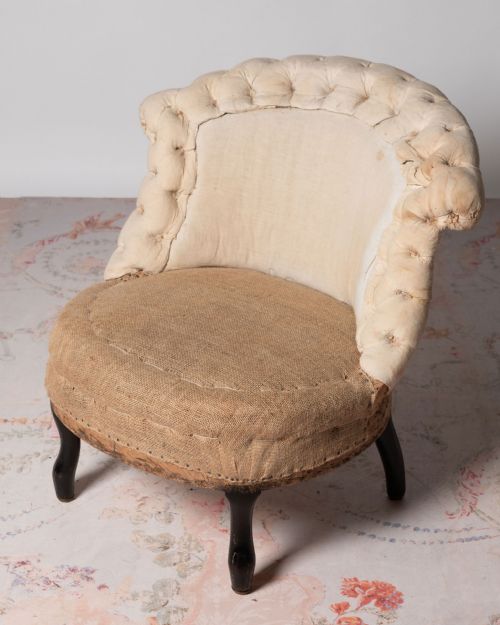
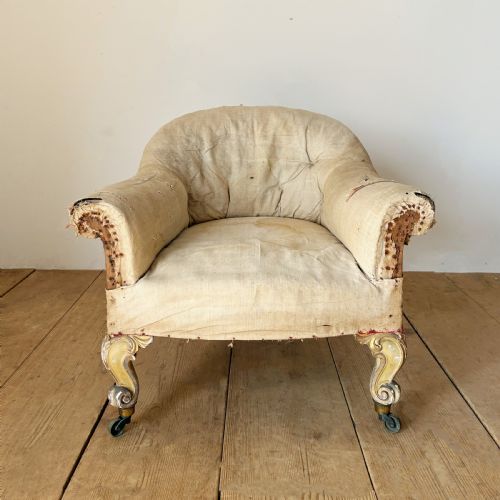
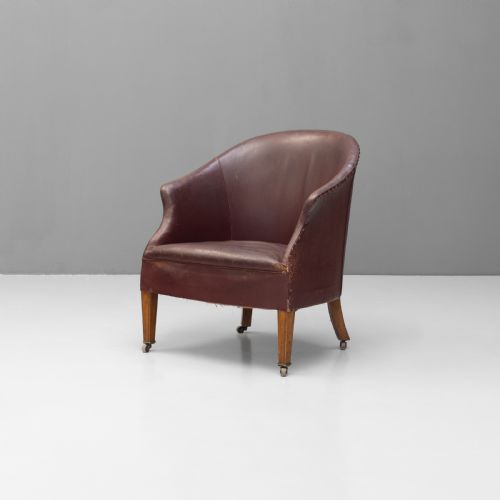
A victorian barrel armchair is defined by its rounded, enveloping backrest that flows seamlessly into the arms, creating a secure and comfortable seat. Buyers seeking this form will find robust nineteenth-century examples alongside later Edwardian and Regency interpretations.
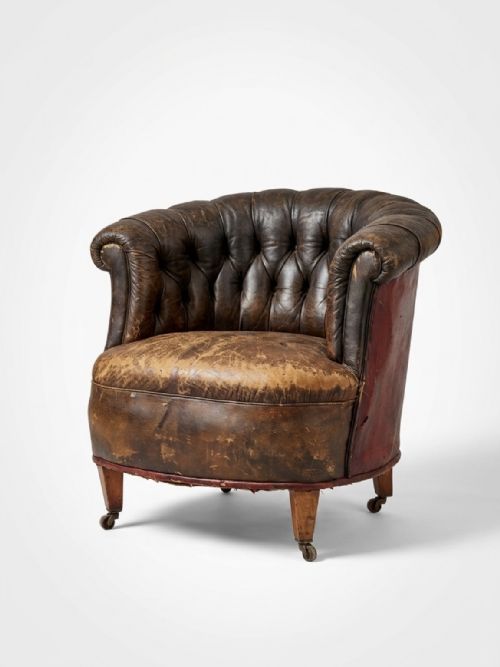
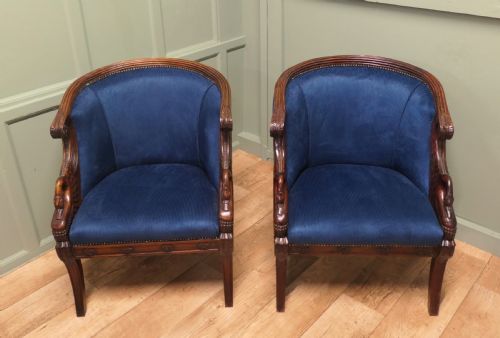
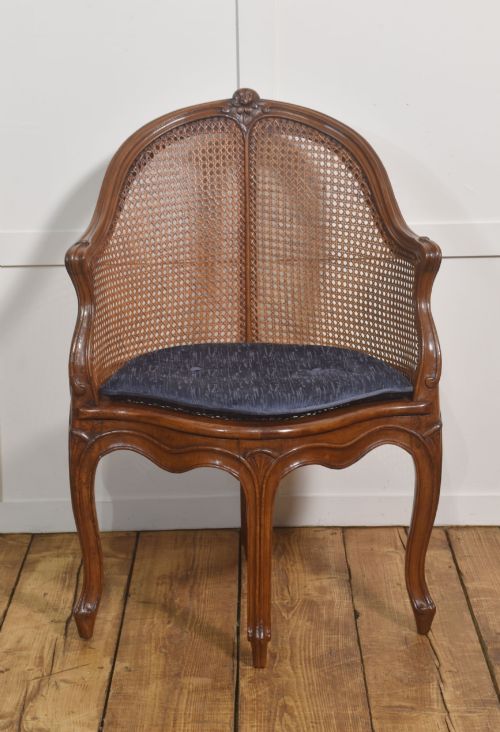
The selections here range from compact mahogany library seats to large leather club chairs and button-backed tub styles. Many pieces display distinct regional or stylistic influences, including French Louis XV curves and Arts and Crafts simplicity.
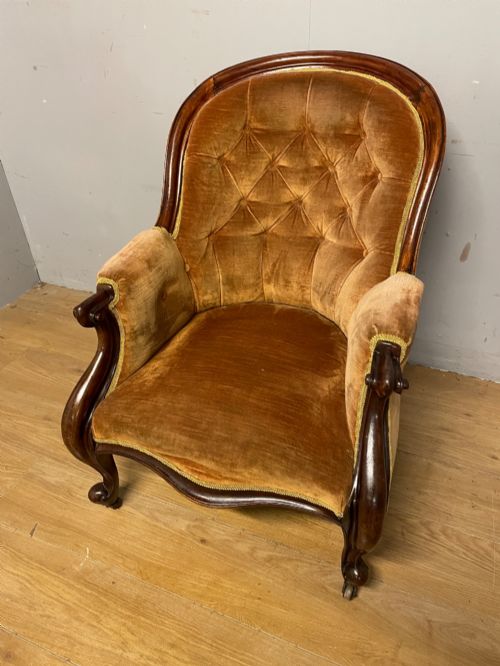
Wooden frames in mahogany, walnut, and oak support seats upholstered in leather, velvet, damask, or cane. These chairs serve practically as study seats, parlour furniture, and fireside reading chairs.
Materials and Construction
Frames rely on sturdy timbers such as mahogany, rosewood, walnut, and oak, often shaped into curving horseshoe or tub silhouettes. Cabinetmakers used bentwood techniques and traditional joinery to achieve the continuous, rounded backrests characteristic of the form.
Upholstery methods involved deep buttoning, springing, and hand-stitched horsehair stuffing covered in leather, velvet, damask fabric, or woven cane. Brass castors and decorative studwork frequently finish the lower framework and arm panels.
Victorian Barrel Armchair Retail Price Guide 2026
Typical asking prices for victorian barrel armchair among the pieces listed under this phrase on Sellingantiques today, from the lower quarter to the upper quarter. They describe what is for sale here now, not the wider market.
Assessing Quality and Craftsmanship
Quality rests in the integrity of the curved wooden frame and the precision of the joinery where the back meets the arms. Superior examples maintain rigid structural stability without looseness in the curved joints.
The grade of covering material, whether hand-dyed leather, tight cane work, or heavy fabric, dictates the tactile richness of the piece. Master craftsmanship shows in the symmetry of the button-back upholstery and the clean execution of showwood frames.
Harrods London·Howard and Sons
The Victorian Barrel Armchair Glossary
- Barrel Back
- A chair design featuring a rounded, semi-circular backrest that encloses the sitter. This shape provides draught-excluding comfort and support.
- Tub Chair
- A deep-seated armchair with a continuous curved back and low arms resembling the shape of a halved wooden tub. It is frequently upholstered in leather or fabric.
- Showwood
- Exposed wooden framing on an upholstered chair where the polished timber forms part of the visual design. Mahogany and walnut are typical choices for this technique.
- Cane
- Woven rattan strips used to form supportive seats or back panels. This material offers lightweight resilience and texture.
- Button-Back
- An upholstery style where depressions are created by pulling strings or twine through the padding and securing them with buttons. This secures the internal stuffing and creates a tufted pattern.
Victorian Barrel Armchair: Frequently Asked Questions
How do I use a barrel armchair today?
These chairs fit well as reading seats in a library, fireside chairs in a living room, or desk chairs in a study. Their enclosed shape provides a quiet, focused seating experience.
Pair them with low side tables and traditional lighting to complement their nineteenth-century proportions and silhouette.
How can I date a nineteenth-century armchair?
Dating relies on identifying timber choices, upholstery techniques, and stylistic markers such as Regency curves or Arts and Crafts simplicity. Secondary woods and fastener types also offer clues to the exact decade of manufacture.
Archival records and maker stamps further clarify the production period.
Are these chairs suitable for daily seating?
Solid timber frames and traditional sprung upholstery make these chairs robust enough for everyday use. Regular conditioning of leather and gentle maintenance of fabric keep them functional.
Their sturdy construction has already allowed them to survive over a century of domestic life.