
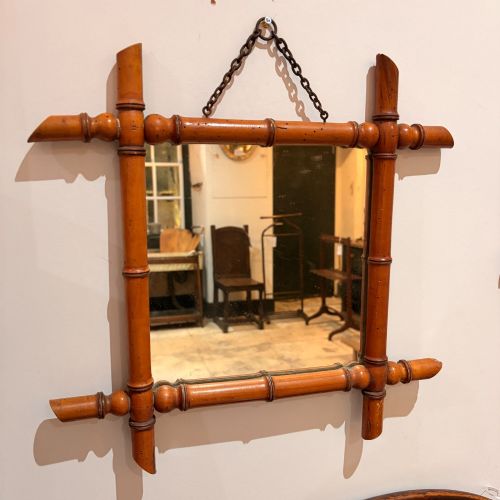
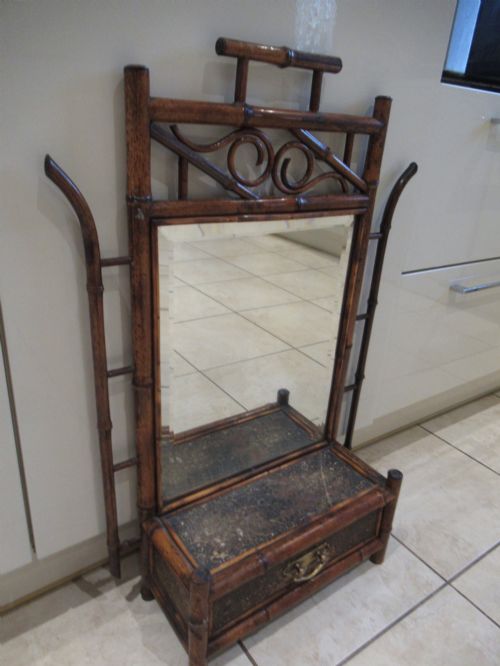
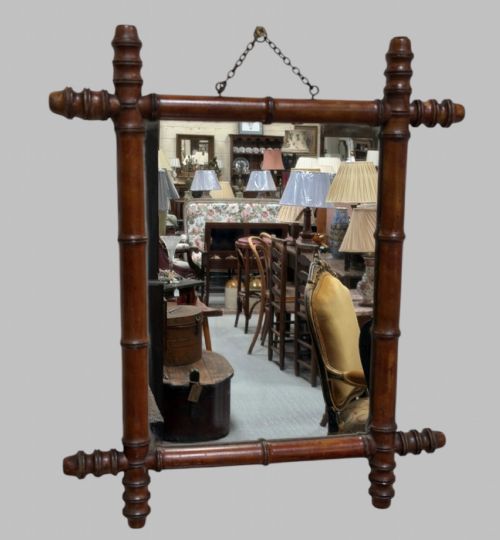
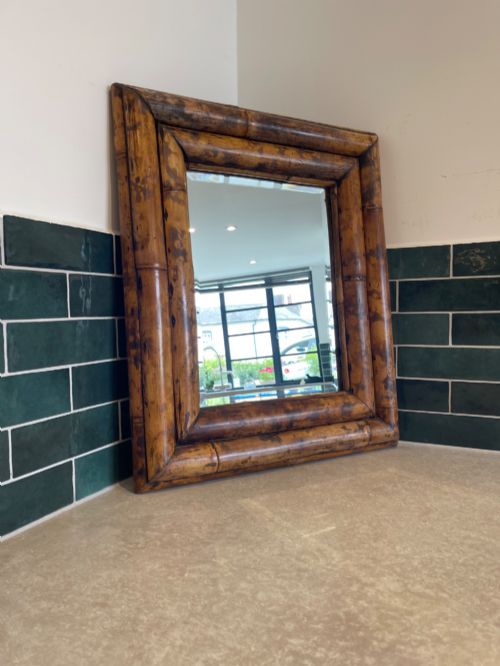


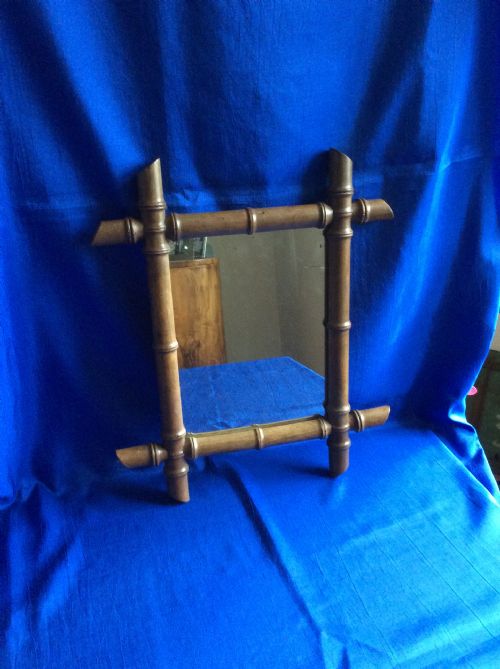

Victorian Bamboo Wall Mirror
These victorian bamboo wall mirror pieces bring unmistakable Aesthetic Movement and Chinoiserie character to a hallway.
Victorian Bamboo Wall Mirror
A victorian bamboo wall mirror is a furnishing designed to hang on a wall, drawing on styles such as Victorian Aesthetic Movement, Chinoiserie, and French Provincial. These pieces serve primarily as wall mirrors for domestic spaces.
The versions most commonly met on this page span the late nineteenth century and the early twentieth century, including pieces dated to 1890, 1900, 1920, and the broader Victorian period. Both natural bamboo and simulated bamboo forms appear across the selection.
How they were made
Many of these pieces utilise actual bamboo alongside timber such as beech and carved wood, combined with mirror glass and metal elements. Simulated bamboo items achieve their characteristic look through carved wood shaped to mimic natural cane joints.
Lacquered finishes appear alongside natural surfaces, aligning with Chinoiserie and nineteenth-century French production methods. The glass is set within these frames to function as a wall mirror.
Some makers carved beech so convincingly that even the knots of the bamboo bamboozle the eye until touched.
What varies in quality
The distinction between standard examples and the top of the range lies in the execution of the frame construction and the depth of the carving on wooden pieces. Faux bamboo versions show varying degrees of fidelity to natural cane work.
Surface treatment also differentiates the pieces, with some featuring refined lacquer work while others rely on simpler timber and metal construction.
The Victorian Bamboo Wall Mirror Glossary
- Bamboo
- A woody grass utilised for framing structures in nineteenth-century decorative furniture. It provides lightweight rigidity and distinctive jointed nodes.
- Faux bamboo
- Simulated cane carved from timber such as beech to mimic the appearance of natural bamboo. This technique allowed makers greater control over dimensions and stability.
- Aesthetic Movement
- A nineteenth-century design style emphasising visual beauty over narrative content. It heavily influenced the production of bamboo and Chinoiserie furnishings.
- Chinoiserie
- European stylistic interpretations of Chinese artistic traditions. This aesthetic frequently informed the decoration and lacquering of bamboo wall mirrors.
Victorian Bamboo Wall Mirror: Frequently Asked Questions
What is a victorian bamboo wall mirror?
A victorian bamboo wall mirror is a decorative hanging glass panel framed in natural or simulated bamboo. These items date from the nineteenth and early twentieth centuries.
They reflect styles such as the Aesthetic Movement and French Provincial design. Such pieces were commonly utilised in halls and reception rooms.
How do I hang a bamboo mirror safely?
Hanging these mirrors requires proper weight distribution, particularly for larger French faux bamboo or carved wood examples. Secure fixings should match the wall type to support the timber and glass.
Ensuring the hanging wire or brackets engage firmly with the frame prevents structural strain. Professional fixings are recommended for heavier pieces.
Are these mirrors made of real bamboo?
Some pieces utilise natural bamboo, while others feature simulated bamboo carved from timber such as beech. Both methods were common during the Victorian era and the early twentieth century.
Examining the joints and grain helps distinguish between genuine cane and carved wood. Simulated versions often provide greater durability for larger frames.
What rooms suit a bamboo wall mirror?
These mirrors suit hallways, bedrooms, and drawing rooms where light reflection and decorative woodwork add texture. Their distinct silhouettes pair well with period interiors and eclectic spaces.
Placing them opposite a light source maximises their brightness. The organic lines soften formal architectural details.