


Victorian Baby Gift
A victorian baby gift marks an arrival or a christening with solid silver, pearl and silk, offering a tangible token of nineteenth-century family life.
Victorian Baby Gift
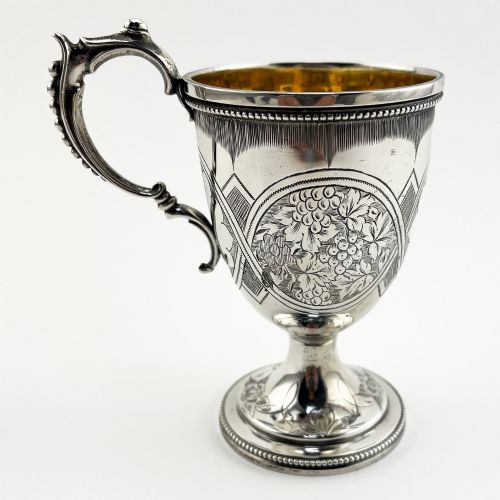
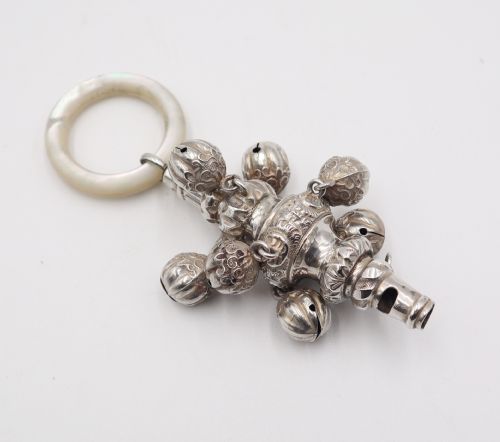
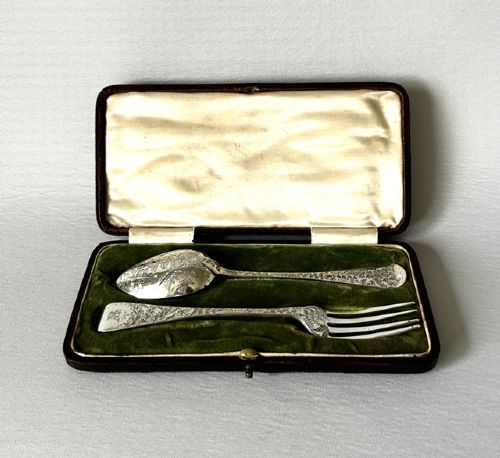
When you search for a victorian baby gift, you encounter objects made to celebrate infancy and early childhood during the nineteenth century. The most common forms on this page include christening mugs, boxed cutlery sets, and silver rattles combined with teething elements.
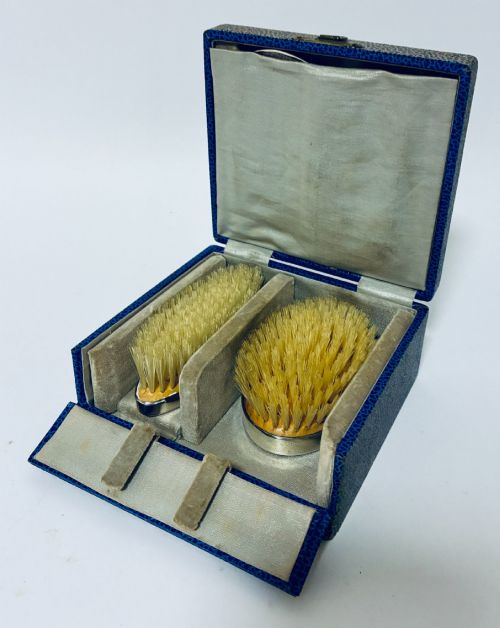
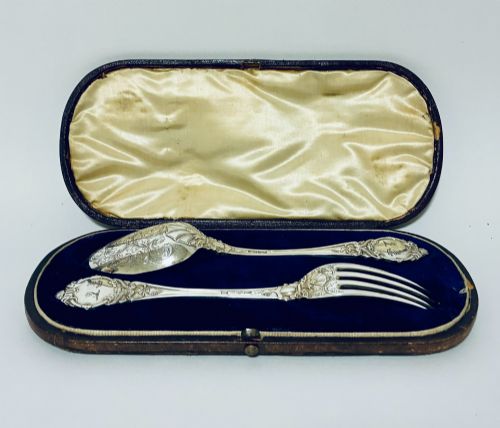
The material record spans the Victorian and Edwardian periods, stretching from the mid-nineteenth century into the early twentieth century. These items were preserved within fitted presentation boxes lined with velvet or silk, protecting the metalwork from daily wear.
How they were made
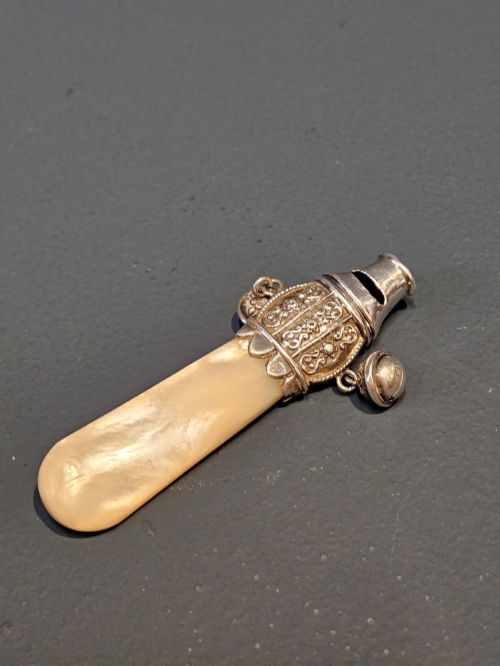
Makers utilised sterling silver and silver gilt, shaping vessels into baluster forms and embossing surfaces with floral motifs or rococo scrolls. Handles often incorporated detailed cast scrollwork, while rattles combined metal bells with natural bristle brushes and carved mother of pearl.
Fitted cases lined with silk and velvet housed multi-piece cutlery sets and vanity items. Metalsmiths punched hallmarks into the silver to record the assay office, year, and silversmith.
Object types span baby rattles, christening cups, cutlery sets, vanity sets, and teethers.
What varies in quality
Quality rests upon the depth of the chasing, the crispness of the floral engraving, and the preservation of the original fitted presentation box. Pieces bearing distinct silversmith marks and clear assay office stamps command greater attention from those who study nineteenth-century metalwork.
The integration of materials also defines the standard, seen where mother of pearl is smoothly carved without fracture and silver gilt retains its warm tone across the interior of a christening mug.
George Unite·Thomas Harwood and Co·JOHN ROUND
The Victorian Baby Gift Glossary
- Sterling silver
- A silver alloy containing 92.5 percent pure silver by mass, forming the primary metal for nineteenth-century mugs and rattles.
- Baluster form
- A architectural shape featuring a rounded lower body tapering upward into a slender neck, commonly seen on christening cups.
- Mother of pearl
- An iridescent inner layer of shell used to shape teething handles and soothing implements attached to rattles.
- Silver gilt
- Sterling silver covered with a thin layer of gold on its surface, frequently found on the inside of christening mugs.
- Rococo scroll
- An ornate, asymmetrical architectural ornament featuring C-scrolls and plant motifs, seen on nineteenth-century handle designs.
Victorian Baby Gift: Frequently Asked Questions
How do I clean antique silver?
Cleaning antique silver requires a soft cloth and a gentle silver polish designed to remove tarnish without stripping the underlying metal or erasing fine engraving. Harsh abrasive cleaners should be avoided.
Preserving the original surface texture and hallmarks ensures the piece retains its historical character.
Why do rattles have mother of pearl?
Mother of pearl provided a smooth, durable surface for an infant to chew upon during teething. The natural material was shaped and polished to attach directly to silver bells and whistles.
This combination of metal and shell created a sensory object designed to entertain and comfort a child.
Are presentation boxes original?
Presentation boxes lined with silk and velvet were custom-made to fit specific cutlery sets and mugs. These cases protected the silver from tarnish and damage when stored.
Finding a piece complete with its original fitted box adds historical context to the set.