

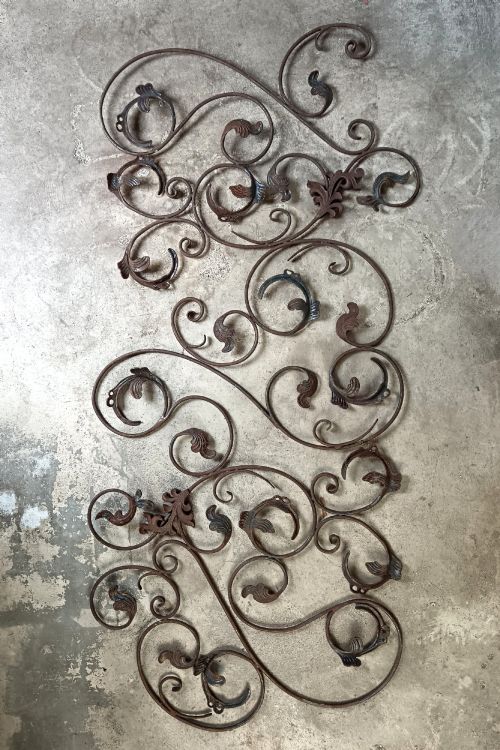


Victorian Art Metalwork
These pieces of Victorian art metalwork bring handcrafted tactile character and utilitarian utility into any room.
Victorian Art Metalwork
Victorian art metalwork encompasses functional objects and architectural elements produced primarily during the nineteenth century and the early decades of the twentieth century. When searching for Victorian art metalwork, a buyer encounters domestic lighting, hearth furniture, planters, and table vessels reflecting distinct design movements.
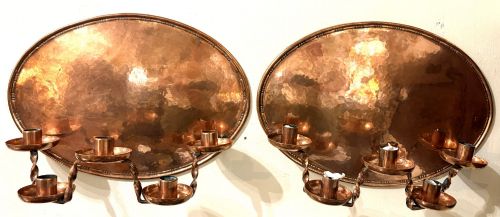
The objects on this page span the Victorian period, the 1880s, 1890s, and extend into 1900, 1920, and 1930. Forms range from chambersticks, wall sconces, coal scuttles, and flagons to architectural scroll panels, beds, and centrepieces with vaseline glass.
Stylistically, these pieces draw heavily upon Arts and Crafts, Art Nouveau, Gothic Revival, Scottish Vernacular, and Indo-Persian aesthetics. Buyers most frequently meet copper, brass, and wrought iron items carrying the hand-hammered textures characteristic of these movements.
How they were made
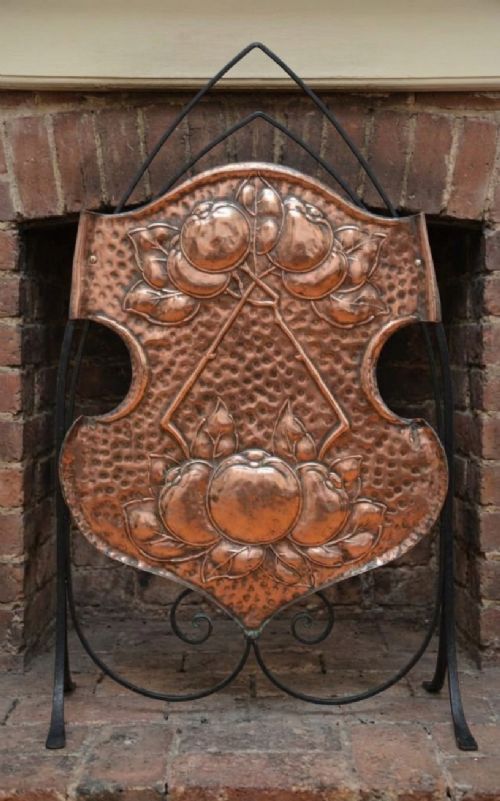
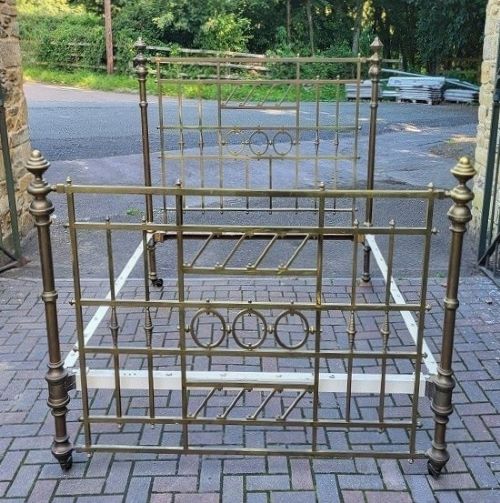
Makers utilised base metals such as copper, brass, iron, bronze, and pewter, shaping sheets and castings through manual hammering, repoussé decoration, and cold-painted finishing. Wrought iron provided structural rigidity for architectural panels, plant holders, and beds.
Surface ornamentation often involved repoussé relief work, hand-decorating, and silver-plating. Elements like green vaseline glass inserts and oak components were integrated into metal frames for centrepieces, umbrella stands, and spirit kettles.
Victorian Art Metalwork Retail Price Guide 2026
Typical asking prices for victorian art metalwork among the pieces listed under this phrase on Sellingantiques today, from the lower quarter to the upper quarter. They describe what is for sale here now, not the wider market.
Current listings feature copper, brass, wrought iron, bronze, and silver plate across periods spanning the nineteenth and early twentieth centuries.
What varies in quality
Quality in these metal objects rests upon the crispness of the hand-hammered detail, the integrity of the joins, and the presence of signed or attributed workshop execution. Stronger pieces display deliberate control in repoussé relief work and well-balanced proportions across structural forms like standard lamps and bedsteads.
The distinction between standard production and superior craftsmanship often lies in the depth of surface decoration and the preservation of original patination on copper, brass, and bronze.
James Shoolbread and Co·Christopher Dresser·Jennings Brothers·Benhan and Froud
The Victorian Art Metalwork Glossary
- Repoussé
- A metalworking technique where the metal is hammered from the reverse side to create a raised design in relief on the front. This method allows artisans to produce intricate pictorial and animal motifs on trays, boxes, and plaques.
- Vaseline glass
- A type of glass coloured with uranium dioxide, producing a distinctive yellowish-green hue that glows under ultraviolet light. It frequently appears paired with silver-plated or metal frames in centrepieces and stands.
- Chamberstick
- A short candlestick fitted with a wide saucer-like base and a loop handle, designed for carrying bedroom candles safely. They are commonly constructed from copper or brass during the period.
- Scroll panel
- An architectural metal element featuring curved, scrollwork iron or bronze formations. These pieces originate from structural salvage and decorative estate work.
Victorian Art Metalwork: Frequently Asked Questions
How do I clean copper and brass?
Copper and brass items generally benefit from gentle dusting and occasional cleaning with appropriate metal care products. Preserving the historical patina is often preferred by collectors over achieving a bright shine.
Avoid abrasive materials that can strip away hand-hammered surface textures and original finishes.
Where were these pieces used?
These metal items served both practical and decorative purposes in domestic interiors and architectural settings. Candlesticks, chambersticks, and spirit kettles provided lighting and beverage service.
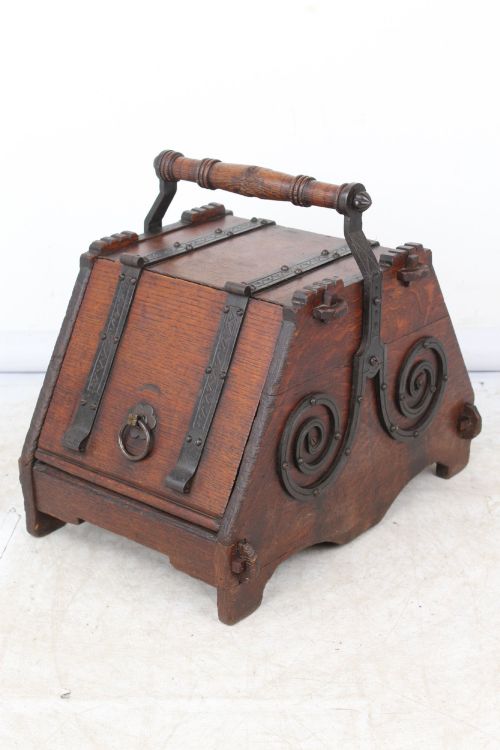
Larger items like coal scuttles, umbrella stands, and wall sconces functioned as everyday furnishings in Victorian and Edwardian homes.
How do I identify the period?
Dating relies on stylistic markers such as Gothic Revival motifs from the 1880s, characteristic Arts and Crafts copperwork from the 1890s, and Art Nouveau fluid lines around 1900. Materials like vaseline glass and cold-painted bronze also help narrow the timeframe.
Maker attribution stamps, workshop marks, and construction techniques further confirm the era of production.