



Victorian Army Officer Portrait
A victorian army officer portrait captures the military discipline and gentlemanly status of nineteenth-century service through oil and watercolour.
Victorian Army Officer Portrait
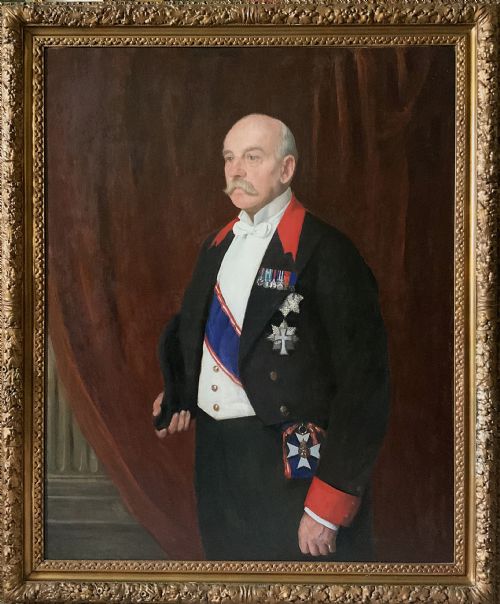
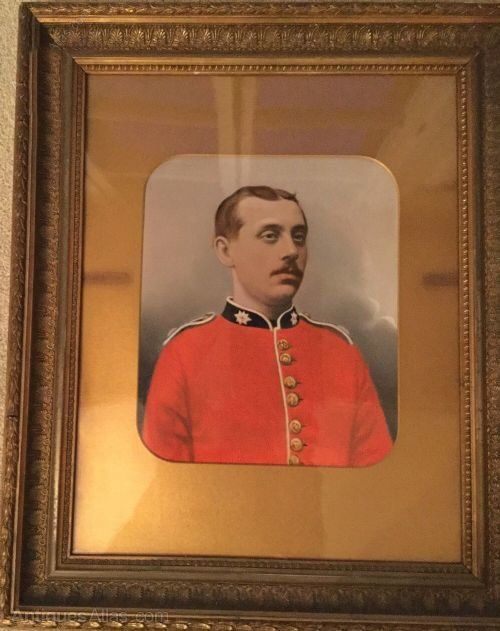
When you search for a victorian army officer portrait, you are looking at nineteenth-century depictions of military figures ranging from majors and captains to guardsmen and major-generals. These works record the physical likeness and uniform details of men who served in regiments such as the Coldstream Guards and the 3rd Dragoon Guards. You will encounter both grand oil paintings on canvas and more intimate framed watercolours produced during the era.
The pieces appearing on this page span the nineteenth century, encompassing early Victorian examples as well as works from around eighteen-fifty and nineteen hundred. Some images present half-length studies, while others capture subjects alongside their mounts, such as a bay horse with an army officer. The sitters frequently hold documented identities, connecting the artwork directly to specific historical campaigns and military administration.
How they were made
Support materials include prepared wood and glass protection for works on paper, ensuring the preservation of delicate watercolours. The construction of the canvas stretched over wooden frames follows standard period framing and mounting practices. These material combinations reflect the workshop standards of nineteenth-century British artists documenting military personnel.
Listings feature works from the nineteenth century, including early Victorian items created using oil on canvas and watercolour on paper.
What varies in quality
The distinction between standard and superior examples lies in the precision of brushwork and the psychological depth captured in the sitter's expression. Master artists render the texture of fabric, gold lace, and medals with a lifelike clarity that lesser hands miss. Compositional scale also plays a role, with very large military portraits offering a commanding presence on the wall.
Another factor is the survival of the original gilded wood frame, which enhances the historical integrity of the piece. Documentation of the sitter and the artist adds intellectual weight to the artwork, elevating signed pieces or those with identified subjects above anonymous portraits.
William Edward Millner·George Duncan Beechey·Sir Richard Westmacott·Wiliam Ousey Lindley
The Victorian Army Officer Portrait Glossary
- Oil on Canvas
- Pigment mixed with drying oil applied to a woven fabric stretched across a wooden frame. This medium allows for rich colour blending and durability over centuries.
- Watercolour
- A painting method where fine pigment is suspended in a water-based solution and applied to paper. It produces translucent effects well suited to detailed portrait miniatures and framed studies.
- Gilded Wood Frame
- A wooden moulding coated with a thin layer of gold leaf or metallic gilt. These frames define the perimeter of the artwork and often date directly to the period of creation.
- Half-Length
- A compositional format showing the subject from the waist or hips up. This framing focuses attention on the face and upper uniform details.
Victorian Army Officer Portrait: Frequently Asked Questions
What periods do these portraits cover?
The listings span the nineteenth century, encompassing the Victorian era, early Victorian periods, and nineteen hundred. Most pieces reflect the artistic conventions and military dress of British forces during the 1800s.
You will find that styles range from detailed military oil paintings to framed watercolours executed around eighteen-fifty.
Are the sitters usually identified?
Many portraits record the specific names and ranks of the officers depicted, such as major-generals, captains, and guardsmen. This documentation often links the artwork to historical regiments like the Bengal Army or the Coldstream Guards.
Some pieces also note the artists responsible for capturing the likeness of these military figures.
What materials were used?
Artists employed oil paint on canvas and watercolour on paper as the primary mediums for these military depictions. Wood and glass frequently support and protect the paper works.
Many of the canvases retain their period gilded wood frames, contributing to the complete historical object.
How should I display them?
These framed artworks suit hanging on walls in traditional study spaces, libraries, or living areas where period pieces set the tone. Because they feature oil on canvas or watercolour on paper, you should avoid placing them in direct sunlight to protect the pigments.
Ensuring stable room humidity will also help preserve both the canvas and the original gilded wood frames.