
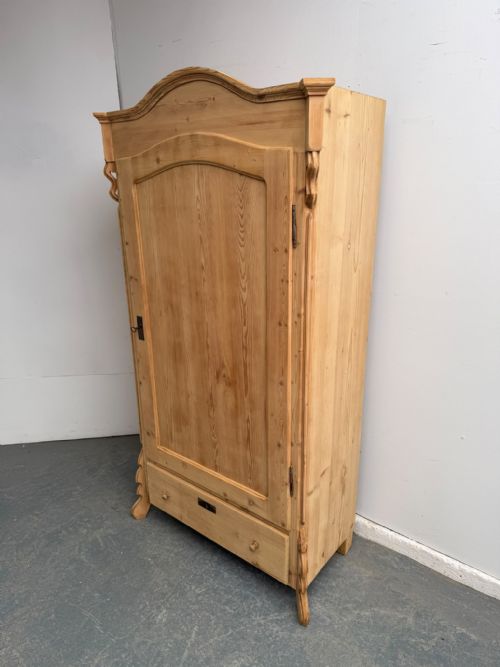
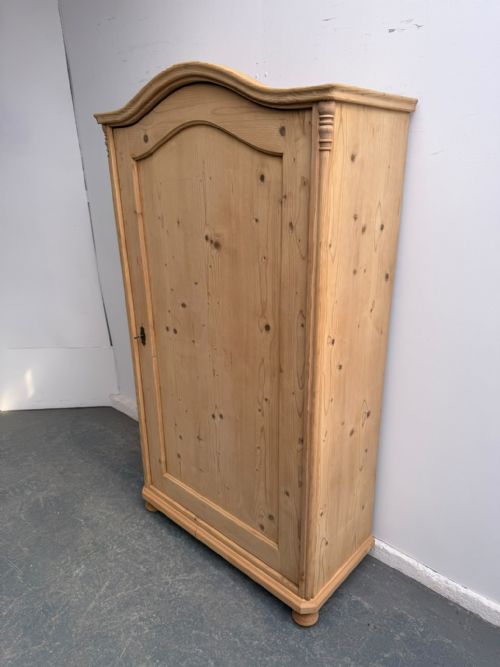
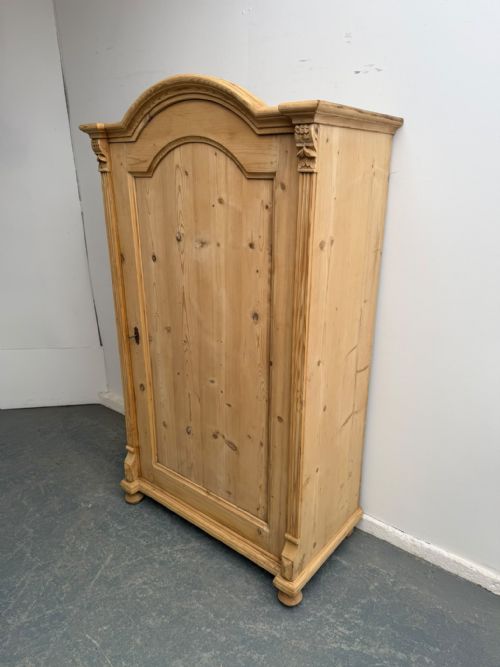


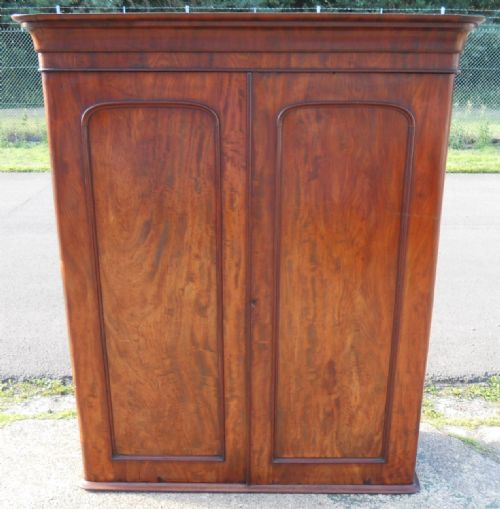

Victorian Arched Door Wardrobe
A victorian arched door wardrobe offers grand architectural presence and generous storage, uniting period craftsmanship with practical bedroom utility.
Victorian Arched Door Wardrobe
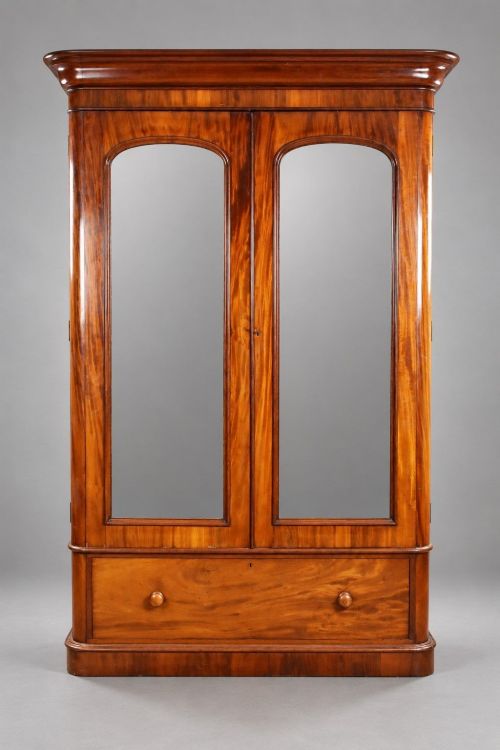
A victorian arched door wardrobe centres on curved woodwork framing the panels, a design defining pieces from the Victorian era. These items span from the mid-nineteenth century, encompassing dates like eighteen fifty, eighteen sixty, and eighteen seventy, as well as broader nineteenth century examples.
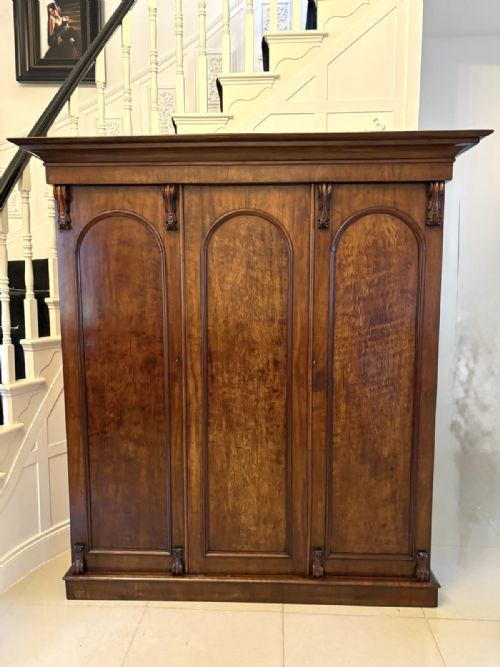
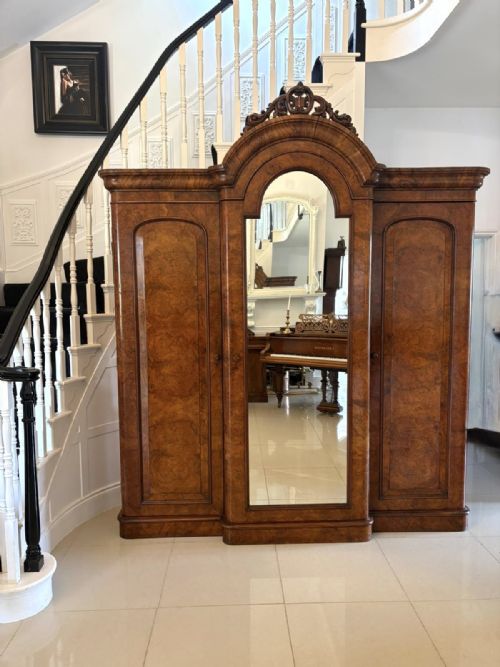
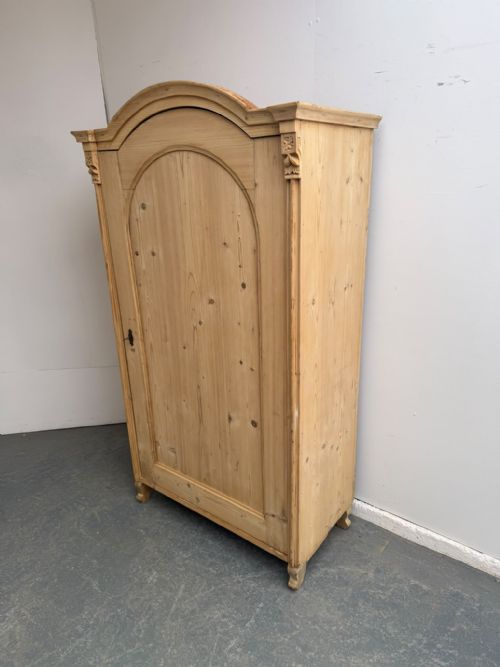
The objects appear in various configurations, including two door fitted versions, three door layouts, and large breakfront formats. Buyers also encounter country house Gothic Revival designs alongside simpler pine storage cupboards intended to wax or paint.
Originating predominantly from English workshops, these storage cupboards and armoires utilise traditional joinery suited to large domestic spaces. The arched door motif creates a distinctive silhouette that separates these furniture pieces from standard rectangular wardrobes.
Materials and Construction
Makers utilised dense hardwoods such as mahogany and burr walnut, frequently applying flame mahogany veneer to create rich surface movement. Iron and brass hardware, including hinges and locking mechanisms, secured the heavy timber doors.
Pine served as the primary timber for country house and regional examples, often supplied ready to wax or paint. Specialised workshops constructed larger pieces with knockdown capability, allowing the heavy frames to dismantle for transport.
Listings feature pine, mahogany, burr walnut, and painted wood, spanning the Victorian era alongside nineteenth-century Gothic Revival styles.
Distinctions in Quality
The selection of timber dictates the visual depth of the piece, with figured mahogany and burr walnut representing the upper tier of cabinetmaking. Grain matching across wide panel doors requires high precision from the maker.
Structural complexity influences the grade, moving from simple pine storage cupboards to multi-door breakfront wardrobes with integrated internal fittings. The presence of original mirrored glass, carved details, and robust iron or brass fixings separates standard utility items from superior examples.
The Victorian Arched Door Wardrobe Glossary
- Breakfront
- A piece of furniture where the central section projects forward from the flanking cabinets. This configuration creates visual depth and allows for larger internal storage.
- Burr walnut
- A prized wood harvested from the warted growths of walnut trees, yielding highly figured grain patterns. Cabinetmakers applied it as a veneer to emphasise surface decoration.
- Gothic Revival
- An architectural and design style drawing inspiration from medieval forms, featuring pointed arches and heavy timber framing. This aesthetic appears on country house wardrobes from the period.
- Knockdown wardrobe
- A large piece constructed to be taken apart into sections for easier transport and installation in domestic rooms. This technique relied on hidden bolts and pegged joints.
Victorian Arched Door Wardrobe: Frequently Asked Questions
How do I date a Victorian wardrobe?
Dating relies on timber choices, construction methods, and stylistic cues recorded in the inventory. Mid-century pieces often feature figured mahogany or burr walnut, while later decades show shifts in proportions and decorative carving.
Examining the internal fixings and backboards provides further clues regarding the manufacturing period. Regional pine items often follow traditional country vernacular rather than strict chronological trends.
Can these large wardrobes be dismantled?
Many larger examples were constructed as knockdown furniture to facilitate movement between rooms. These pieces utilise internal bolts or pegged frames that allow the cornice, base, and sides to separate.
Buyers should verify the specific construction method before purchase, as solid mahogany multi-door units can be exceptionally heavy and permanent once assembled.
What is the difference between pine and mahogany versions?
Pine versions are typically provincial items designed to be waxed or painted, often described as storage cupboards. They offer a simpler aesthetic suited to country interiors.
Mahogany and burr walnut editions represent formal urban cabinetmaking, displaying sophisticated grain figures and architectural mouldings intended to be showcased in finished timber.
How should I care for the wood veneers?
Veneered surfaces require stable room humidity and protection from direct sunlight to prevent drying and lifting. Regular gentle dusting preserves the polished finish without damaging the historic timber.
Applying traditional wax feeds the wood and maintains the lustre of figured mahogany and walnut over time.