

Victorian Apprentice Piece Chest
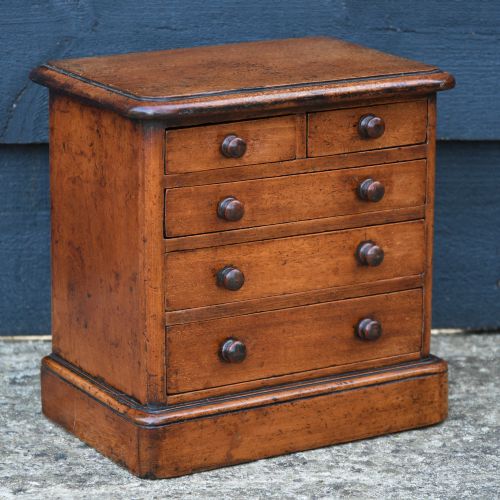
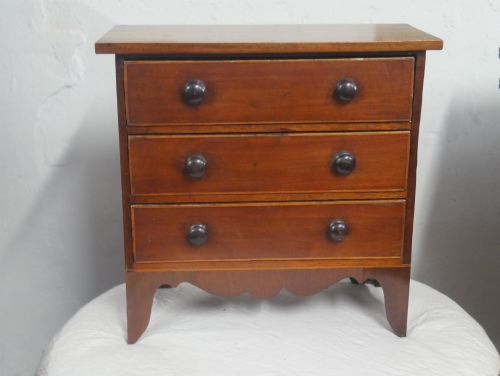
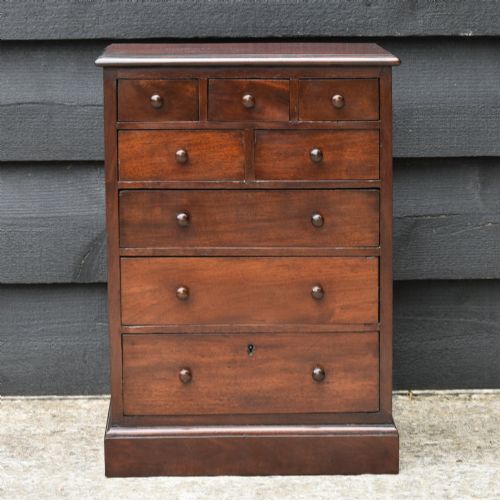
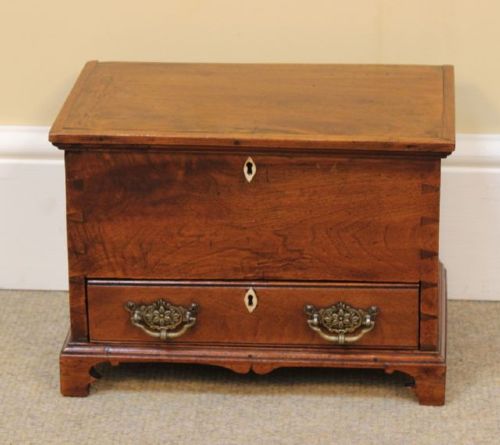
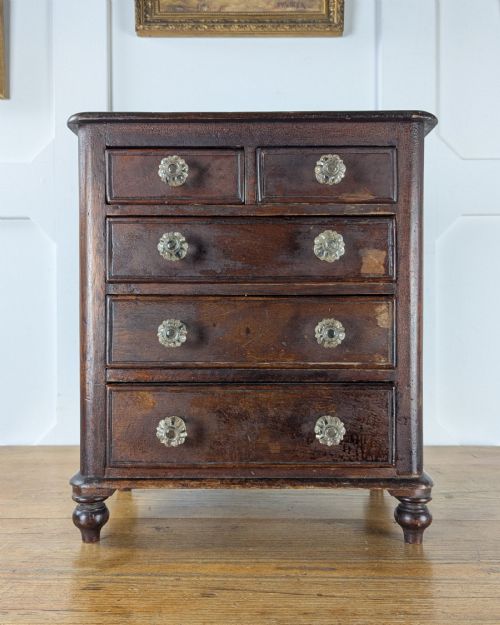
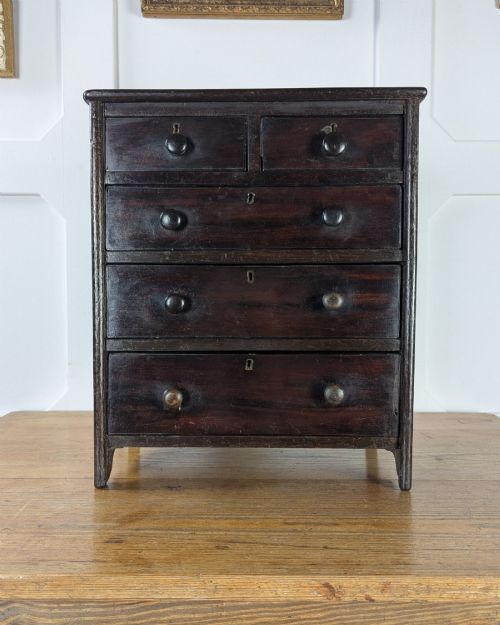
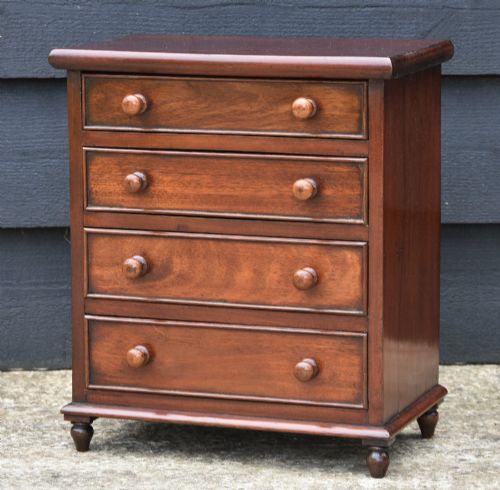
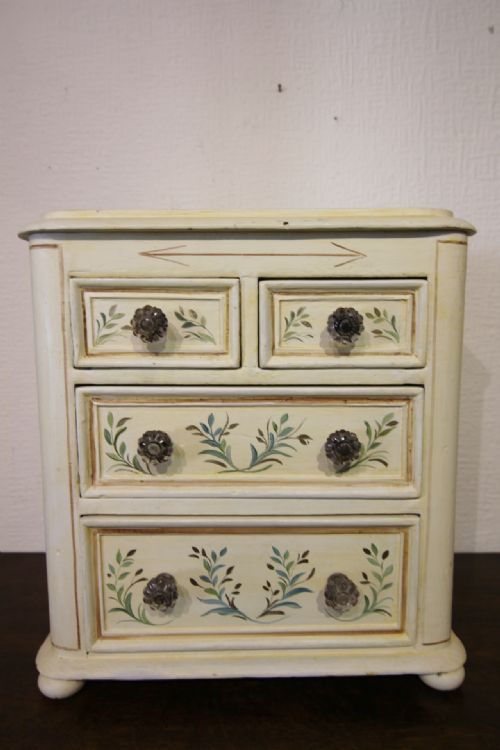
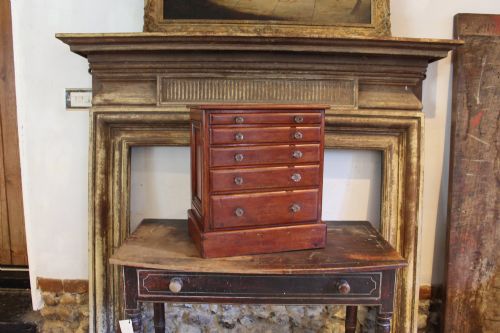
These small items are a victorian apprentice piece chest, scaled-down works created by cabinetmakers to prove skill or serve as salesman samples.
Victorian Apprentice Piece Chest
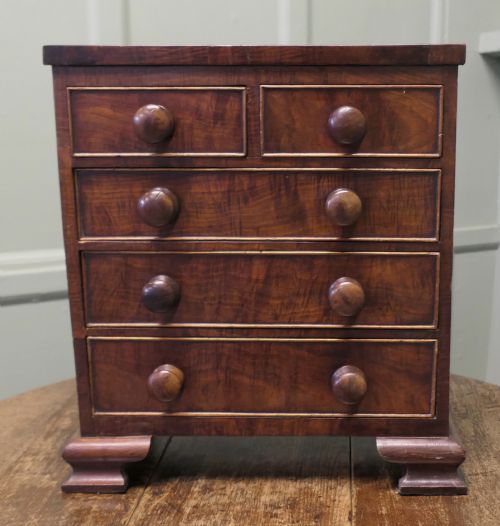
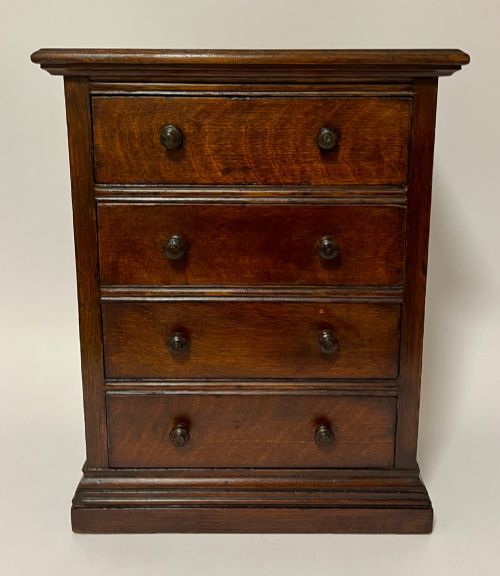
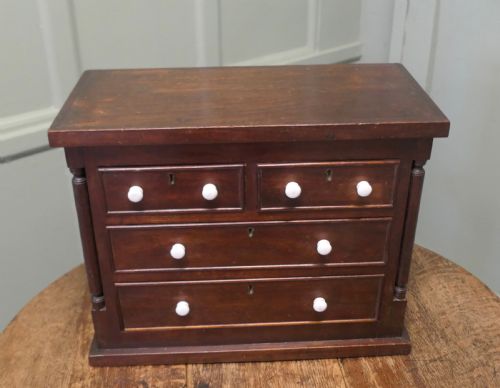
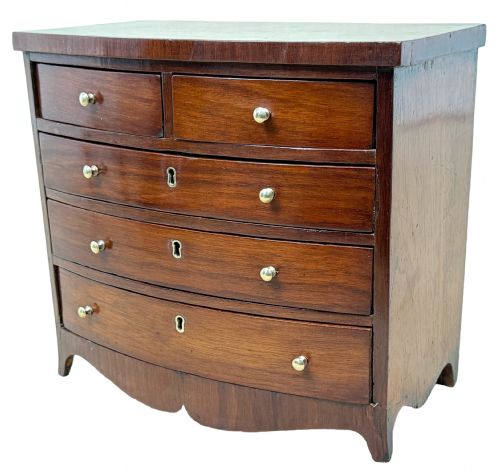
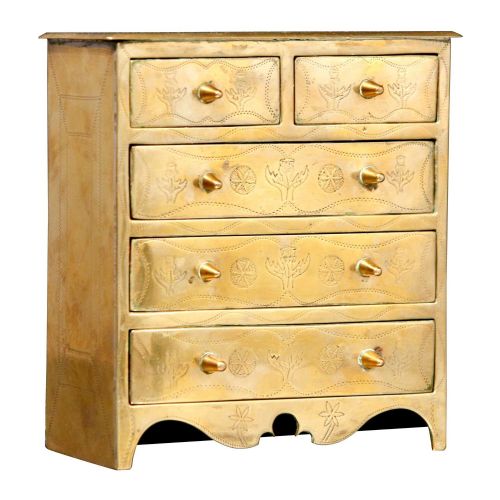
A victorian apprentice piece chest represents a scaled-down version of full-sized domestic furniture, produced in miniature form during the nineteenth century. Buyers examine pieces ranging from simple tabletop drawers to detailed miniature Scotch chests and bowfront designs.
The most common examples on this page are mahogany chests of drawers dating from the Victorian period, alongside variants in walnut, pine, and rosewood. These objects often served practical purposes as jewellery boxes, specimen cases, or domestic receptacles.
Materials and construction methods
Cabinetmakers utilised hardwoods like mahogany, walnut, and rosewood, alongside softer woods such as pine and oak. Construction frequently mirrored full-sized furniture through the use of dovetailed drawer joints, turned feet, and applied mouldings.
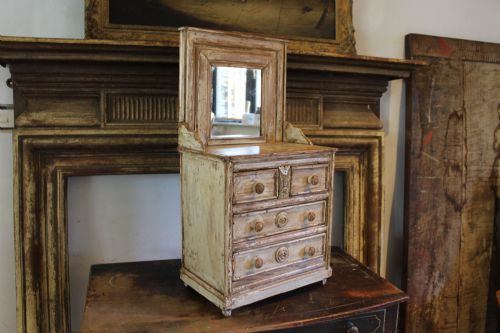
Detailing often included brass fittings, bone escutcheons, mother-of-pearl inlay, and painted finishes. Some examples incorporate hidden compartments such as secret drawers or take the form of miniature sideboards and linen presses.
Listings feature items from the 19th Century, Victorian period, and early 20th century up to 1920, constructed from mahogany, walnut, pine, and brass.
Distinctions in craftsmanship
The standard of a piece depends heavily on the precision of its joinery and the choice of timber figure. Finer examples display carefully selected mahogany or figured walnut veneers matched across drawer fronts.
Attention to secondary details separates standard utility objects from superior works. Examples with original brass hardware, clean interior linings, finely turned feet, and well-executed secret drawers command greater interest.
The Victorian Apprentice Piece Chest Glossary
- Apprentice piece
- A small-scale item made by a trainee cabinetmaker to demonstrate proficiency in various woodworking techniques before joining a guild.
- Bowfront
- A curved cabinet front that swells outward in the centre, commonly seen on nineteenth-century chests of drawers.
- Escutcheon
- A small protective plate surrounding a keyhole, often fashioned from brass, bone, or mother-of-pearl.
- Scotch chest
- A tall chest of drawers originating in Scotland, typically featuring a deep top drawer over multiple smaller or central drawers.
Victorian Apprentice Piece Chest: Frequently Asked Questions
What is a victorian apprentice piece chest?
These objects are small-scale furniture models built during the nineteenth century. They were created by trainees to demonstrate competence in woodworking or used by merchants to showcase furniture designs to clients.
Most examples replicate domestic furniture such as chests of drawers, sideboards, or linen presses. Their compact dimensions allowed them to sit upon tables or desks.
How were these miniature chests used?
While originally created as skill tests or travelling samples, many found roles within the home as decorative containers. Owners utilised them to store jewellery, small keepsakes, or botanical specimens.
Their sturdy timber construction and functional drawers made them practical storage items on a miniature scale. Today they function primarily as decorative antiques or collector pieces.
What woods are commonly found?
Mahogany is the predominant timber seen across these listings, often selected for its rich grain and durability. Walnut, rosewood, and amboyna also appear frequently in finer examples.
Softer woods like pine and oak occur regularly, sometimes featuring painted surfaces or ebonised mouldings. Occasionally, decorative elements incorporate bone, brass, and mother-of-pearl inlay.
How do you date a miniature chest?
Dating relies upon timber choice, construction methods, and stylistic cues from specific periods. Pieces from the early nineteenth century often exhibit Regency characteristics, while later examples reflect Victorian or 1880s aesthetic preferences.
Hardware styles, dovetail construction, and secondary woods provide further clues to the decade of manufacture. Comparing pieces with dated examples helps establish a reliable timeline.