

Victorian 9ct Bracelet
A victorian 9ct bracelet carries the unmistakable warmth of nine-carat gold and the solid weight of nineteenth-century craftsmanship.
Victorian 9ct Bracelet
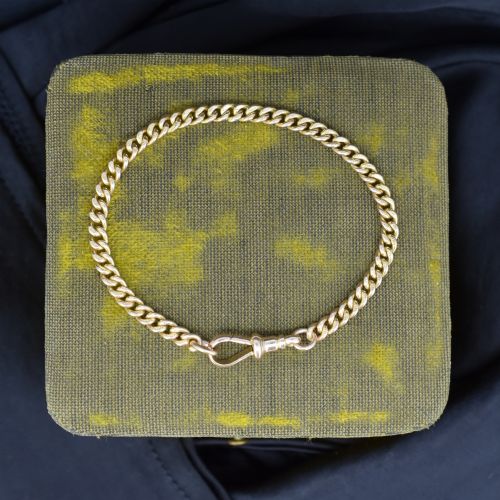
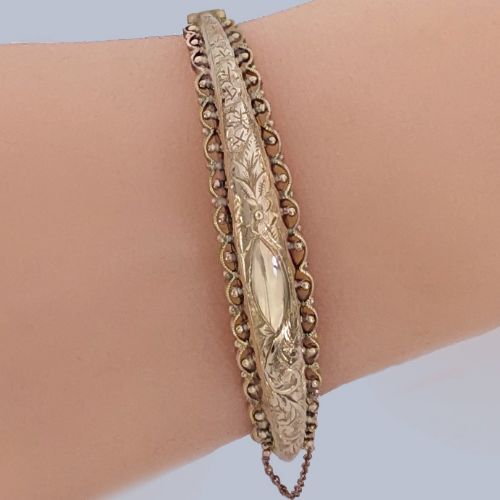
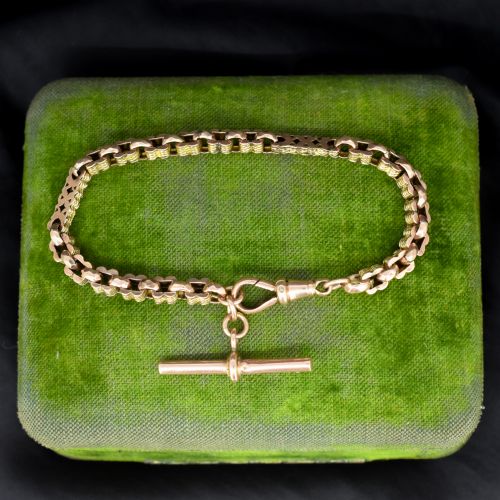
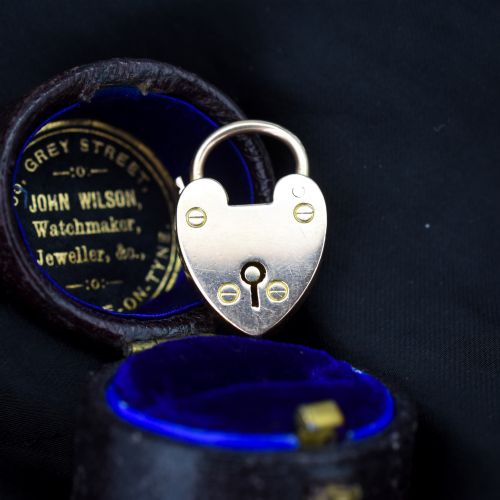
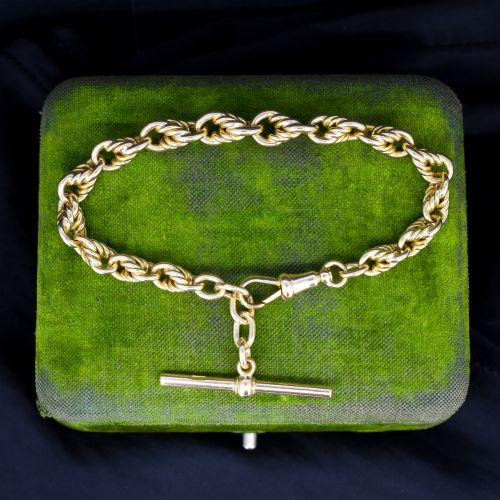
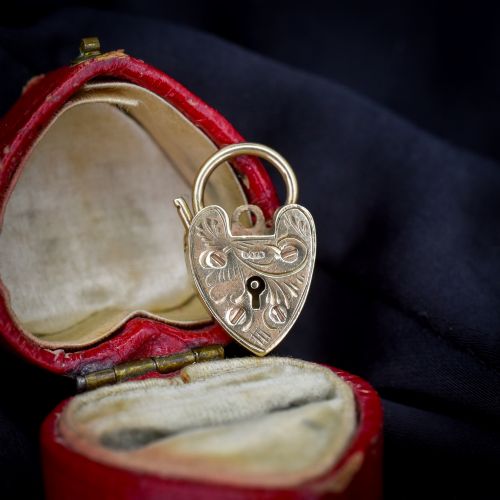
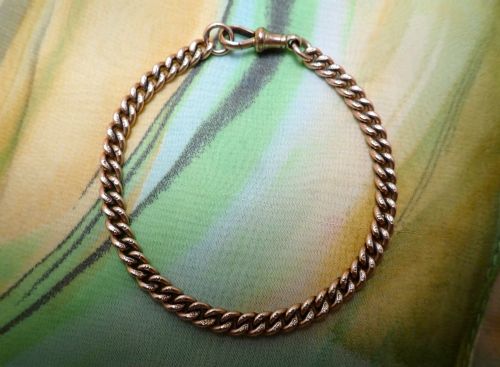
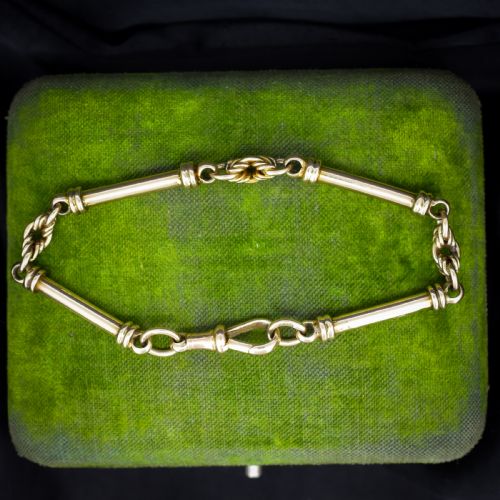
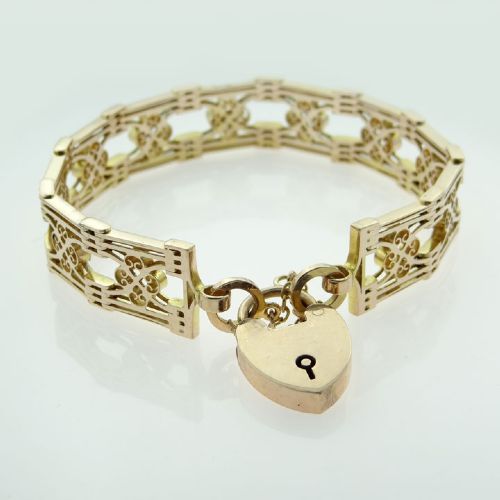
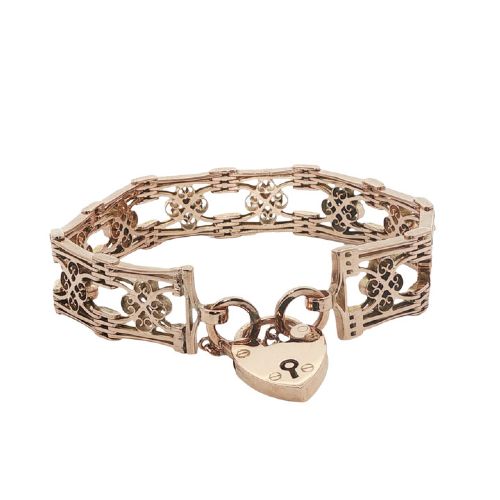
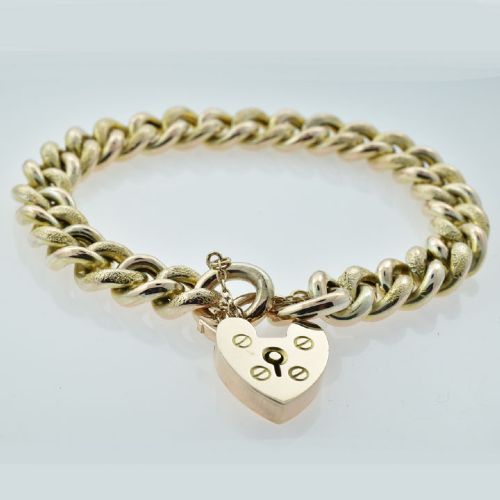
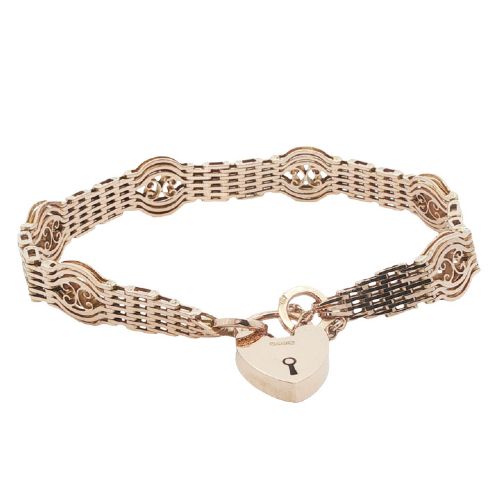
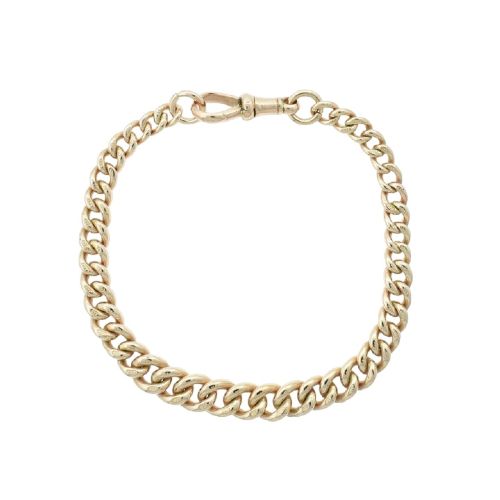
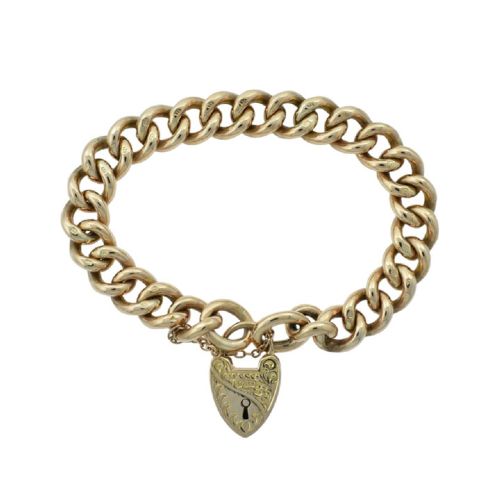
A victorian 9ct bracelet typically takes the form of a substantial curb chain, a flexible gate link, or a rigid bangle shaped from nine-carat gold. Many of these pieces originate from the nineteenth century, often featuring secure heart padlocks, dog clips, or T-bars.
Makers and smiths of the period frequently utilised yellow and rose gold tones, occasionally combining them within a single piece to create subtle contrast. The selection spans everyday chain bracelets to ornate charm-laden designs holding fob seals and lockets.
How they were made
Goldsmiths constructed these chains and bangles from nine-carat gold, employing hollow or solid links shaped by hand and machine. Curb links, gate panels, and tubular bars were soldered together carefully to endure daily wear.
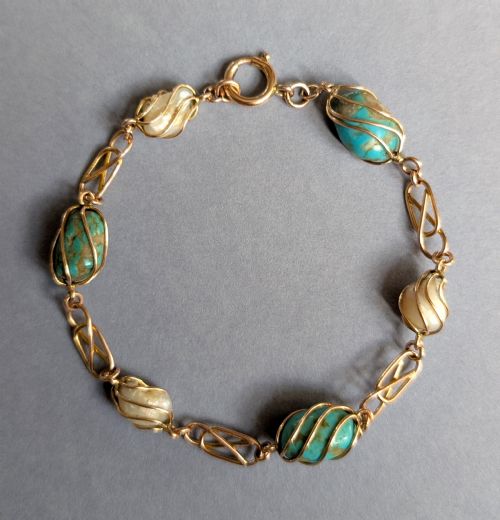
Gemstones such as turquoise, seed pearls, rubies, and diamonds were flush or bezel set into gold mounts, while engravings were hand-chased onto hearts and padlocks with fine tools.
Victorian 9ct Bracelet Retail Price Guide 2026
Typical asking prices for victorian 9ct bracelet among the pieces listed under this phrase on Sellingantiques today, from the lower quarter to the upper quarter. They describe what is for sale here now, not the wider market.
A serpent wraps its golden tail around one wrist, proving that Victorians liked their jewellery to hiss gently.
What varies in quality
The distinction between standard and superior pieces rests on the weight of the gold, the crispness of hand-engraving, and the original integrity of the links. Heavier gauge chains and solid gate links demonstrate greater durability and a more substantial feel in the hand.
Refinement shows in the detail of the clasp mechanism, the matching of stones like seed pearls and turquoise, and the survival of original components such as safety chains and T-bars.
The Victorian 9ct Bracelet Glossary
- Padlock
- A heart-shaped clasp serving as both functional closure and decorative pendant on many chain bracelets. These often feature hand-engraved scrollwork.
- Albert
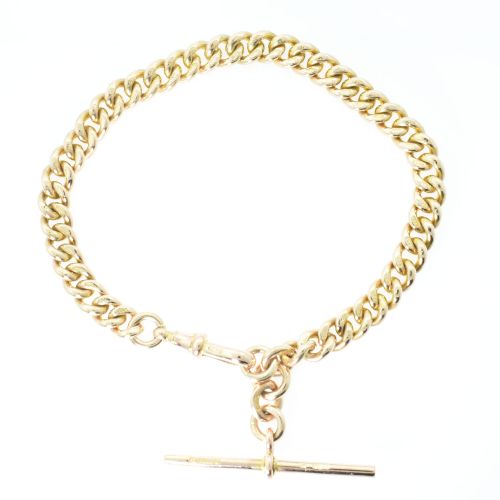
- A style of heavy chain originally designed for pocket watches, adapted into bracelets with T-bars for securing through buttonholes or loops.
- Gate link
- A flexible bracelet construction formed of parallel metal bars joined by vertical links, resembling a traditional garden gate.
- Dog clip
- A spring-loaded swivel clasp used to attach pendants or secure the ends of a watch chain bracelet.
- Seed pearl
- Very small, natural saltwater pearls often arranged in floral or crescent patterns upon gold mounts during the nineteenth century.
Victorian 9ct Bracelet: Frequently Asked Questions
Can I wear a 9ct bracelet every day?
Nine-carat gold possesses a durability that suits regular daily wear, provided the links and clasps remain secure. Solid curb chains and gate links handle daily movement well, while hollow or gem-set variants require greater care against knocks.
Checking the spring tension on dog clips and heart padlocks helps prevent accidental loss during everyday use.
What is an Albert bracelet?
An Albert chain derives from Victorian watch chains, characterised by graduated links and a crossbar known as a T-bar. These pieces wrap around the wrist with notable weight and visual presence.
The T-bar originally secured a pocket watch to a waistcoat, but today it rests decoratively among the links of a wrist bracelet.
How do I secure a heart padlock clasp?
The heart padlock functions via a small spring-loaded lever on the side or base of the heart. Pressing this internal mechanism opens the bail to attach onto jump rings or chain links.
Many antique pieces include an attached safety chain to provide extra security should the primary padlock release.
How do rose gold and yellow gold differ?
Rose gold achieves its warm pinkish hue through a higher alloy proportion of copper mixed with gold. Yellow gold maintains a traditional bright metallic tone through balanced proportions of silver and copper alloys.
Victorian makers frequently combined both gold colours within a single piece for patterned contrast.