

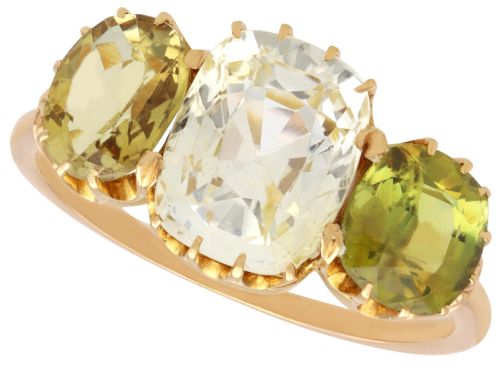


Victorian 3 Stone Ring
When you search for a victorian 3 stone ring, you are holding a piece of nineteenth-century sentiment shaped in gold and gem.
Victorian 3 Stone Ring
The materials span 18ct gold, 18ct yellow gold, and 18ct rose gold, anchoring stones like sapphire, ruby, opal, and turquoise alongside diamonds. While many examples originate firmly in the Victorian period, others emerge from adjacent eras including Edwardian times and the turn of the twentieth century.
Materials and Construction
Goldsmiths of the nineteenth century utilised 18ct gold to form the shanks and settings, working yellow and rose tones to complement specific stones. Gemstones including old cut diamonds, sapphires, and rubies were secured by hand, often complemented by intricate gallery work or starburst engravings.
Techniques such as gypsy setting and boat shaping integrated the stones smoothly into the band or elevated them in claw mounts. These methods required precise hand-fitting to ensure durability in everyday wear while maintaining the delicate aesthetic of the period.
Victorian 3 Stone Ring Retail Price Guide 2026
Typical asking prices for victorian 3 stone ring among the pieces listed under this phrase on Sellingantiques today, from the lower quarter to the upper quarter. They describe what is for sale here now, not the wider market.
Listings feature 18ct yellow gold and 18ct rose gold alongside diverse gemstones including sapphire, ruby, opal, turquoise, and diamond.
Assessing Craftsmanship and Material
The calibre of a ring rests upon the match and cut of its stones, where uniformity in colour and proportion elevates the piece. Hand-cut gems such as old mine cut diamonds display distinct facet patterns that set them apart from mass-produced stones.
Structural integrity through the shoulders and setting claws determines the longevity of the mount. Finely executed chasing, clear hallmarks denoting origins such as Chester or Birmingham, and secure stone settings separate standard workshop output from superior surviving examples.
The Victorian 3 Stone Ring Glossary
- Trilogy ring
- A ring set with three stones, traditionally symbolising the past, present, and future.
- Old cut diamond
- A hand-faceted diamond cut before the advent of modern machinery, characterised by a smaller table and higher crown.
- Gypsy ring
- A style where stones are flush-set directly into the thick gold band, creating a smooth surface.
- Boat ring
- A setting shaped like an upturned boat, tapering at the ends to cradle a row of gems.
- Hallmark
- An official stamp struck into precious metals to indicate the purity, maker, and assay office of the piece.
Victorian 3 Stone Ring: Frequently Asked Questions
What is a trilogy ring?
A trilogy ring is a mounting that holds three distinct stones across the finger. Victorian jewellers frequently used this design to showcase diamonds paired with sapphires or rubies.
The three-stone configuration carried sentimental meaning for the wearer, often representing relational milestones. They remain versatile pieces suited for modern stacking or wearing alone.
How do I wear an antique ring?
Wearing these pieces requires mindful care due to their age and delicate settings. Removing them before heavy manual tasks protects the gold claws and softer gems like opal and turquoise.
Pairing them with plain bands prevents rubbing against the antique shank. Regular inspection by a specialist ensures the stones remain secure in their original mounts.
What is a gypsy setting?
A gypsy setting embeds the gemstone flush into the metal band rather than lifting it in claws. This technique protected the girdle of the stone during daily Victorian wear.
Such rings often feature starburst engravings radiating outward from the flush-set diamond or coloured gem. The smooth profile makes them comfortable for continuous wear.
How can I tell the period?
Dating relies on a combination of gemstone cuts, metal hallmarks, and mounting styles. Old cut diamonds and specific gold carats often point toward nineteenth-century production.
Assay office stamps and registration numbers found inside the band provide precise chronological markers. Stylistic shifts between early Victorian clusters and late Victorian boat rings further define the era.