

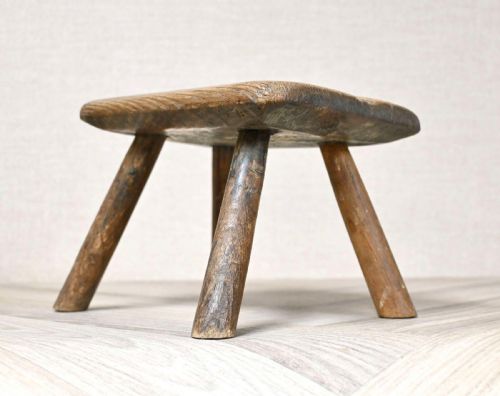
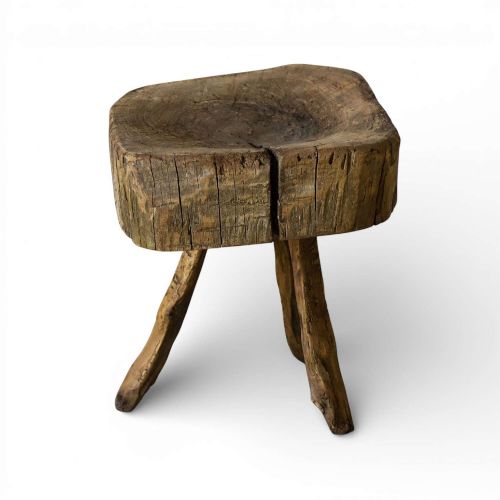


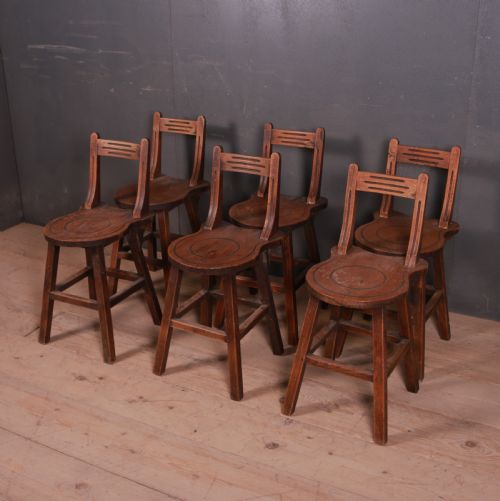


Vernacular Elm Stool
These vernacular elm stool examples offer honest country utility and sturdy charm for any rustic interior.
Vernacular Elm Stool
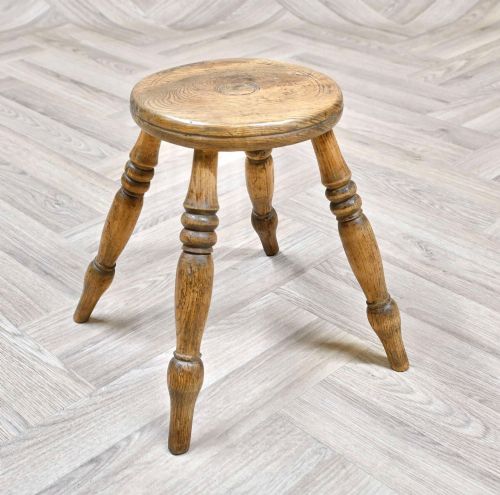
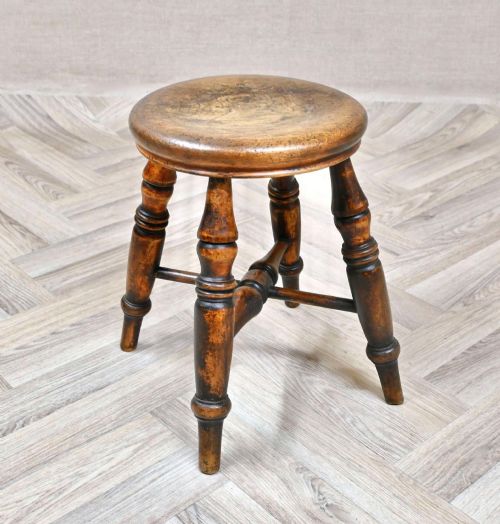
When you search for a vernacular elm stool, you encounter hardworking seating shaped by rural necessity across the eighteenth and nineteenth centuries. These pieces encompass low country forms, dairy stools, milking stools, and tavern seats designed for daily use in farmhouses, hearths, and workshops.
You are most likely to meet nineteenth-century examples on this page, alongside Georgian pieces and occasional items from around eighteen hundred. They appear in styles such as rustic country, primitive country, and vernacular rural, reflecting straightforward utilitarian craftsmanship.
How they were made
Maker-joiners utilised solid elm for durable, resilient seats that resisted splitting under heavy daily loads. This hardwood was frequently combined with beech, ash, and oak for turned or gnarled legs and structural stretchers.
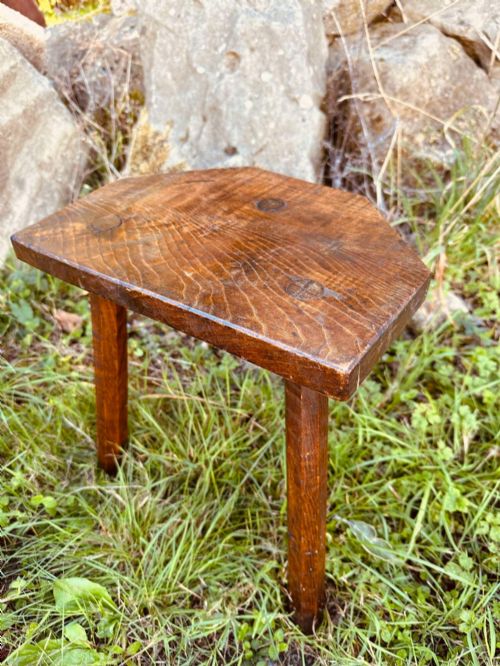
Construction methods relied on traditional wood-working techniques, including pegged joints and wedged tenons where legs pass straight through the seat. Some examples retain traces of original paint, while others highlight the live edge and grain of the timber.
Vernacular Elm Stool Retail Price Guide 2026
Typical asking prices for vernacular elm stool among the pieces listed under this phrase on Sellingantiques today, from the lower quarter to the upper quarter. They describe what is for sale here now, not the wider market.
This site's listings show nineteenth-century and Georgian periods, with materials spanning elm, beech, ash, oak, paint, and timber.
What varies in quality
Quality rests in the balance of proportions and the character of the timber rather than decorative embellishment. A well-balanced stance on three or four legs provides the stability expected from utilitarian country furniture.
The visual appeal depends on the figure of the elm top, the honesty of the wear, and whether the legs retain their original gnarled shape or turned profile. Surfaces that show genuine age without excessive modern restoration command greater appreciation.
The Vernacular Elm Stool Glossary
- Vernacular
- Things made locally by regional craftsmen using available materials, prioritising function over academic design. This approach defines the honest character of country furniture.
- Elm
- A tough, interlocking-grained hardwood traditionally chosen for seating because it resists splitting when nailed or pegged. It forms the primary seat material in these rustic pieces.
- Hearth stool
- A low seat positioned near a fireplace for warmth or domestic tasks. These pieces sit close to the floor for stability on uneven stone flags.
- Milking stool
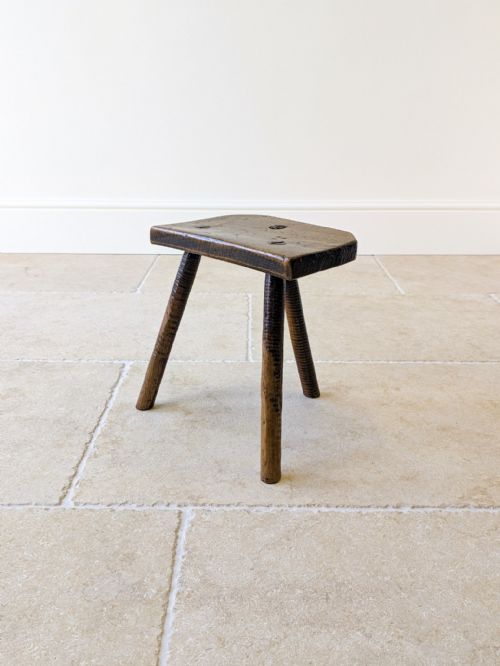
- A small, portable seat with three legs designed for stability on farm floors during milking. The tripod construction prevents rocking on unpaved surfaces.
- Live edge
- The natural outer edge of a tree left unshaped on a wooden board or seat top. This feature highlights the organic form of the timber.
Vernacular Elm Stool: Frequently Asked Questions
What is a vernacular elm stool?
A vernacular elm stool is a practical piece of country seating made by local artisans using native elm wood. These items served functional roles in homes, dairies, and taverns rather than following formal stylistic rules.
They display simple construction methods, often featuring solid wooden seats fitted with three or four sturdy legs.
How were these stools used originally?
These stools served everyday domestic and agricultural tasks around the home, farm, and workshop. People used them for milking cows, sitting by the hearth, or working at low benches.
Their portable and sturdy design made them essential utility objects in rural settings.
How do I live with a country stool?
You can place a country stool beside a chair as a small side table, use it as a plant stand, or keep it by a hearth for extra seating. Their compact size allows them to fit easily into various rooms.
Pairing them with modern or traditional interiors adds warmth and texture through natural wood grain.
How do I tell periods apart?
Georgian examples often display formal restraint and traditional country turning, while nineteenth-century pieces can range from primitive three-legged designs to painted dairy variants. Examining the tool marks and wood wear helps distinguish eighteenth-century pieces from later nineteenth-century makes.
Construction details like pegging and leg attachment methods also offer clues to the age of the piece.