




Venetian Crest Mirror
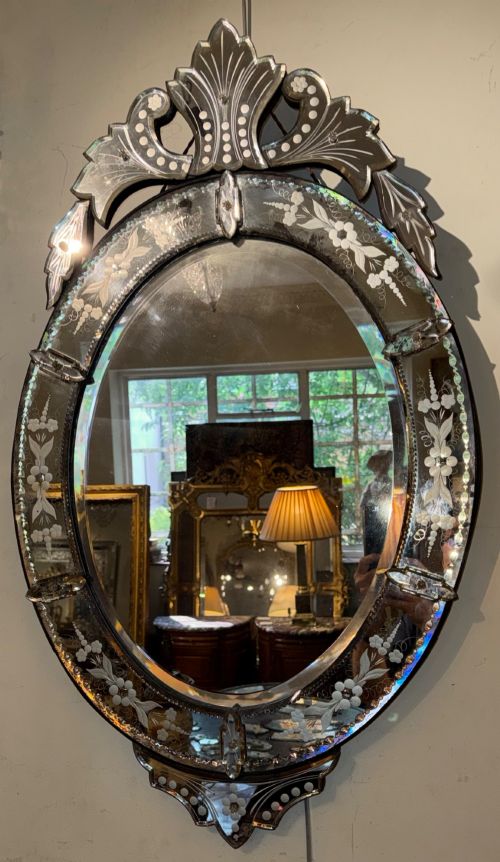
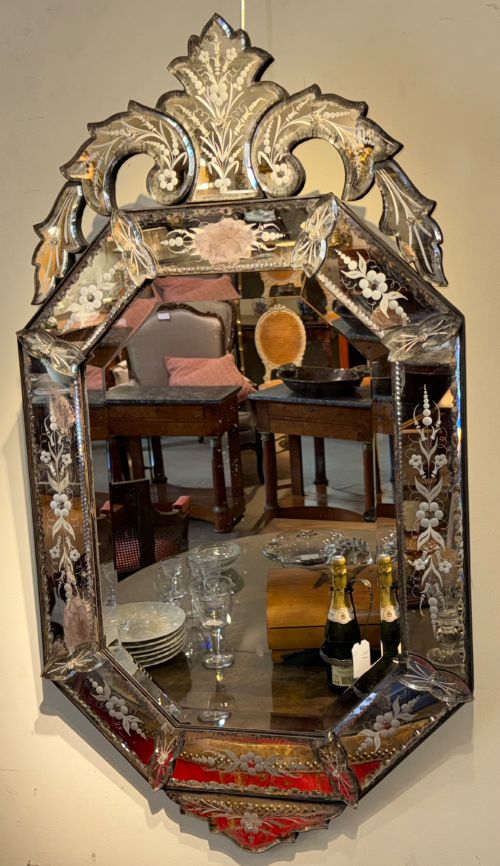
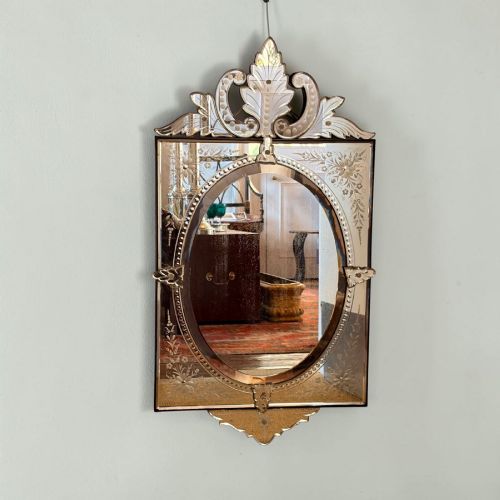
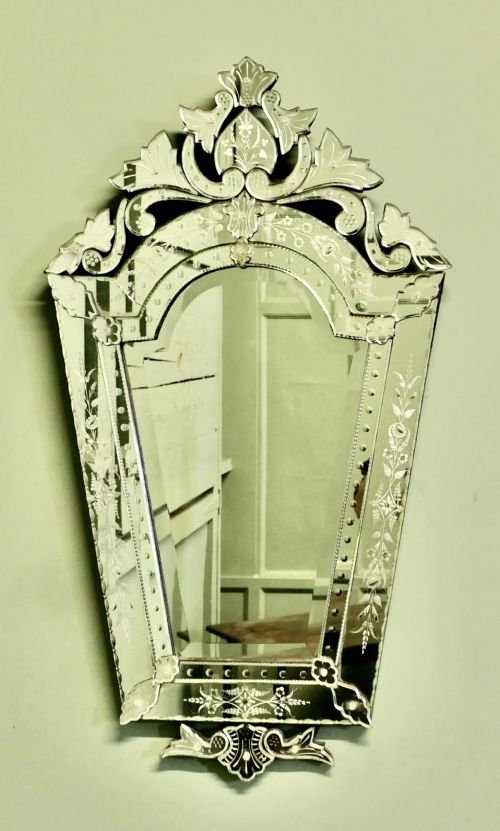
These venetian crest mirror examples bring dramatic silhouettes and brilliant luminescence to a room, drawing the eye with elaborate glass work and ornate crestings.
Venetian Crest Mirror
A venetian crest mirror forms a distinct category of wall decoration defined by an elaborate upper crown or cresting above the central glass plate. These pieces bridge traditional Italian craftsmanship and decorative wall furnishings from various eras.
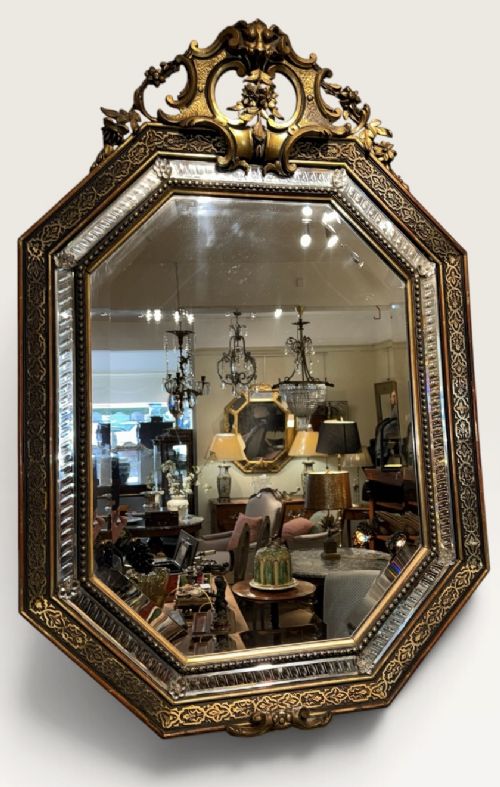
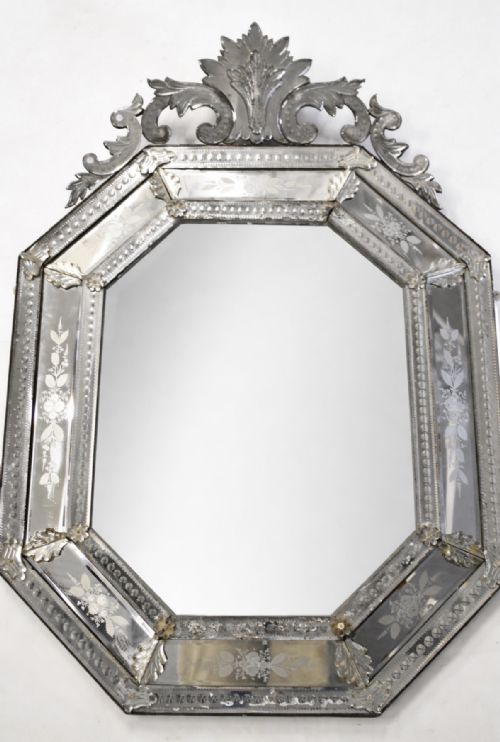
The versions met most frequently range across the nineteenth century and into the twentieth century, including Edwardian interpretations and Art Deco variations. Wall mirrors dominate the selections, appearing alongside cushion frames and octagonal formats.
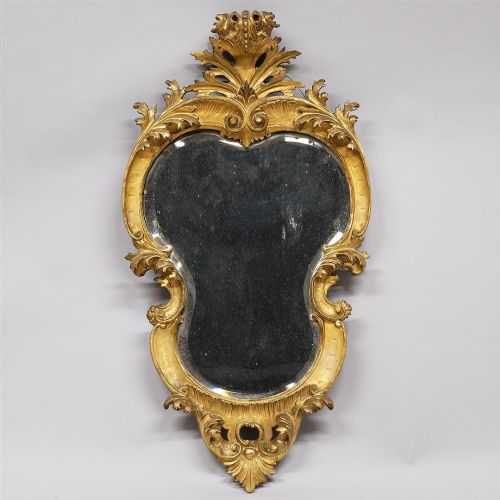
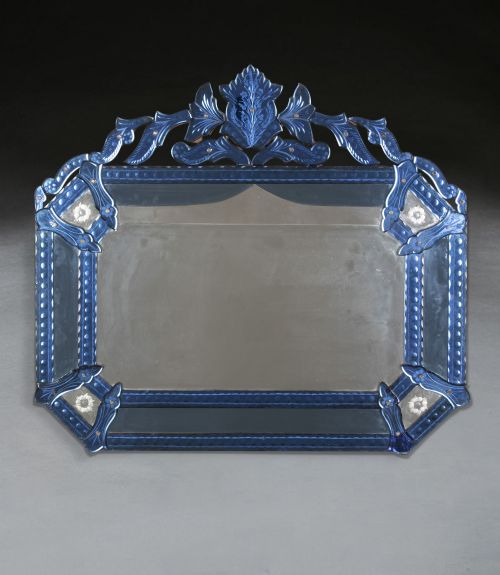
Origins trace primarily to Venetian and Italian workshops, though French Rococo influence appears in select nineteenth-century pieces. Buyers encounter both clear silvered glass plates and examples featuring coloured borders in ruby red or blue glass.
Materials and construction
Construction relies upon a combination of wood frames, metal supports, and specialised glass components such as mirrored glass and silvered glass. Giltwood and gilt bronze frequently provide the foundational structure for elaborate frames and crestings.
Craftsmen utilised techniques including cutting, etching, and bevelling directly onto the glass plates to create decorative borders and reflective motifs. The integration of separate glass sections into the frame requires precise assembly by skilled hands.
Venetian Crest Mirror Retail Price Guide 2026
Typical asking prices for venetian crest mirror among the pieces listed under this phrase on Sellingantiques today, from the lower quarter to the upper quarter. They describe what is for sale here now, not the wider market.
Listings feature periods spanning from the eighteenth century through the Edwardian era up to the 1950s, utilising wood, metal, and glass.
Judging quality in execution
Quality separates by the depth and precision of the cut and etched glass details on both the main plate and the cresting. Superior examples display crisp lines and deliberate hand-bevelling rather than mechanical uniformity.
The integrity of the underlying wooden or gilt framework dictates the structural success of the piece, particularly where heavy crests attach to the main mirror body. Preservation of the original silvering and balanced foxing contribute significantly to the character of older plates.
The Venetian Crest Mirror Glossary
- Crest
- The ornamental top feature of a mirror frame. It often incorporates cut glass or carved giltwood to provide height and drama.
- Foxing
- The natural ageing process of mirrored glass resulting in small dark spots and atmospheric patination. This occurs as the silver backing degrades over decades.
- Giltwood
- Timber treated with a thin layer of gold leaf or gold paint. It appears widely on nineteenth-century frames and decorative crests.
- Silvered glass
- Glass coated with a reflective metallic substance on the rear surface. This process creates the mirror effect seen in wall furnishings.
- Bevelling
- The practice of angling the edges of a glass plate down towards the perimeter. This technique catches light and adds visual depth.
Venetian Crest Mirror: Frequently Asked Questions
How do I hang a heavy venetian crest mirror securely?
These mirrors require robust wall anchors matched to the weight of the wood and glass construction. Professional installation is recommended to support the fragile cresting.
Ensure the hanging wire or brackets engage directly with wall studs rather than plaster alone. Distributing the load prevents stress on the joints where the crest meets the main frame.
What is cushion framing on these mirrors?
Cushion framing involves curved or domed glass sections sloping outward from the central plate toward the edge. This volumetric shape enhances light reflection across the room.
Such configurations require meticulous glass-cutting techniques to fit adjacent pieces together seamlessly. The design remains characteristic of traditional Venetian production.
How should I clean an antique glass mirror?
Maintenance requires mild cleaning solutions applied sparingly with a soft microfiber cloth rather than harsh chemical sprays. Avoid letting moisture seep behind the glass plates.
Gentle care preserves the fragile silvered backing and prevents damage to aged foxed areas. Regular dusting protects the delicate etched surfaces from abrasion.
How do I distinguish eighteenth-century pieces from later revivals?
Earlier examples exhibit hand-beaten silvering techniques and distinct irregularities in the glass plate structure. Eighteenth-century mirrors often show specialised hand-cut detailing specific to Venetian ateliers.
Later nineteenth- and twentieth-century revivals utilise more uniform machine-bevelling and standardised frame construction. Comparing the ageing patterns on the wooden backing helps confirm the period.