


Venetian Cityscape Artwork
Venetian cityscape artwork captures the light and water of the canals through oil and watercolour, bringing historic Italian palaces into a room.
Venetian Cityscape Artwork
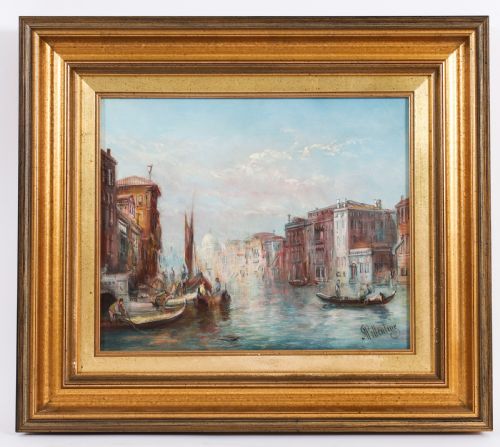
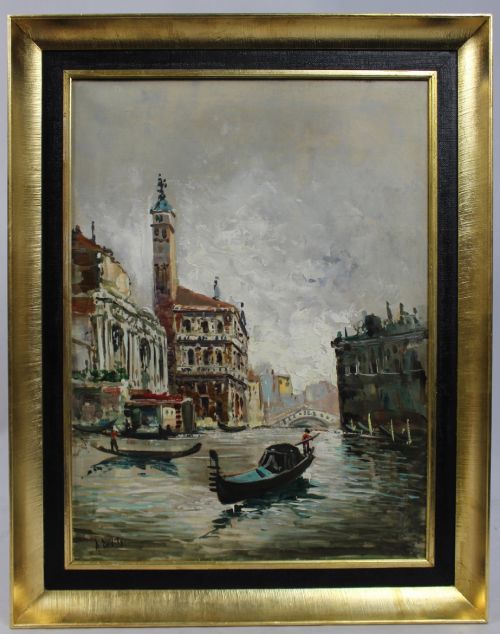
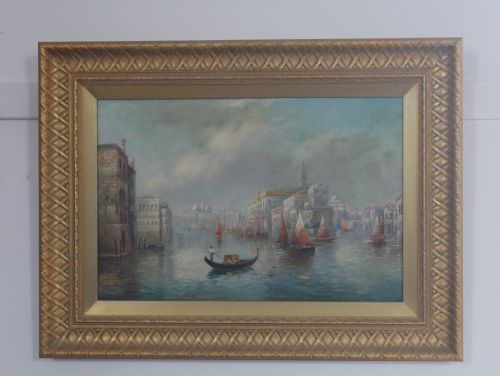
When buyers search for venetian cityscape artwork, they encounter framed paintings depicting the canals, lagoons, and historic landmarks of Venice. These pieces primarily record iconic subjects such as the Grand Canal, the Doge's Palace, and Santa Maria della Salute. The selection spans the nineteenth century through the mid-twentieth century, encompassing Victorian fine art and mid-century impressionism.
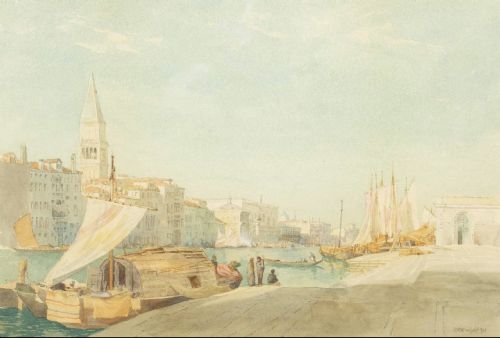
Nineteenth-century oils and watercolours dominate the selection, often portraying the architecture with precise detail or atmospheric light. Later works introduce mid-century impressionist and expressionist approaches, using bolder brushwork to capture the city. Buyers find both expansive canvases showing wide lagoon views and intimate watercolours focusing on gondolas passing beneath bridges.
Materials and Technique
Artists record the light of the lagoons using oil paint applied to canvas or board, alongside delicate watercolours on paper. Pastels, gouache, and ink pen drawings also appear, capturing the textures of old stone mansions and shimmering water. Giltwood and gilded frames enclose many of the works, complementing the historic scenes.
Makers handle pigment to emphasise the reflection of sunlight on water and the shadows of ancient palazzos. Nineteenth-century academic methods give way in later decades to looser impressionist marks, while watercolours rely on transparent washes to suggest atmospheric haze.
Listings feature oil on canvas, watercolour, pastel, gouache, and ink, set within period giltwood frames from the nineteenth and twentieth centuries.
Variations in Quality
Quality rests in the precision of the architectural perspective and the handling of atmospheric light upon the water. Works by established nineteenth-century painters or recognised impressionists demonstrate superior command of colour harmony and depth. The framing also contributes, as period giltwood enhances the visual weight of an oil painting.
Compositional balance separates standard townscapes from compelling visual records of the lagoon. Stronger pieces capture the distinct texture of crumbling masonry and the movement of gondolieri with confident brushwork. Weaker examples rely on formulaic repetition without engaging the specific atmosphere of the Venetian canals.
Alfred Pollentine·Antonio DeVity·Claude Jousset·Jane Vivian·Antoine Bouvard Senior
The Venetian Cityscape Artwork Glossary
- Grand Canal
- The main waterway of Venice, lined with historic palaces and depicted frequently in nineteenth and twentieth-century paintings. It provides artists with wide vistas of bustling boat traffic and grand architecture.
- Dogana
- The historic customs house of Venice situated at the tip of the Dorsoduro district. It appears often in paintings alongside the adjacent basilica.
- Giltwood
- Wood carved and coated with gold leaf to form ornate picture frames. These frames frequently accompany nineteenth-century oil paintings.
- Gouache
- An opaque water-based medium used alongside pastels and ink to render luminous Venetian scenes on paper. It offers heavier coverage than traditional watercolour.
Venetian Cityscape Artwork: Frequently Asked Questions
What periods do these artworks cover?
The works span from the nineteenth century through the Victorian era and into the mid-twentieth century.
Artists working across these periods recorded the architecture and waterways using traditional oils or impressionist watercolours.
Which landmarks appear most often?
Painters frequently depict the Grand Canal, the Doge's Palace, and the Salute from the lagoon.
Views of the Bridge of Sighs and San Simeone Piccolo also feature regularly across the selections.
Are these works painted on canvas?
Many pieces utilise oil paint on canvas or board, while others employ watercolour on paper.
Some mid-century works incorporate mixed media, pastels, gouache, or ink pen drawings.
How should I frame a watercolour?
Watercolours require conservation mounting behind glass to protect the paper from humidity and light damage.
Original period frames complement the historical nature of nineteenth-century pieces when appropriate.