


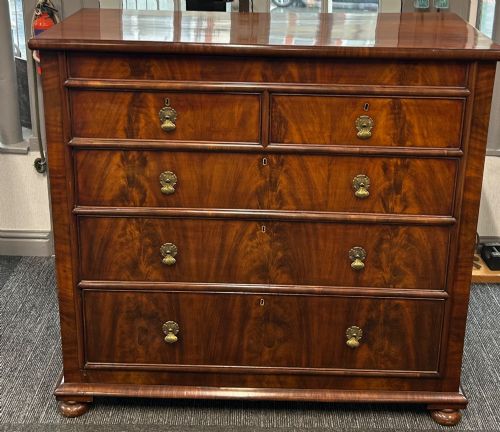


Veneered Wooden Chest
A veneered wooden chest brings figured grain and centuries of cabinet-making skill into a room, offering both storage and a striking focal point.
Veneered Wooden Chest
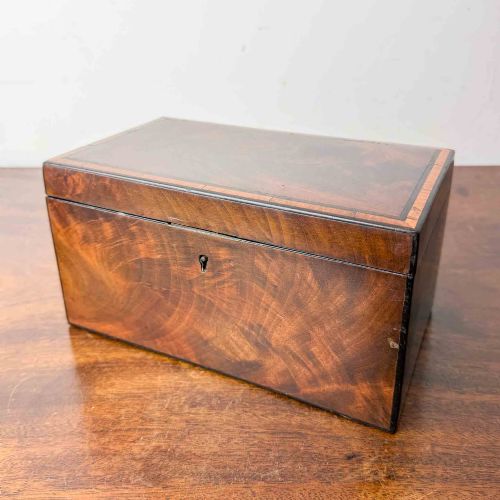
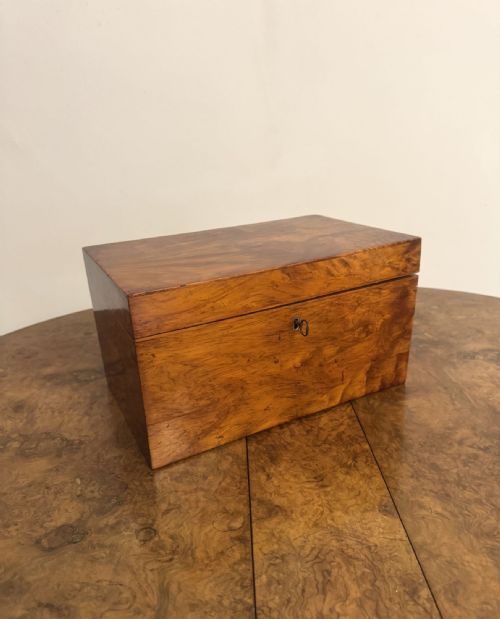
When you search for a veneered wooden chest, you encounter a wide selection of storage forms that showcase decorative sliced timber surfaces across several centuries. The selection ranges from compact tea caddies and collectors boxes to large chests of drawers, commodes and cabinets on stands originating from seventeenth-century workshops through to the Victorian era and beyond.
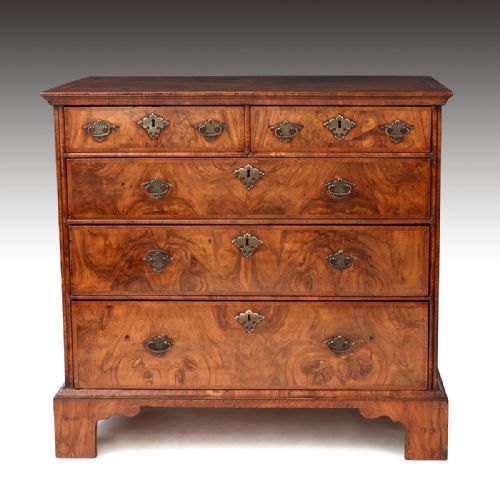
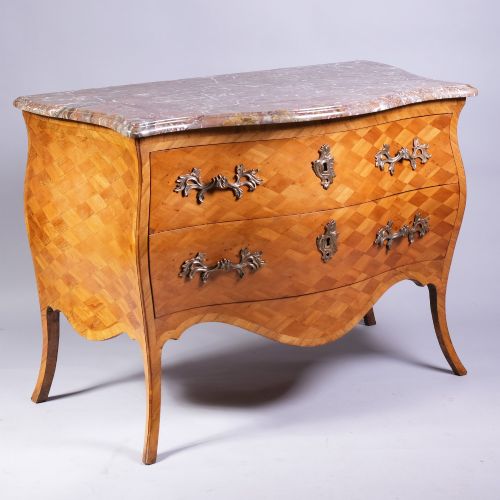
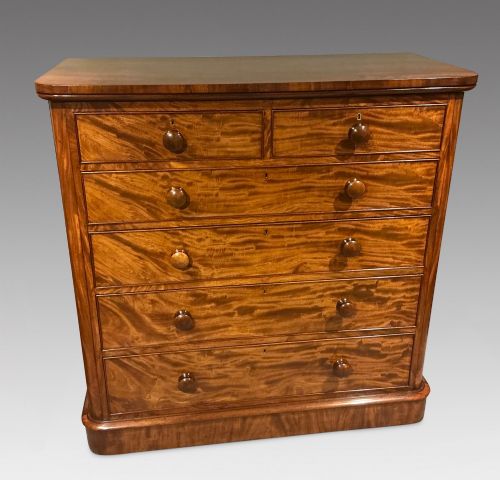
You are most likely to meet substantial chests of drawers and commodes finished in figured mahogany or walnut, alongside smaller tea chests and decorative boxes. These pieces reflect diverse regional aesthetics, including English William and Mary, Georgian and Regency designs, alongside continental Biedermeier and French commodes.
How they were made
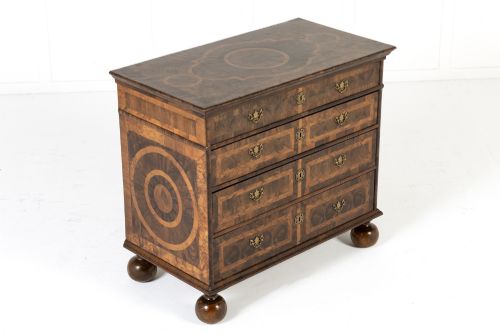
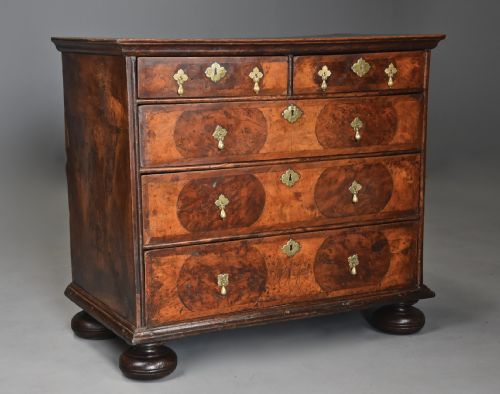
Cabinet-makers laid thin decorative veneers of timbers such as walnut, kingwood, mahogany, laburnum and olive wood onto secondary structural carcases made of oak or pine. Many early examples utilise intricate oyster veneering, arranging cross-sections of branches into geometric patterns across the surfaces.
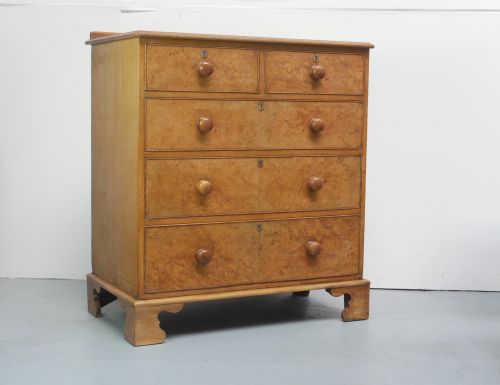
Makers also employed marquetry and parquetry techniques, arranging contrasting woods like yew, amboyna, burr ash and partridge wood into detailed pictorial or geometric designs. Brass hardware, including handles and escutcheons, was typically fitted to secure drawers and doors.
Veneered Wooden Chest Retail Price Guide 2026
Typical asking prices for veneered wooden chest among the pieces listed under this phrase on Sellingantiques today, from the lower quarter to the upper quarter. They describe what is for sale here now, not the wider market.
Periods range from late seventeenth-century William and Mary examples to mid-Victorian and Biedermeier pieces.
What varies in quality
The quality of a piece depends heavily on the choice and matching of the timber veneers, with symmetrical grain patterns and richly figured burr surfaces commanding higher regard. The skill of the original execution shows in how evenly the veneer was laid and how cleanly the decorative stringing or parquetry was integrated into the carcase.
Proportion and structural integrity also separate standard items from finer works, visible in the harmony of the drawer arrangements, the crispness of any applied mouldings, and the survival of the original brass handles and stands.
R H & J Simpson
The Veneered Wooden Chest Glossary
- Oyster veneer
- A method of cutting small branches obliquely to produce circular or oval motifs resembling oyster shells. These cross-sections were arranged closely together to cover entire drawer fronts or tabletops in decorative patterns.
- Commode
- A low cabinet or chest of drawers developed in France during the seventeenth century and later adopted across Europe. They typically feature wide drawers and decorative marble or faux marble tops.
- Tea caddy
- A small box or chest designed specifically for storing dry tea leaves securely. They often feature internal lidded compartments and are finished in fine veneers such as mahogany, amboyna or burr thorn wood.
- Marquetry
- The art of applying pieces of veneer to a structural structure to form decorative patterns or pictures. Craftsmen used various coloured woods to create intricate floral or geometric designs.
- Cabinet on stand
- A tall storage cabinet elevated on an integrated support frame or table base. This form was particularly popular during the seventeenth century, displaying elaborate walnut or kingwood veneers.
Veneered Wooden Chest: Frequently Asked Questions
What is an oyster veneer?
An oyster veneer is created by slicing small tree branches or roots transversely to produce small, circular discs with rich grain patterns. Craftsmen arranged these discs closely together across the surface of a chest to form decorative, repeating motifs.
This technique was particularly favoured during the late seventeenth century on walnut, olive wood and laburnum pieces.
How do I identify a William and Mary chest?
William and Mary chests typically date from the late seventeenth or very early eighteenth century and often feature distinctive geometric paneling or oyster veneer patterns. They frequently stand on raised bases, bun feet or integrated stands rather than resting directly on the floor.
Secondary timbers on these pieces are commonly oak, and the hardware often includes drop handles mounted on brass plates.
Where were Biedermeier chests made?
Biedermeier chests originate from Central Europe, primarily German-speaking regions, during the nineteenth century. They are characterised by a focus on clean architectural lines, minimal ornamentation, and blonde figured timbers such as ash or birch.
These pieces were designed for comfortable middle-class homes, prioritizing warm wood grain and practical proportions over heavy carving.
How should I care for a veneered surface?
Veneered furniture requires protection from direct sunlight and sudden changes in temperature or humidity, which can cause the thin wood layers to lift or split. Dusting regularly with a dry cloth and occasionally applying a suitable wax helps maintain the finish.
Avoid using modern liquid polishes or placing damp items directly on antique wood surfaces.