



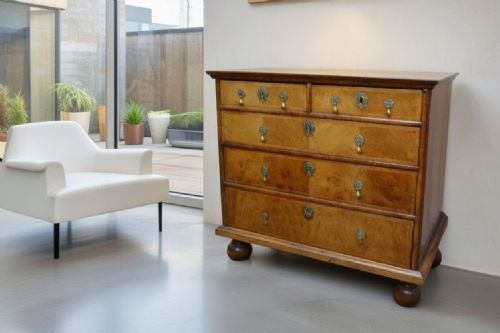


Veneered Walnut Commode
A veneered walnut commode brings warmth and rich grain to a room through centuries of cabinet-making skill.
Veneered Walnut Commode
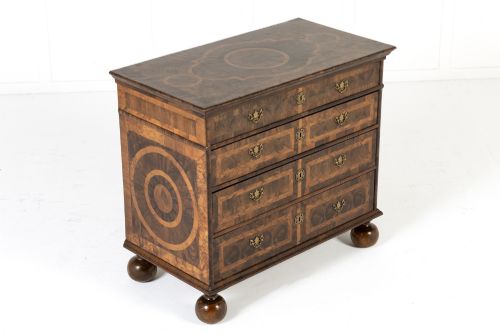
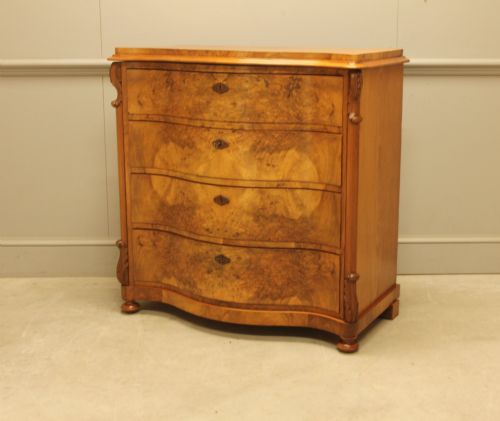
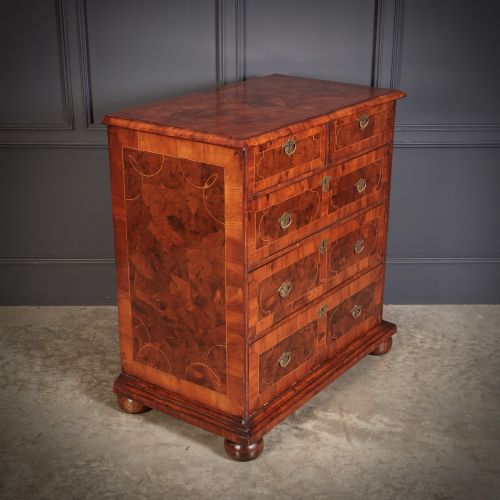
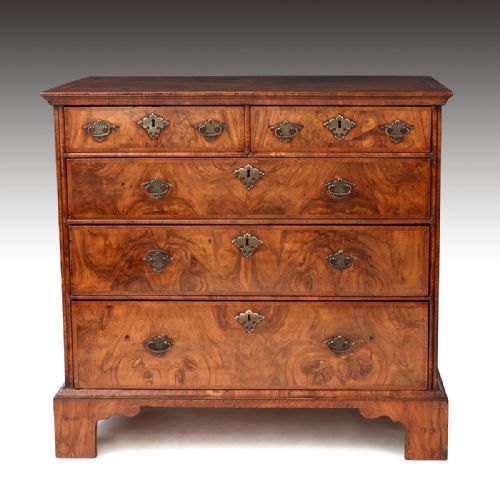
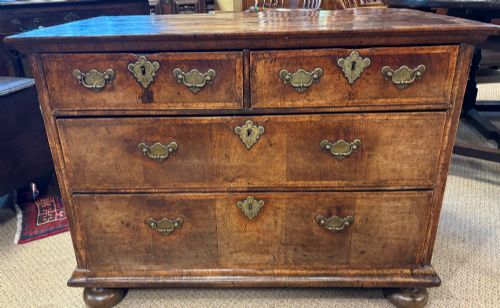
A veneered walnut commode is a storage chest defined by figured timber surfaces applied to a secondary carcass, spanning styles from William and Mary and Queen Anne periods to Biedermeier and 19th-century European designs. Buyers searching this phrase encounter low chests of drawers, shaped front commodes, and cabinets utilising decorative wood slices.
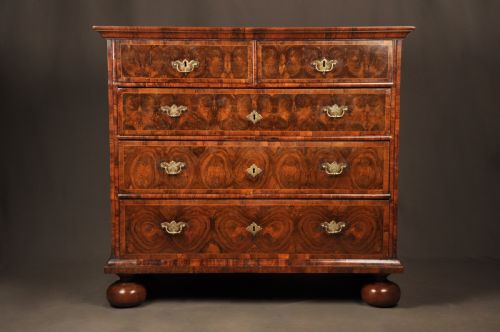
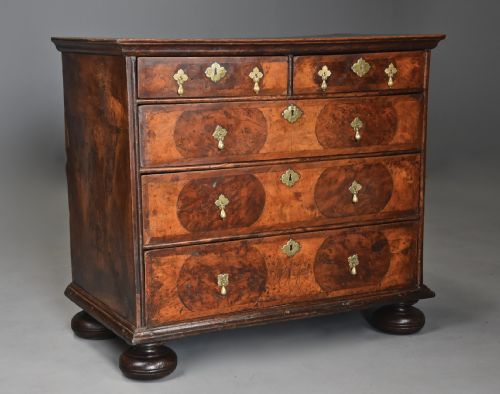
Early examples frequently showcase intricate oyster veneer laid in circular or geometric patterns, often using olive, laburnum, or walnut laid over oak foundations. Later 19th-century pieces bring smoother blonde figured walnut or serpentine proportions suited to continental tastes.
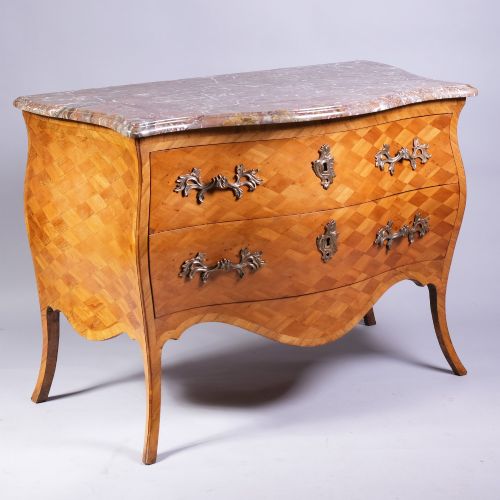
The most common forms on this page include William and Mary period chests and French or Swedish marble-topped commodes. These pieces serve as practical bedroom or hallway storage while acting as decorative focal points through their distinct wooden surfaces.
Materials and construction
Cabinet-makers constructed these pieces by applying thin cross-grain slices, known as oyster veneer, or burr walnut sheets onto sturdy primary and secondary woods like oak and pine. This technique maximised the visual impact of expensive, highly figured timber while maintaining structural stability across large drawer fronts.
Master craftsmen enhanced the timber using boxwood stringing, brass handles, and occasionally inlaid marquetry details to frame the natural grain patterns. Tops of later continental commodes frequently incorporated fitted marble slabs, combining heavy stone surfaces with warm wooden cabinetry.
Veneered Walnut Commode Retail Price Guide 2026
Typical asking prices for veneered walnut commode among the pieces listed under this phrase on Sellingantiques today, from the lower quarter to the upper quarter. They describe what is for sale here now, not the wider market.
Regional styles represented on this page range from Dutch Baroque and William and Mary to Biedermeier and nineteenth-century Swedish designs.
Quality factors in walnut furniture
The standard of a piece rests heavily on the depth and complexity of the timber figuring, whether in the matching of burr walnut sheets or the precision of circular oyster veneer cuts. Superior examples maintain intact, harmonious grain patterns across every drawer front without distracting patch repairs.
Construction methods and surface preservation distinguish exceptional historic pieces from simpler work. Original brass hardware, crisp edge banding, and timber retaining a warm, natural patina reflect the skill of the original workshop and careful historic upkeep.
The Veneered Walnut Commode Glossary
- Oyster veneer
- A method of cutting small branches or roots across the grain to produce small circular or oval wooden discs resembling oyster shells. These pieces fit together in geometric arrangements across drawer fronts and tabletops.
- Burr walnut
- Timber taken from a tree growth or excrescence, yielding highly twisted, knotted grain patterns prized for decorative furniture surfaces. It appears frequently on high-status chests and commodes.
- Biedermeier
- A Central European style dating to the nineteenth century, known for clean lines, restrained ornamentation, and blonde figured timbers. Pieces from this movement focus on domestic comfort and polished wooden surfaces.
- Serpentine
- A furniture front or tabletop shaped with a convex centre flanked by concave curves, creating a gentle wave effect. This curved profile requires advanced woodworking skill.
- Marquetry
- The art of applying small pieces of veneer to a structure to form decorative pictures or geometric patterns. Makers used contrasting timbers like boxwood to achieve detailed pictorial designs.
Veneered Walnut Commode: Frequently Asked Questions
What is an oyster veneered chest?
An oyster veneered chest is a storage piece surfaced with small round timber slices cut across small branches. These circular segments create detailed geometric patterns across the front and top.
Such pieces typically date from the late seventeenth century during the William and Mary period. The technique highlights the natural rings and variations of walnut, olive, or laburnum wood.
How do I care for a walnut commode?
Caring for a walnut commode involves keeping it away from direct sunlight and maintaining stable room humidity to protect the delicate surface veneers. Gentle dusting with a soft cloth preserves the historic finish without stripping natural oils.
Avoid placing wet items or harsh chemical cleaners directly onto the wooden or marble surfaces. Regular, minimal maintenance keeps the antique wood stable and maintains its historic character.
What is the difference between a chest and a commode?
A chest of drawers generally refers to traditional British storage furniture featuring stacked drawers for clothing and linens. A commode often points toward continental European designs, frequently featuring shaped fronts or marble tops.
Both terms describe low storage furniture used across bedrooms and living spaces. The distinction often relates to regional cabinet-making traditions and stylistic origins rather than function.
How can I date an antique walnut commode?
Dating these pieces requires examining construction techniques, drawer linings, handle fixings, and overall stylistic markers such as bracket feet or serpentine shaping. Seventeenth-century examples often display oyster veneer and oak carcases, while nineteenth-century pieces show different timber preparations and softer lines.
Comparing hardware marks, wood shrinkage, and secondary timbers helps establish the likely decade of manufacture. Each period leaves distinct physical clues within the internal structure.