

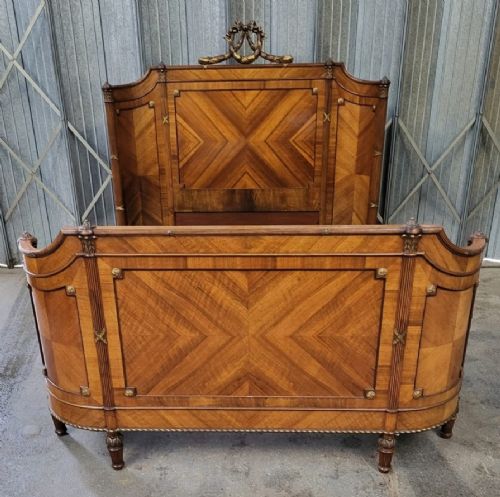


Veneered Bed Frame
A veneered bed frame brings rich timber figures and strong geometric or classical lines into the bedroom, offering warmth and presence.
Veneered Bed Frame
A veneered bed frame represents substantial sleeping furniture constructed with thin layers of decorative wood applied to a stable underlying structure. When you search for a veneered bed frame, you encounter large furniture pieces designed to serve as the visual anchor of a bedroom. The selection spans distinct eras, from nineteenth century continental pieces to twentieth century designs.
The most common examples on this page date from the nineteen thirties, showcasing the bold curves and figured grains typical of the Art Deco period. Alongside these, you find Edwardian mahogany bedsteads and earlier French styles finished in walnut or satinwood. These frames arrive in various sizes, ranging from single widths up to king size proportions.
Makers utilised different timbers to achieve specific visual effects, pairing deep walnut with lighter contrasting woods like satinwood or fruitwood. Ormolu mounts and iron structural elements appear on select continental examples to enrich the overall composition. Each piece demonstrates how cabinetmakers used figured veneers to create decorative impact across the headboard and footboard.
How they were made
Cabinetmakers constructed these bed frames by applying thin slices of decorative timber over sturdier secondary woods to display striking grain patterns. Figured walnut, burr mahogany, and satinwood veneers were meticulously laid out in symmetrical arrangements across large flat surfaces and curved panels. This technique allowed artisans to showcase complex natural patterns that solid timber planks rarely provided.
French and Art Deco pieces often employed curved or serpentine wooden forms, requiring skilled manipulation of veneers over shaped wooden cores. Ormolu mounts were cast and applied to accent corners and focal points on classical continental designs. Iron components frequently reinforced the internal structure and side rails to ensure stability under daily use.
Veneered Bed Frame Retail Price Guide 2026
Typical asking prices for veneered bed frame among the pieces listed under this phrase on Sellingantiques today, from the lower quarter to the upper quarter. They describe what is for sale here now, not the wider market.
Listings feature walnut, mahogany, satinwood, and fruitwood materials across periods spanning the Edwardian era, nineteen tens, and nineteen thirties.
What varies in quality
The quality of a veneered bed frame rests primarily on the selection and matching of the wood veneers across the main visual panels. Finer examples display continuous, book-matched grain patterns that flow symmetrically across the headboard and footboard. Lesser pieces show random grain selection or simpler timber cuts without the same depth of figure.
Construction methods also distinguish standard production from superior craftsmanship, particularly in how curved sections and joints are handled. Superior pieces integrate Ormolu mounts and secondary woods like satinwood or fruitwood with precision, while simpler designs rely on straightforward mahogany or walnut surfaces.
The Veneered Bed Frame Glossary
- Veneer
- A thin layer of valuable or decorative wood applied to a base material of commoner timber. This method allows makers to display striking natural grain patterns across large furniture surfaces.
- Figured walnut
- A walnut timber displaying irregular, highly decorative growth patterns such as curls or waves. Cabinetmakers prized this material for its visual movement on prominent furniture facades.
- Ormolu
- Gilded bronze or brass used for decorative mounts and decorative enrichment on furniture. French styles frequently incorporate these metal elements to highlight structural contours.
- Satinwood
- A pale, hard wood with a natural sheen, often used for contrasting inlays and panels. It provides a bright visual counterpoint to darker timbers like walnut.
- Book-matching
- A veneer technique where adjacent slices of wood are opened like a page to mirror each other. This creates symmetrical patterns that enhance the decorative appeal of the bed frame.
Veneered Bed Frame: Frequently Asked Questions
How do I choose the right size?
Check the internal dimensions of the bedstead against your mattress size before purchasing, as older frames can vary from modern standards. Consider the height of the headboard to ensure it fits comfortably beneath windows or sloped ceilings in your room.
Measure the available floor space carefully, allowing extra room for side rails and footboards, particularly on larger king size or French frames.
Are modern mattresses suitable?
Most antique bed frames accommodate standard modern mattresses if the internal length and width match contemporary sizing. You may need to add modern wooden slats or a low-profile base to provide proper support for contemporary mattress designs.
Verify the internal clearance between the side rails to ensure your chosen mattress drops securely into the frame without overhang.
How do I care for walnut veneer?
Maintain walnut veneer by dusting regularly with a soft, dry cloth and avoiding silicone-based polishes that build up over time. Keep the wood away from direct sunlight and strong heat sources to prevent the natural timber from drying out or fading.
Apply a quality beeswax polish occasionally to nourish the surface and preserve the natural lustre of the veneer.
How do I identify Art Deco pieces?
Art Deco bed frames typically feature streamlined geometric shapes, curved silhouettes, and highly figured walnut veneers. Look for fan-shaped details, blonde satinwood contrasts, and a distinct lack of fussy ornamentation.
These nineteen thirties designs emphasise smooth, uninterrupted expanses of wood grain rather than carved flourishes or traditional revival motifs.