



Velvet Piano Bench
A velvet piano bench brings useful seating and period texture to a room, offering the plush comfort of period fabric over a sturdy timber frame.
Velvet Piano Bench
A velvet piano bench is typically found in forms such as piano stools, music stools, duet benches, and window seats originating from the nineteenth and early twentieth centuries. These pieces appear in styles ranging from Victorian and Edwardian to Art Deco, Sheraton Revival, and Georgian Revival.
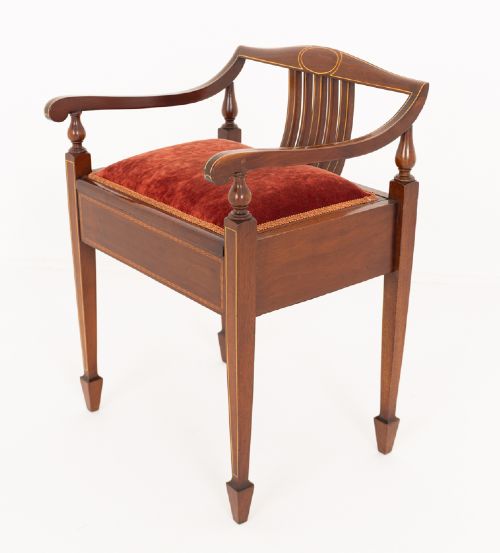
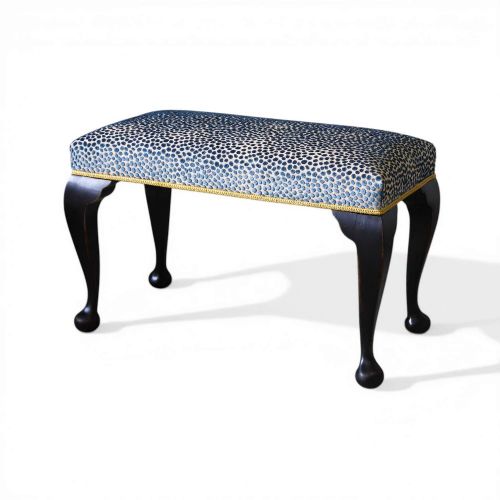
The most common versions on this page are Edwardian and Victorian mahogany piano stools, alongside occasional ebonised wood, walnut, rosewood, and giltwood examples. Many feature upholstered seats with lift-up mechanisms or revolving tops, supported by turned or cabriole legs, or X-framed structures.
Materials and construction methods
Makers built these frames using hardwoods such as mahogany, walnut, and rosewood, sometimes applying ebonising or satinwood inlay for decorative contrast. Structural details include turned legs, cabriole legs, and X-frame supports.
Upholstery utilised fabric and velvet, occasionally finished with braid trim. Brass fittings appear on mechanisms such as revolving tops and lift-up music storage compartments.
Velvet Piano Bench Retail Price Guide 2026
Typical asking prices for velvet piano bench among the pieces listed under this phrase on Sellingantiques today, from the lower quarter to the upper quarter. They describe what is for sale here now, not the wider market.
Several stools double as hidden music libraries, letting pianists stash their nocturnes right beneath their velvet seats.
Distinguishing quality across examples
Quality rests on the selection of timber and the crispness of decorative elements like satinwood inlay and giltwood carving. Solid mahogany and walnut frames demonstrate superior cabinet-making compared to simpler stained timbers.
The integration of mechanical elements, such as smoothly revolving seats or well-fitted lift-up compartments, separates standard utility pieces from finer examples. Finer upholstery detailing, including the use of quality braid and plush velvet, also elevates a piece.
The Velvet Piano Bench Glossary
- Ebonised wood
- Timber stained or painted black to imitate ebony. This finish was popular for creating a formal, high-contrast appearance in Victorian and Edwardian seating.
- Satinwood inlay
- Decorative wood veneer set into the surface of a darker timber in contrasting patterns. This technique frequently defines Sheraton Revival pieces.
- X-framed
- A structural base formed by intersecting diagonal timbers that cross to form an X shape. This design provides sturdy support for nineteenth-century stools.
- Cabriole leg
- A furniture leg featuring a double curve, typically arching outward and then inward. This form is characteristic of Victorian and revival styles.
- Revolving piano stool
- A seat designed to spin on a threaded central spindle, allowing the player to adjust their height. These often feature mahogany or rosewood frames.
Velvet Piano Bench: Frequently Asked Questions
What is a velvet piano bench used for?
These pieces serve primarily as seating for musicians at a piano or dressing table, offering a comfortable upholstered surface during practice. Many incorporate internal compartments beneath lift-up seats for storing sheet music and small accessories.
Beyond the music room, homeowners utilise them as low occasional seats, window seats, or hallway benches. Their compact proportions make them adaptable for placement at the foot of a bed or beneath a window.
How do I identify an Edwardian piano stool?
Edwardian examples often feature light mahogany frames with delicate satinwood inlay work, reflecting the Sheraton Revival style popular during the period. They frequently incorporate inlaid panels and tapered or turned legs rather than heavy carving.
Many Edwardian music stools also include lift-up upholstered seats designed to hold sheet music. This functional addition distinguishes them from earlier Victorian revolving designs.
Are these benches comfortable for daily use?
The upholstered velvet tops provide a soft seating surface suitable for extended periods of sitting at a piano or vanity. The padding thickness varies depending on the original maker and subsequent reupholstery.
While structurally robust, antique frames are built to historical dimensions which tend to be lower and more compact than modern seating. Buyers should check the height against their intended table or desk.