

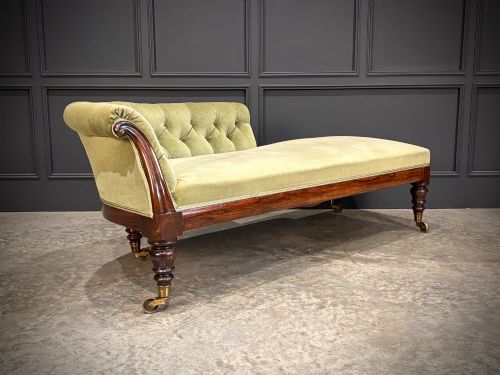
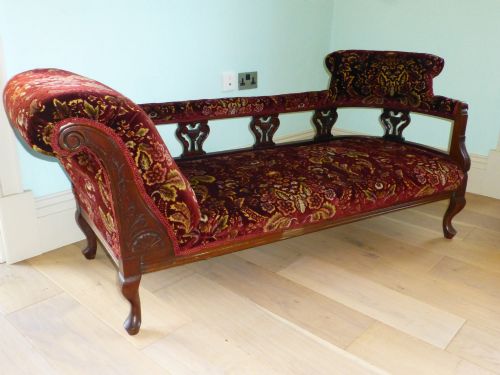
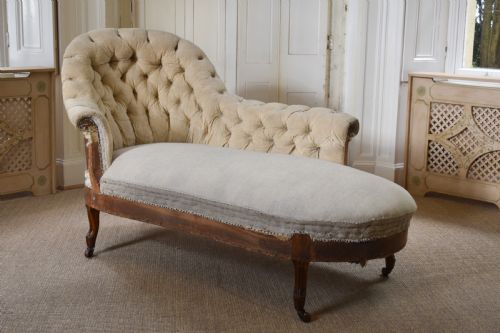
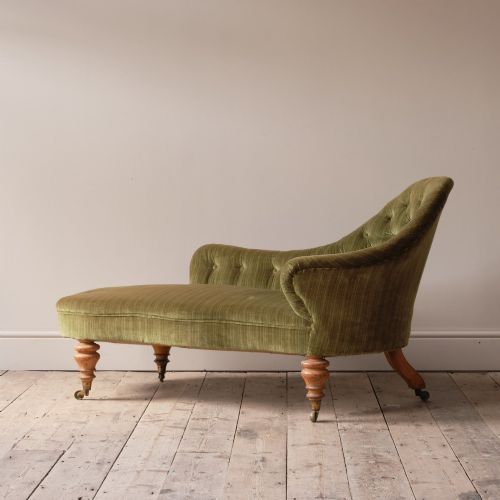
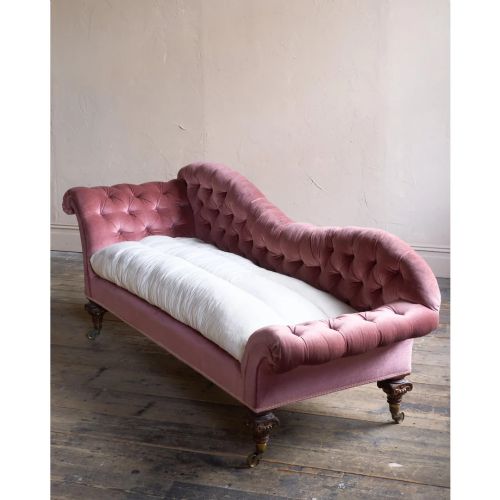


Velvet Daybed
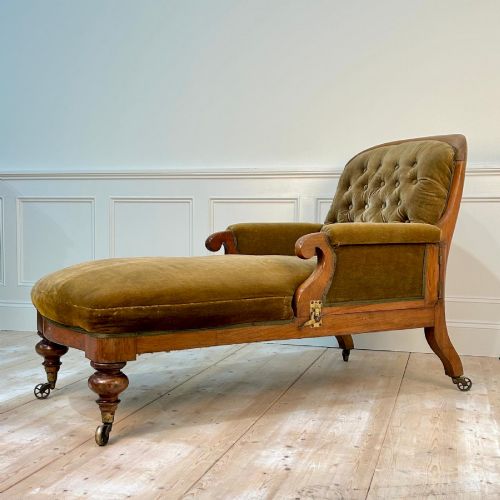
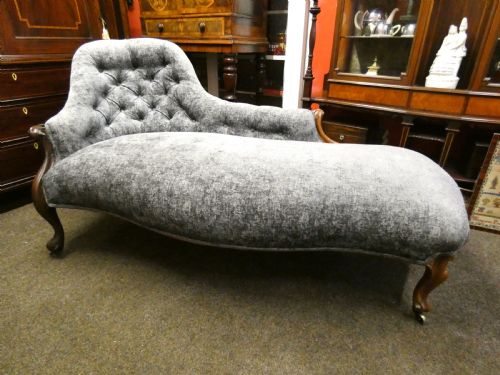
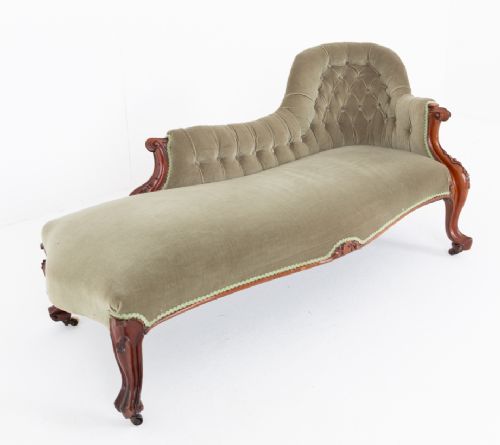
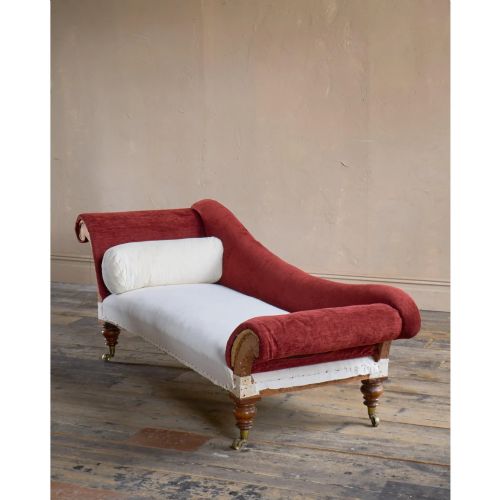
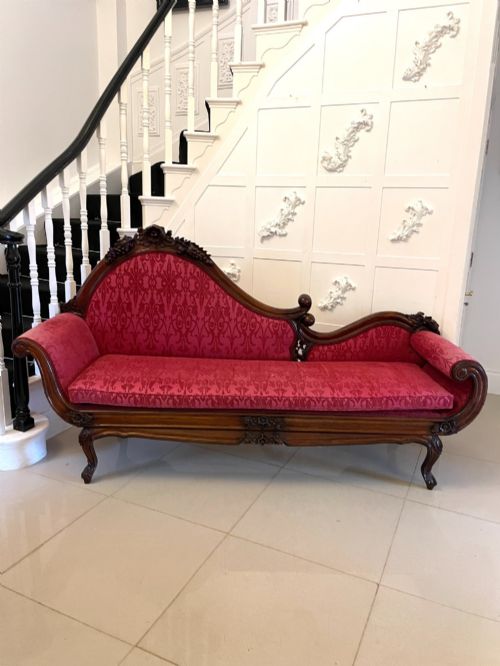
These velvet daybed pieces are nineteenth-century reclining furniture upholstered in soft pile, built for comfortable daytime lounging.
Velvet Daybed
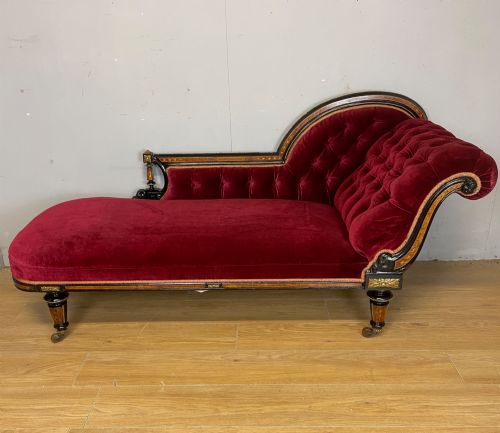
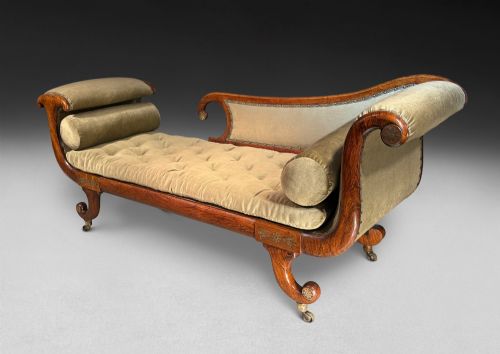
A velvet daybed combines the reclining function of a chaise longue with rich textile upholstery. These items appear primarily from the Victorian and Regency periods, spanning forms like carved mahogany frames and ebonized structures.
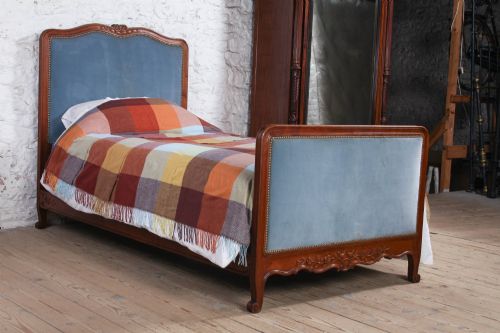
Most examples on this page take the form of nineteenth-century chaise longues, French day beds, and button-backed sofas. Shoppers encounter diverse frame styles including Grand Regency, French Napoleon III, and Arts and Crafts influences.
Makers and workshops of the era utilised various timber frames, pairing rosewood, walnut, and mahogany with supportive sprung or buttoned upholstery. The resulting furniture serves both as a functional seat and a decorative centrepiece.
Construction and materials
Makers constructed the structural frames from hardwoods such as mahogany, walnut, and rosewood, often employing ebonisation or simulated grain techniques. Brass inlay, ormolu decoration, and carved wooden details frequently adorn the woodwork.
Upholstery relies on traditional velvet fabric applied over buttoned backs and sprung cushions. Structural support integrates iron components alongside timber, while specific models feature ionic column legs and double scroll ends.
Velvet Daybed Retail Price Guide 2026
Typical asking prices for velvet daybed among the pieces listed under this phrase on Sellingantiques today, from the lower quarter to the upper quarter. They describe what is for sale here now, not the wider market.
Listings feature nineteenth-century seating constructed from mahogany, rosewood, walnut, and iron, upholstered in velvet and fabric.
Factors determining quality
Quality depends upon the depth of the timber carving and the sophistication of the frame architecture, such as intricate brass inlay or well-executed ormolu mounts. Finer pieces demonstrate superior joinery in structural elements like double scroll ends and column legs.
The execution of the upholstery work, including buttoning and fabric durability, dictates the overall finish. Pieces attributed to documented workshops display higher standards of proportion and decorative detail.
Holland and Sons·William Birch·Howard and Sons
The Velvet Daybed Glossary
- Chaise longue
- An elongated upholstered chair designed for reclining, featuring a backrest and typically one arm rest. It serves as the primary form found within these listings.
- Ormolu
- Gilded bronze ornamentation applied to furniture frames for decorative effect. This technique appears on nineteenth-century pieces alongside brass inlay.
- Ebonisation
- A wood finishing process designed to imitate ebony by staining cheaper timbers dark. Makers utilised this method on nineteenth-century frames.
- Button back
- An upholstery style where depressions are formed in the fabric by pulling ties through to the frame. This technique is common on Victorian examples.
- Regency
- An English design period spanning the early nineteenth century characterised by classical influences. Pieces from this era often feature mahogany and brass work.
Velvet Daybed: Frequently Asked Questions
What is a velvet daybed?
A velvet daybed is a nineteenth-century reclining seat upholstered in pile fabric, combining elements of a sofa and a chaise longue.
These pieces were designed for resting during the day in formal drawing rooms or parlours.
How do I date a velvet daybed?
Dating relies on examining the timber frame, decorative motifs, and upholstery style. Regency examples show classical lines and brass inlay, while Victorian pieces often feature button backs and rosewood.
Changes in furniture proportions and woodwork techniques across the nineteenth century help establish the period.
Where should I place a daybed?
These pieces suit reception rooms, studies, or large bedrooms where their decorative frames and upholstered backs remain visible.
Positioning them away from direct sunlight protects the velvet fabric from fading over time.
How do I care for antique velvet?
Antique velvet requires gentle brushing with the pile to maintain its texture and appearance. Professional cleaning is recommended for antique upholstery.
Avoiding abrasive cleaners preserves the delicate fibres of the fabric.