

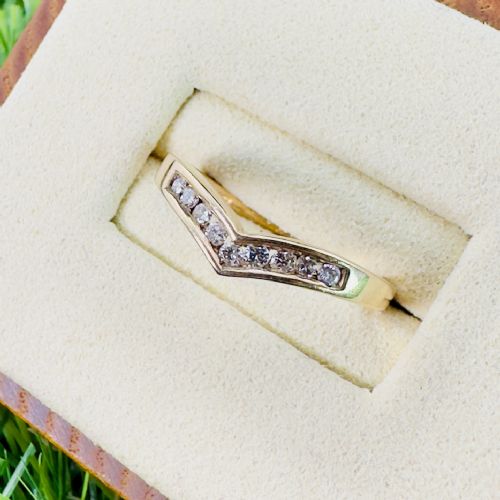


V Shaped Ring
A v shaped ring brings a distinct geometric profile to the finger, merging architectural lines with period character.
V Shaped Ring
When searching for a v shaped ring, buyers encounter distinct finger ornaments shaped with angled bands, chevron profiles, or fitted wishbone contours. These pieces span Victorian, Edwardian, and mid-century periods, often incorporating curved or pointed arches designed to sit flush against other bands.
The selections available range from plain stacking bands in yellow gold to diamond-set wishbone designs in platinum. Many examples integrate stones such as rubies, sapphires, and old-cut diamonds following the angular contours of the mount.
Originating largely from British and European workshops across the late nineteenth and twentieth centuries, these rings reflect shifting tastes from ornate cluster settings to clean mid-century geometric minimalism.
How they were made
Goldsmiths utilised durable precious metals including platinum, sterling silver, and various grades of gold, ranging from nine to twenty-two carats. These metals were cast, forged, and hand-finished to create sharp angles or smooth curves without losing structural integrity.
Gemstones such as diamonds, sapphires, and amethysts were secured using claw, flush, or cluster settings tailored to follow the specific geometry of the band. Master artisans balanced the tension of the metal with precise stone placement to ensure longevity during daily wear.
Listings feature gold, platinum, and silver alongside diamonds, sapphires, rubies, and amethysts spanning the Victorian era to the late twentieth century.
What varies in quality
The standard of a piece depends heavily on the precision of the metalwork and the uniformity of the angled geometry. Master craftsmanship reveals itself in crisp, symmetrical lines and secure stone settings that maintain their alignment over decades of use.
Material composition also dictates the standing of the piece, with heavier gauge precious metals and well-matched, lively gemstones commanding greater appreciation than lighter, mass-produced alternatives.
W. E. D. L·John Round
The V Shaped Ring Glossary
- Wishbone ring
- A band shaped into a distinct upward or downward point resembling a poultry wishbone. This design often functions as an eternity or wedding band configured to nestle against a solitaire.
- Old cut diamond
- A hand-faceted diamond cut before the standardisation of modern brilliant geometry. These stones typically feature smaller tables and larger culets, producing a softer glow under candlelight.
- Navette
- A boat-shaped or marquise outline featuring pointed ends and an elongated centre. The term applies to rings where the gemstone cluster follows this specific pointed geometry.
- Half eternity
- A ring band set with gemstones along only the top half of the circumference. This construction allows for easier sizing adjustments compared to full eternity bands.
V Shaped Ring: Frequently Asked Questions
Can a v shaped ring be resized easily?
Resizing depends entirely on the specific geometry of the band and the placement of any channel-set or pavé stones. Altering the metal at the back of the shank is usually straightforward for a skilled jeweller.
However, adjusting an angular or wishbone band risks distorting the central point or symmetry of the design. Consultation with a specialist workshop ensures the structural integrity remains intact.
How do I wear a wishbone ring with other bands?
These angled bands are traditionally designed to contour around the stone and setting of an existing engagement ring. The recessed point accommodates the centre stone, allowing both pieces to sit flush against the finger.
Alternatively, they are worn alone as a minimalist statement piece or stacked with multiple wedding bands for a textured effect.
What periods do these rings come from?
The inventory encompasses pieces from the Victorian and Edwardian eras, through the Art Deco period, up to mid-century and later twentieth-century designs. Each era brings distinct characteristics, from ornate antique clusters to streamlined modern wishbones.
Hallmarks and stylistic cues generally provide reliable indicators of a piece's specific decade of origin.
How do I care for antique gold and platinum rings?
Routine maintenance involves gentle cleaning with warm water, mild soap, and a soft-bristled brush to remove accumulated oils from beneath the stones. Harsh chemical dips should be avoided, particularly with softer gems or antique foil-backed stones.
Periodic inspection by a professional jeweller ensures that claws holding older cut diamonds or coloured stones remain tight and secure.