
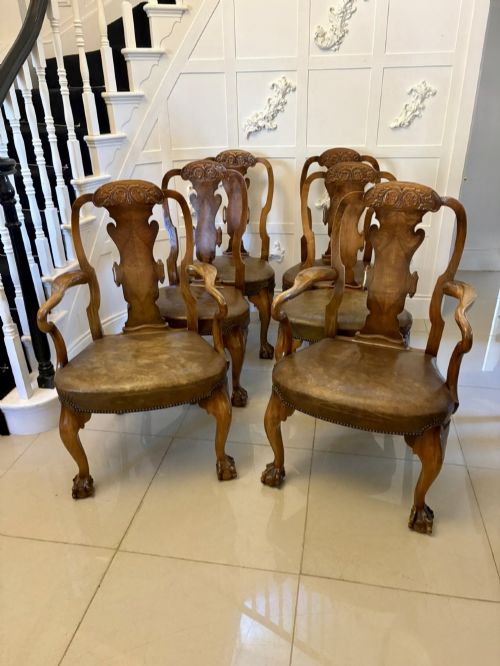


Upholstered Walnut Seating
Upholstered walnut seating brings together timber frames and rich textile coverings across Victorian, Edwardian, and Art Deco periods.
Upholstered Walnut Seating
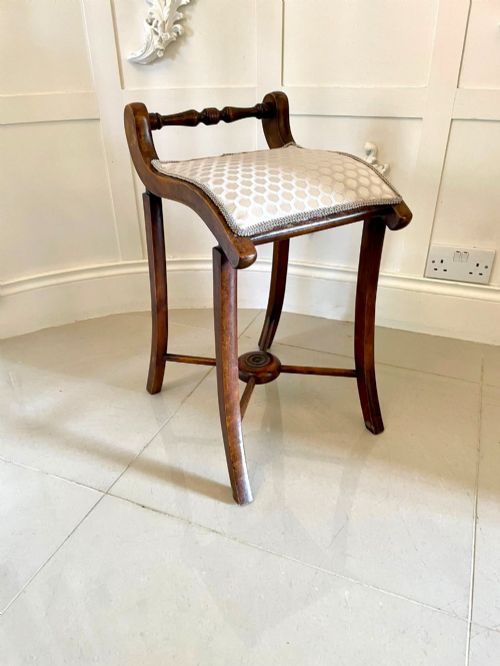
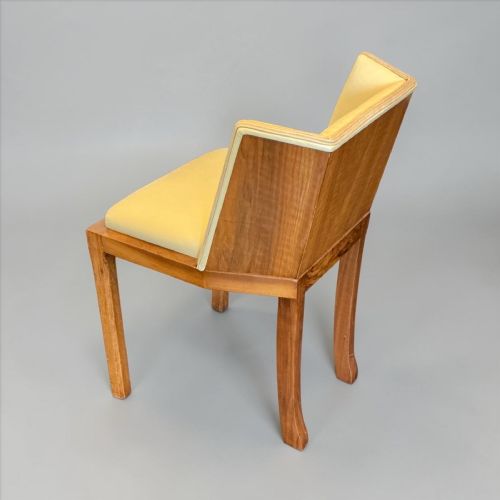
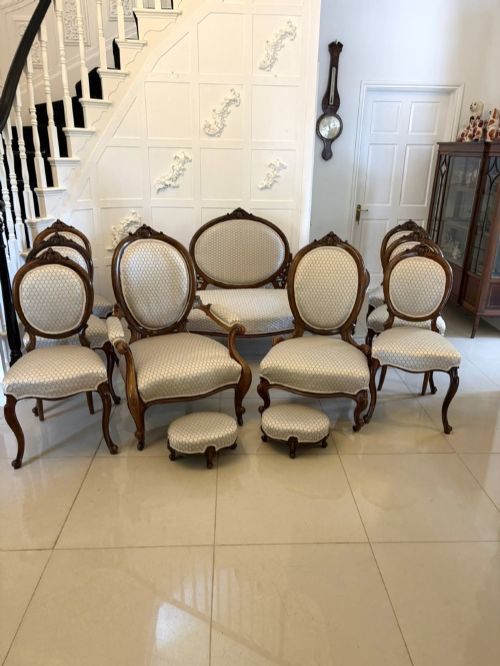
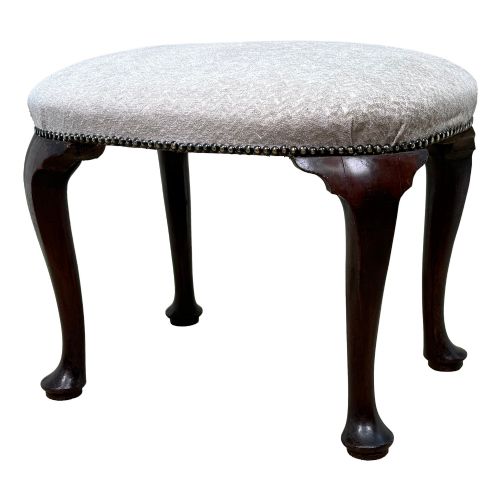
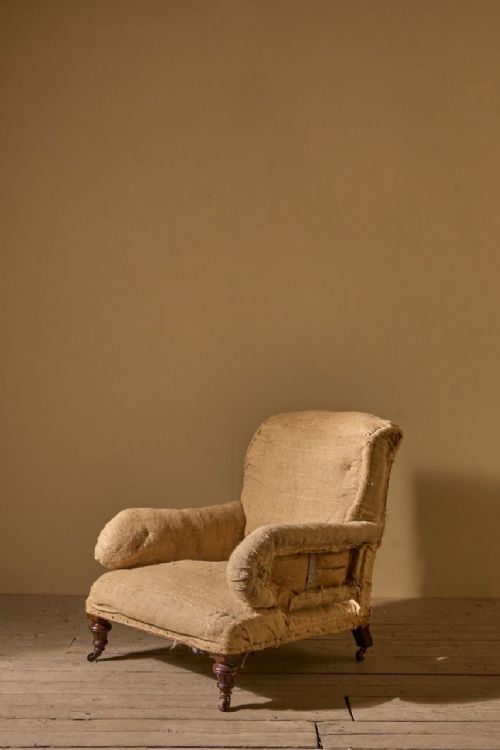
Upholstered walnut seating encompasses everything from dining chairs and armchairs to sofas, settees, and footstools. These forms appear across the 18th century, Victorian era, Edwardian period, and 1930s.
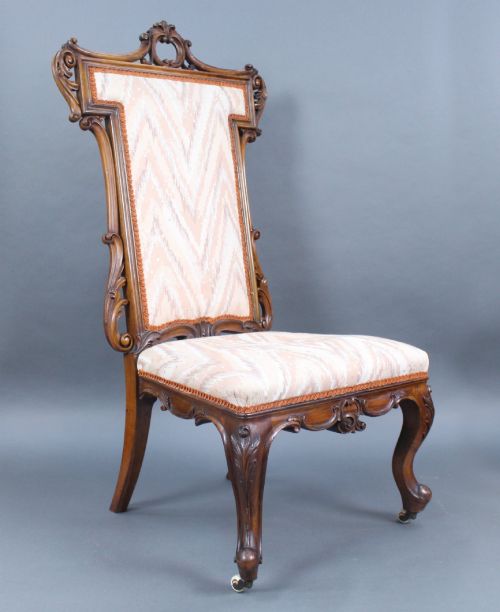
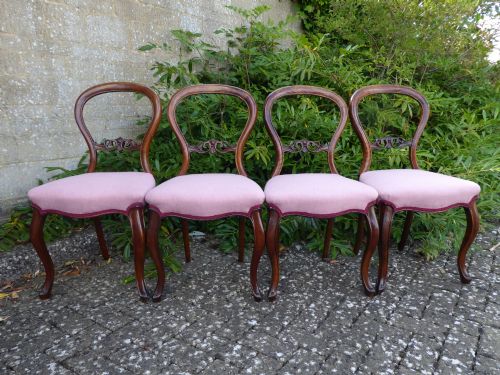
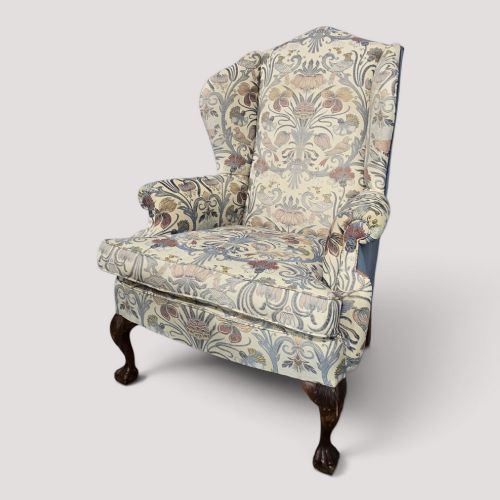
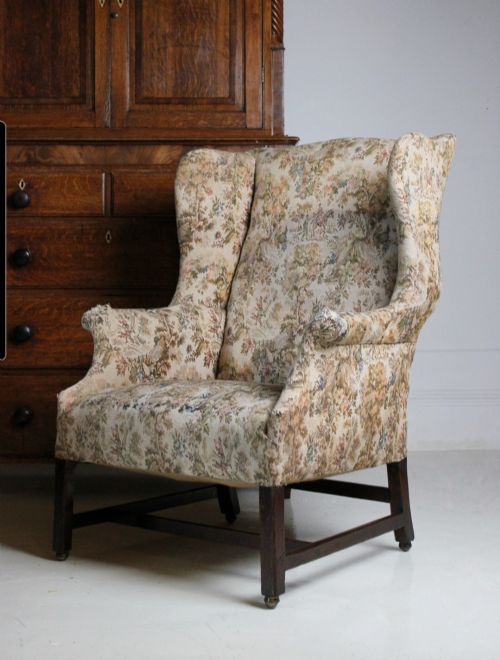
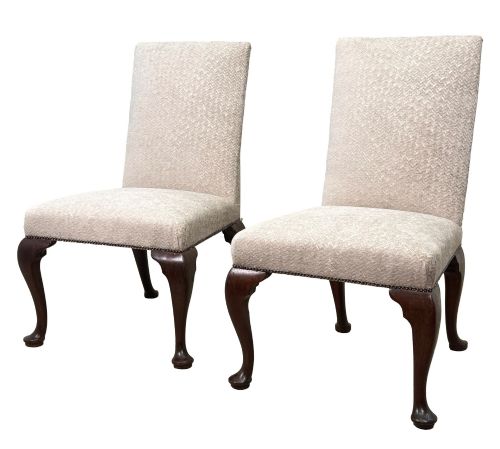
Dining chairs and side chairs dominate the selection, often found in matched sets of four, six, or eight pieces. Individual nursing chairs, wing armchairs, and stools provide smaller seating options.
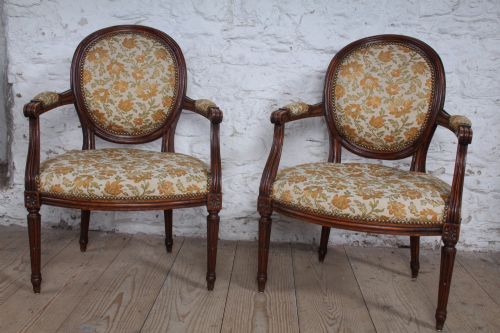
Styles range widely through Queen Anne, Louis XV, Rococo Revival, and Art Deco interpretations. Frames show carved details, cabriole legs, and occasionally gilded accents.
Factors of Quality
Carving depth and crispness on the walnut frame separate standard production from superior pieces. Hand-carved details and balanced proportions indicate higher workshop standards.
The choice of covering material and the precision of the upholstery work define the grade of the piece. Fine silk, tapestry, and leather coverings complement the underlying timber.
A beadwork seat on an X frame stool proves that Victorians embroidered anywhere.
Charles Tozer·SF Cullen·Howard and Sons
The Upholstered Walnut Seating Glossary
- Cabriole leg
- A furniture leg that curves outward at the knee and tapers inward to an ankle, common in Queen Anne and Louis XV styles.
- Bergere
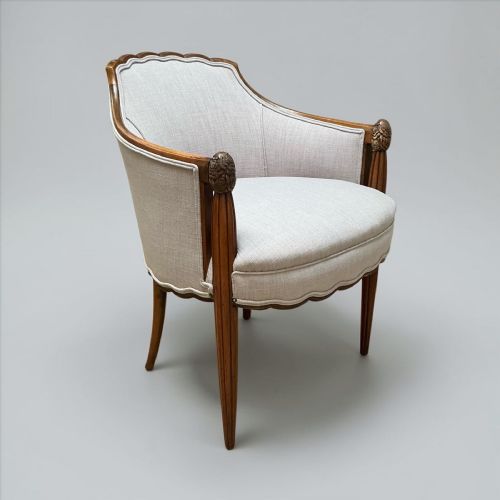
- An enclosed upholstered armchair with wooden framing, frequently featuring cane side panels.
- Balloon back
- A chair back shaped like a rounded oval or balloon, popular during the Victorian era.
- X frame
- A structural furniture base formed by crossed diagonal members, seen on specific stool designs.
- Button back
- An upholstery technique where buttons are pulled deep into the padding to create a quilted diamond pattern.
Upholstered Walnut Seating: Frequently Asked Questions
How do I identify a Queen Anne style walnut chair?
Queen Anne style walnut chairs typically feature curved cabriole legs and shaped backs without heavy carving. The grain of the walnut timber remains visible across the smooth frame.
Many examples date from later revivals in the early 20th century rather than the original 18th century period.
What is the difference between an armchair and a nursing chair?
Armchairs provide full armrests and wider proportions for general seating use in reception rooms. Nursing chairs are built lower to the ground without arms, originally designed for nurseries.
Both forms utilise walnut frames paired with various textile upholstery fabrics.
Can I find matching dining chair sets?
Matching sets of dining chairs appear in groupings of four, six, or eight pieces. These sets usually share identical carved walnut frames and uniform upholstery.
Individual side chairs also appear separately for occasional placement.
What materials are used for the upholstery?
Upholstery materials include velvet, silk, leather, tapestry, and standard textile fabrics. Button back padding and beadwork also appear on specific Victorian pieces.
Original coverings are occasionally replaced with modern or period-appropriate fabrics.