

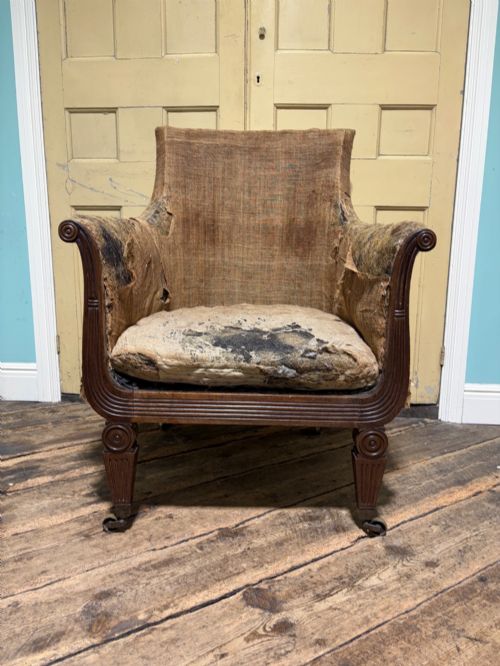
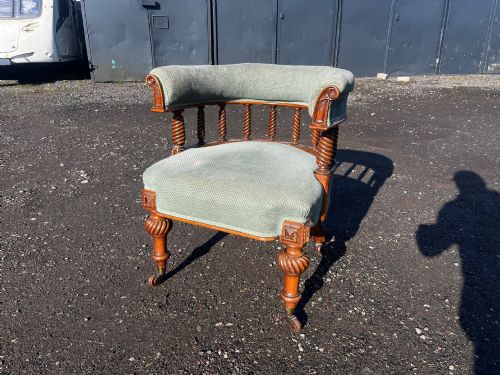
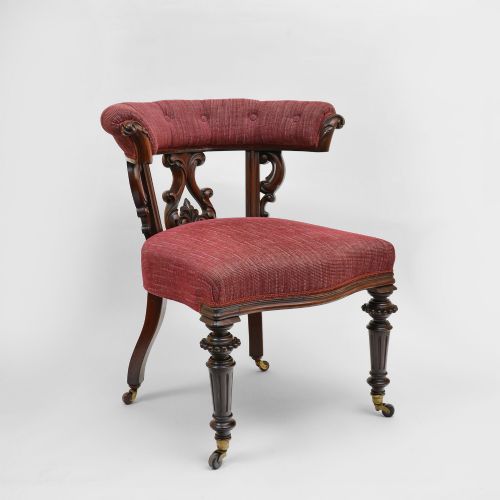
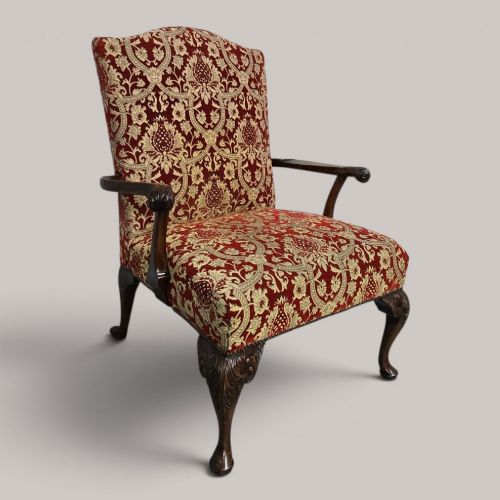

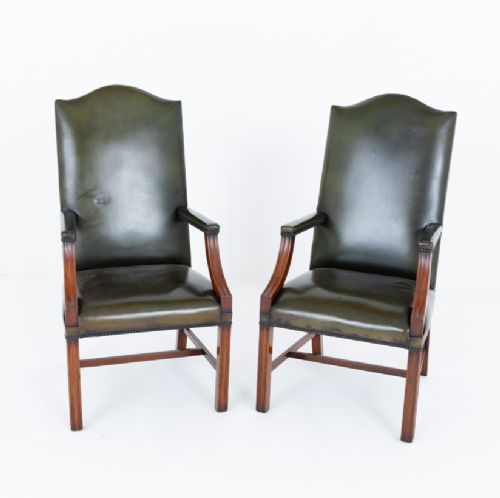


Upholstered Study Armchair
An upholstered study armchair offers firm support and leather or fabric comfort for working hours, drawing on centuries of library seating design.
Upholstered Study Armchair
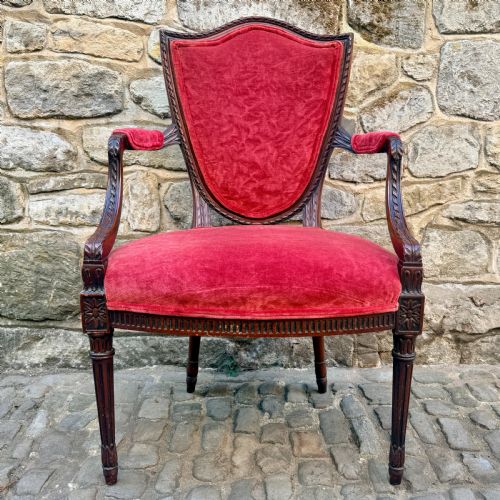
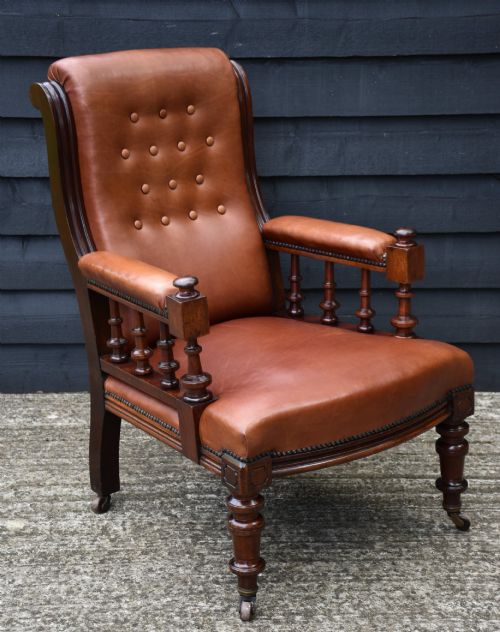
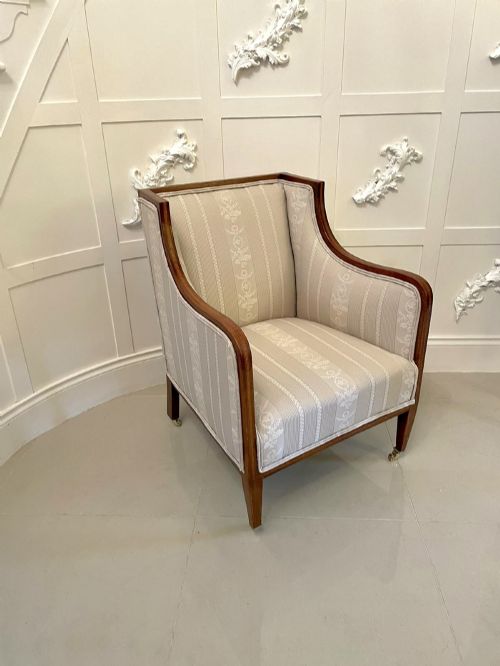
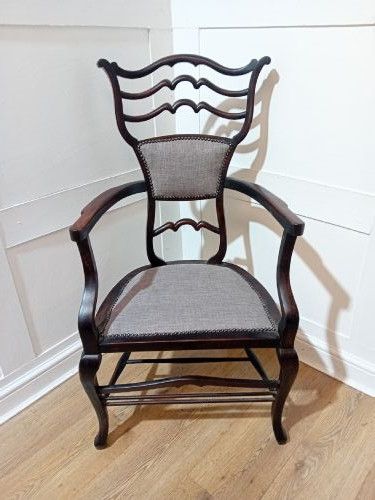
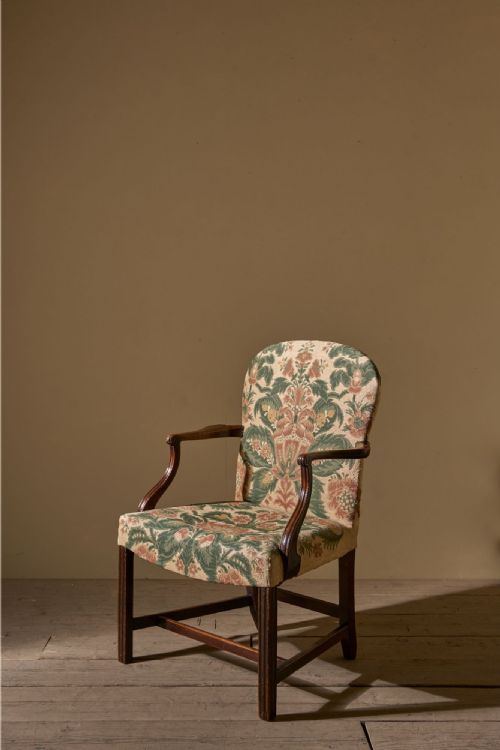
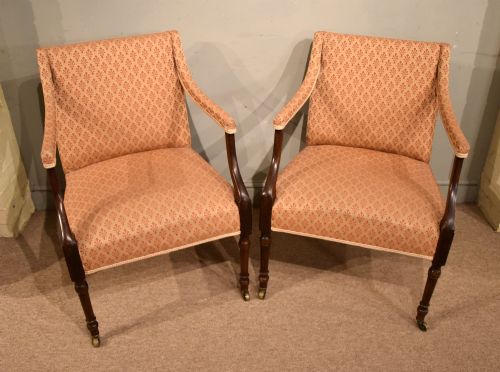
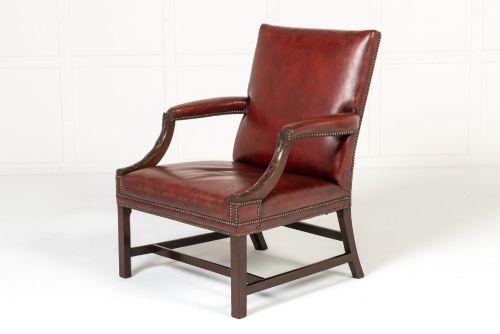
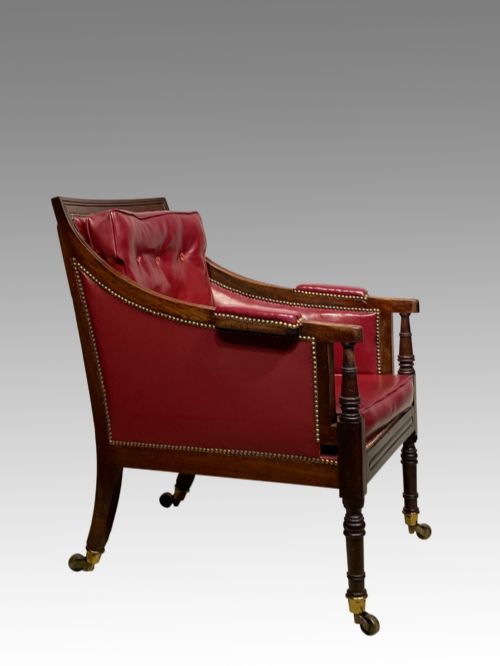
An upholstered study armchair combines a supportive timber frame with padded seating designed for long hours at a desk or in a library. These pieces range from substantial 18th-century forms to lighter Edwardian and Victorian designs.
Mahogany and oak frames appear frequently alongside walnut and rosewood, establishing the formal character of these seats. Most examples rely on leather or traditional fabric upholstery to provide a comfortable surface for reading and writing.
The selection on this page leans heavily toward Victorian and Georgian styles, alongside Regency pieces and revival interpretations. Buyers encounter armchairs, desk chairs, and library elbow seats originating across several centuries.
Construction and materials
Cabinetmakers constructed these frames primarily in mahogany, oak, and walnut, often using carved details or inlaid decoration to finish the timber. Joinery methods relied on mortise and tenon joints to ensure the rigid stability required for daily desk work.
Upholstery involved stuffing horsehair or wool into textile or leather coverings, secured with brass tacks or piping along the frame. Timber surfaces were polished with wax or shellac to bring out the natural grain of the wood.
Upholstered Study Armchair Retail Price Guide 2026
Typical asking prices for upholstered study armchair among the pieces listed under this phrase on Sellingantiques today, from the lower quarter to the upper quarter. They describe what is for sale here now, not the wider market.
The listings span from 18th-century walnut studies to 1930s Art Deco desk chairs, utilising mahogany, oak, and rosewood.
Quality and proportion
The fineness of timber selection and the crispness of hand-carved details distinguish superior examples from standard workshop production. Better pieces maintain harmonious proportions between the upholstered back, the arm supports, and the stance of the legs.
The integrity of the frame construction and the depth of the timber patination dictate the standing of an armchair. Original brass castors and untouched primary surfaces add considerable weight to a piece's historical integrity.
The Upholstered Study Armchair Glossary
- Gainsborough chair
- A wide, upholstered armchair with open padded arms, designed in the mid-18th century for sitting at a desk or in a library.
- Library armchair
- A substantial seat featuring upholstered arms and back, built for comfort in private studies and reading rooms.
- Tub chair
- An armchair with a continuous curved back and arms forming a rounded enclosure around the sitter.
- Sheraton Revival
- A late 19th-century design movement that reinterpreted the light, neoclassical forms of the late 18th century.
- Elbow chair
- A traditional term for an armchair with low arms, often used at a desk or dining table.
Upholstered Study Armchair: Frequently Asked Questions
How do I use a study armchair at a modern desk?
Check the height of the chair seat against the knee clearance of your desk, noting that older chairs often sit lower than modern office furniture. Ensure the arms fit underneath the desk surface if you prefer to sit close while working.
Adding a thin, matching leather cushion can adjust the seating height without altering the period appearance of the chair.
Are these chairs comfortable for daily work?
Traditional horsehair stuffing provides a firmer seat than modern foam, offering upright support rather than deep sink-in comfort. Many people find this firmness suits long hours of reading and writing.
Consider the upright angle of the back and the width of the arms to ensure the proportions suit your build.
How do I tell a Georgian chair from a Victorian revival piece?
Georgian chairs display the timber handling, joinery methods, and wear patterns characteristic of active 18th-century production. Revival pieces made during the Victorian era often feature denser mahogany and machine-tooled details.
Examining the underside of the seat frame and the type of secondary woods used often reveals the true manufacturing period.
How do I care for leather upholstery on a library chair?
Clean the leather gently with a dry or slightly damp cloth to remove dust, avoiding harsh detergents that strip natural oils. Apply a traditional leather wax or preservative sparingly to maintain suppleness and prevent cracking.
Keep the chair away from direct sunlight and heat sources to protect both the timber frame and the leather finish.