
Upholstered Mahogany Seating
These pieces of upholstered mahogany seating span the 18th century to the Edwardian period, offering solid timber frames paired with textiles for practical domestic use.
Upholstered Mahogany Seating
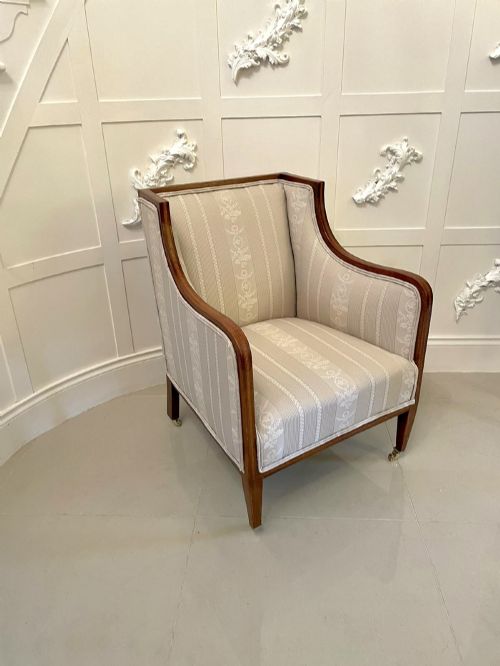
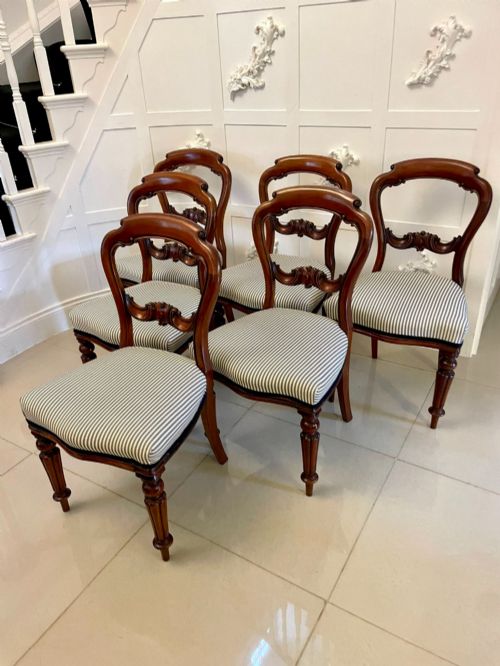
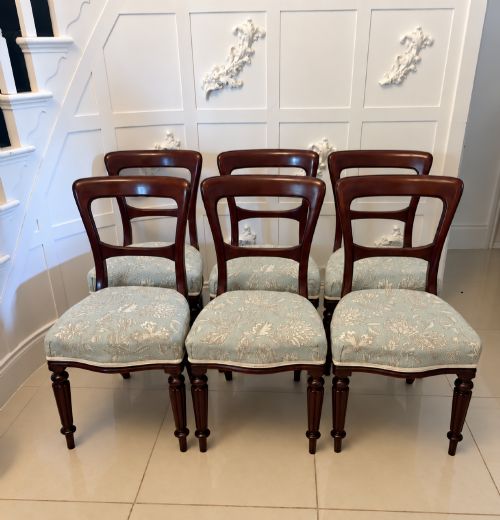
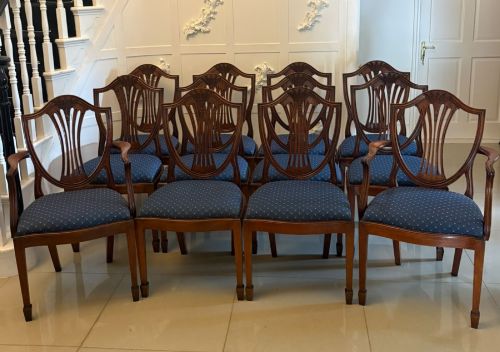
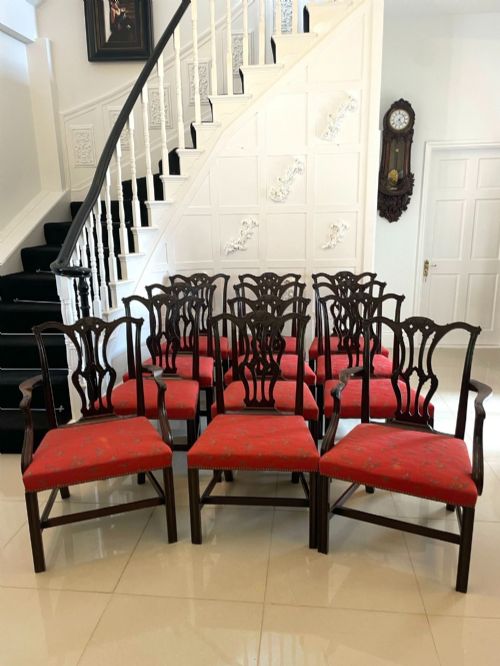
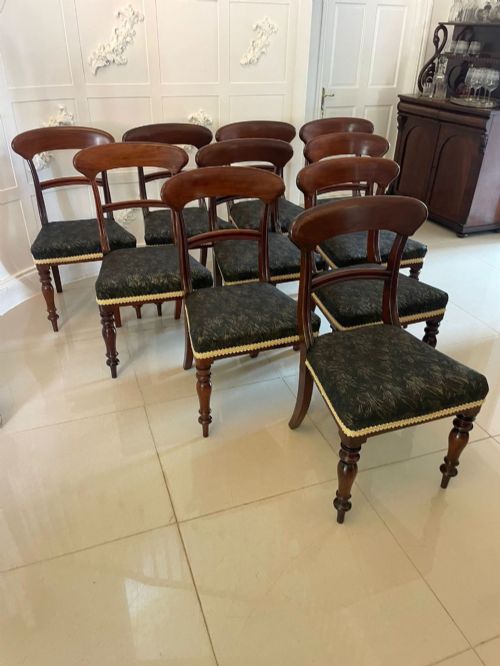
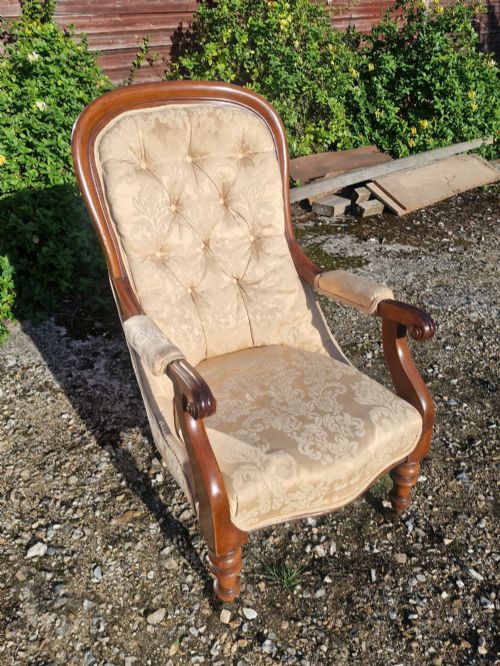
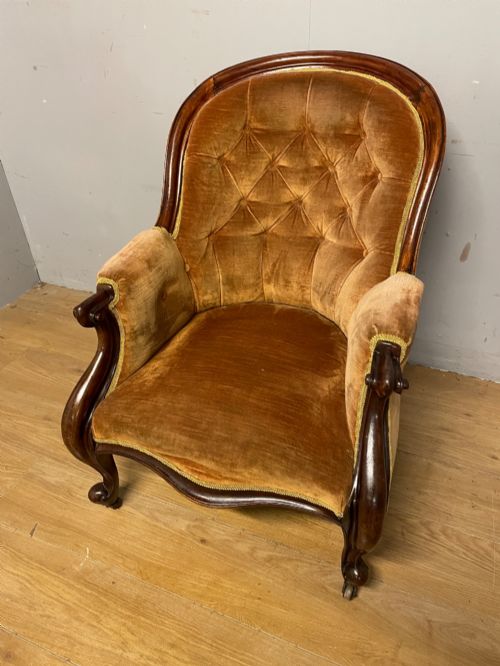
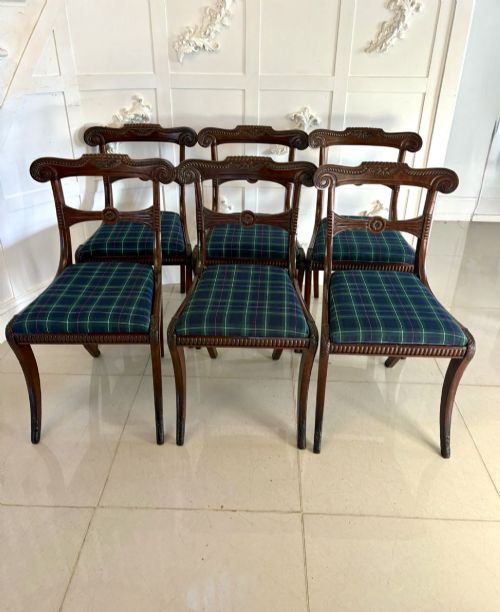
The pieces appearing most frequently across this selection are dining chairs and armchairs originating in the 19th century, alongside Edwardian settees and bedroom chairs. Makers constructed these items across distinct historical eras including the Georgian, Regency, William IV, and Victorian periods.
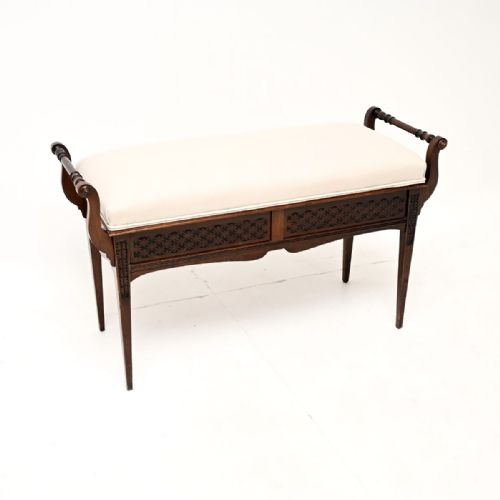
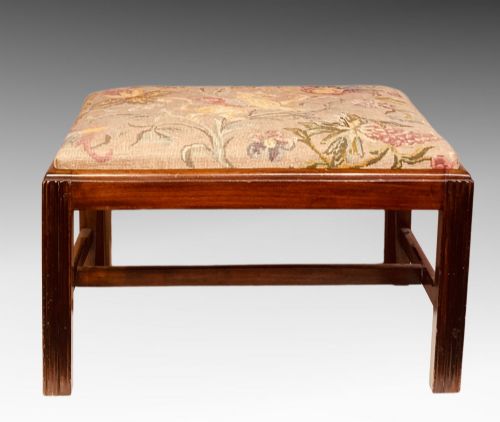
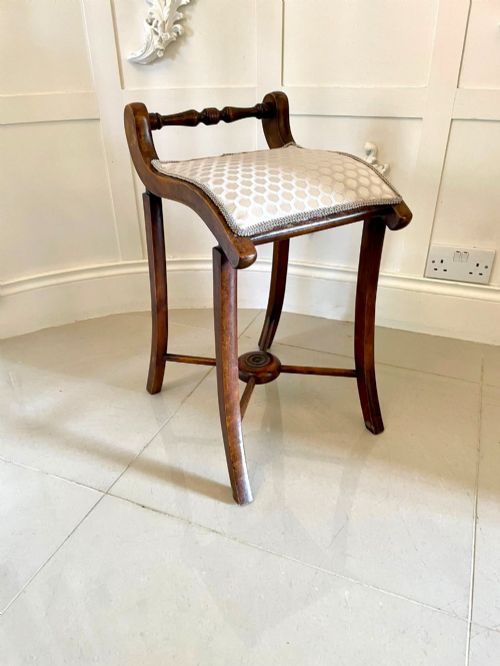
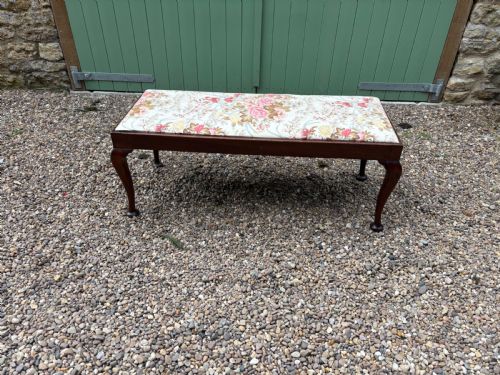
Object types include specific seating forms such as nursing chairs, buttoned long stools, and camel back sofas. Many examples incorporate design revivals like the Georgian Revival style alongside period originals.
Materials and construction methods
Craftsmen built structural frames primarily from mahogany, occasionally utilising Cuban mahogany or incorporating satinwood and maple details for visual contrast. Certain Regency examples feature brass inlay integrated directly into the wooden framework.
Upholstery methods involved various textiles applied to internal stuffing and webbing, including standard upholstery fabric, velvet, and needlework seats. Workers secured these materials over supportive frames designed for daily household function.
Materials recorded across the inventory include mahogany, Cuban mahogany, satinwood, maple, brass, velvet, and various textile upholstery fabrics.
Distinctions in quality
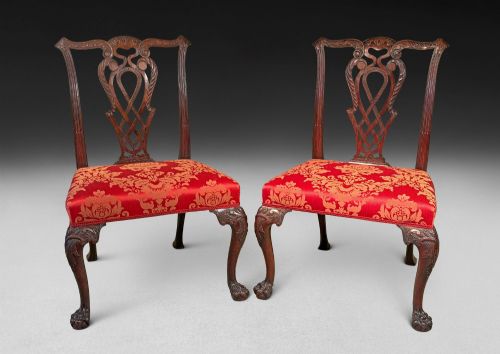
Quality differences stem from the precision of the timber carving, the structural integrity of the frame joints, and the scale of matched sets. Single workshop productions or marked items by recognised makers typically demonstrate higher refinement in joinery and ornamentation.
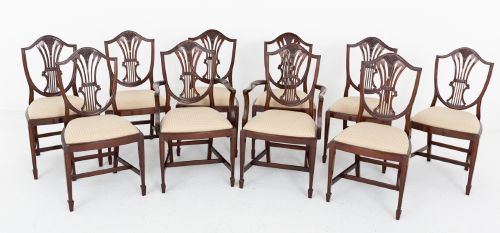
The sophistication of decorative elements, such as brass inlay, specific shield back designs, or carved bar backs, separates standard utilitarian items from exhibition quality pieces.
Maple and Co·Gillows·Whytock and Reid
The Upholstered Mahogany Seating Glossary
- Mahogany
- A durable, reddish-brown tropical hardwood utilised extensively for furniture frames due to its strength and finish.
- Shield back
- A chair back design shaped like a heraldic shield, popular during the late 18th century and later revival periods.
- Balloon back
- An oval-shaped chair back resembling a balloon, characteristic of Victorian seating forms.
- Bar back
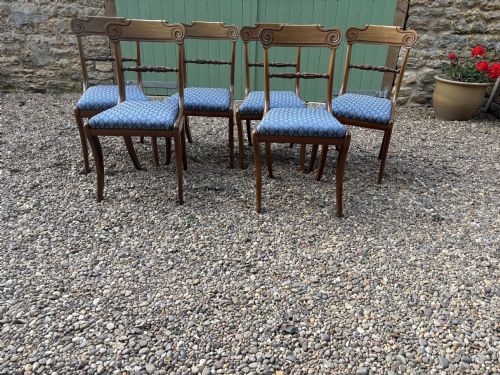
- A horizontal cross-rail set across the upper portion of a chair back, frequent in William IV designs.
- Settee
- A medium-length upholstered seat with a back and arms, designed for multiple occupants.
Upholstered Mahogany Seating: Frequently Asked Questions
What periods do these seats cover?
The selection spans pieces originating from the 18th century through the Georgian, Regency, William IV, and Victorian eras into the Edwardian period and 1920s.
Buyers find both period originals and later revival styles represented within the inventory.
How do I identify a dining chair set?
Listings categorize dining chairs by total count, often grouping carver armchairs with standard side chairs in sets ranging from four to twelve pieces.
Descriptions note whether the set forms a matched group or incorporates stylistic revivals.
What upholstery materials are used?
Original and replacement coverings include velvet, standard upholstery fabric, textiles, and needlework seats applied over traditional stuffing.
Frames incorporate mahogany timber alongside decorative elements like brass inlay and satinwood.
Are there seating options other than chairs?
The category includes sofas, settees, buttoned long stools, ottomans, and benches alongside standard dining and library seating.
Specific forms like bedroom nursing chairs and hall benches also appear across the listings.