

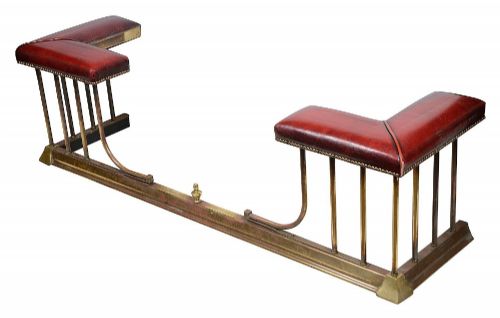


Upholstered Hearth Seat
An upholstered hearth seat brings low-slung, padded comfort right to the fireplace, combining metal or timber frames with tactile textile tops.
Upholstered Hearth Seat
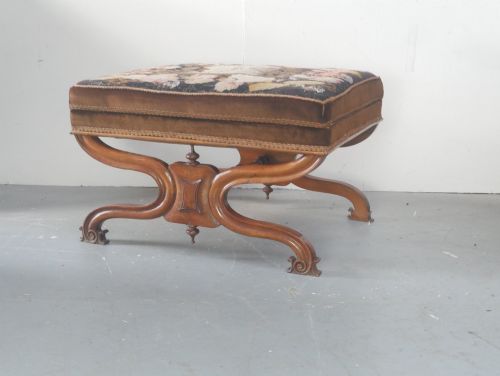
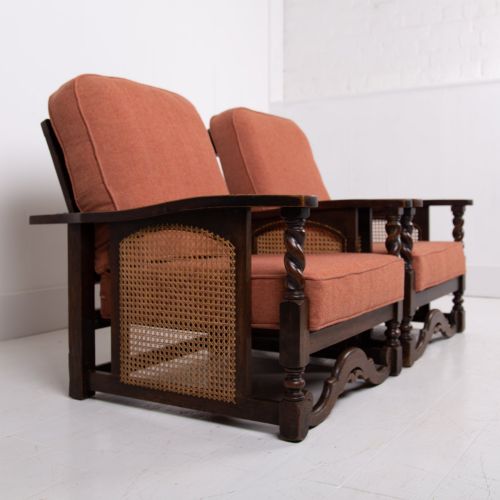
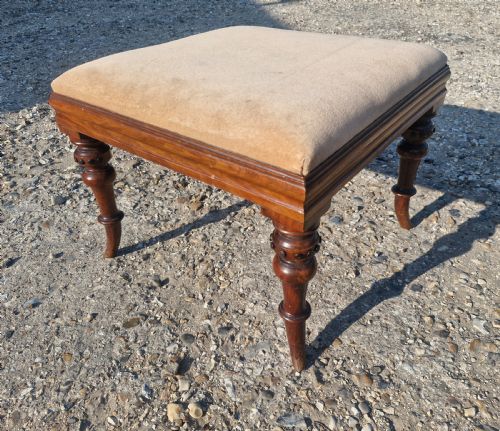
When you search for an upholstered hearth seat, you are looking at low seating designed to sit directly before a fireplace, often taking the form of a club fender with corner seats or a long freestanding stool. These pieces span the Victorian and Edwardian eras through to the early twentieth century, appearing in styles ranging from Jacobean Revival and Victorian Rococo Revival to Scottish Baronial and Art Deco.
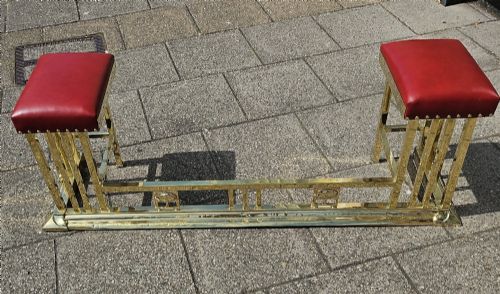
The most common versions you will meet on this page are brass or steel club fenders fitted with leather or fabric pads, alongside wooden stools framed in walnut, mahogany, oak, or ebonised timber. They bridge the gap between architectural fireplace accessories and practical seating, designed originally to allow warmth from the grate while keeping sitters at a low level.
How they were made
Frames rely on structural metals like brass, cast steel, iron, and chrome, or dense hardwoods including walnut, mahogany, oak, and rosewood. Metal club fenders often incorporate tubular brass rails and corner standards, sometimes paired with silvered finishes or heavy cast iron bases.
Upholstery materials recorded in the evidence include leather, velvet, tapestry, needlepoint, and general fabric. These textiles are secured over padded tops, occasionally supported by carved cabriole legs or heavy timber rails.
One steel club fender on offer originates directly from the prestigious In & Out Club.
What varies in quality
The distinction between ordinary and exceptional pieces lies in the substance of the frame and the ambition of its carving or metalwork. Heavy gauge brass, solid cast steel, and finely carved walnut or mahogany frames command greater presence than lighter, plainer constructions.
The integrity of the upholstery treatment also defines the standard, particularly where original needlepoint, hand-worked tapestry, or patinated leather survives intact on sturdy timber or metal foundations.
The Upholstered Hearth Seat Glossary
- Club fender
- A low-framed seat surrounding the hearth, typically constructed from brass or steel with upholstered corner pads. It allows people to sit close to the fire.
- Cabriole leg
- A furniture leg that curves out and then in, resembling the leg of an animal. This form appears frequently on Victorian and revival stools.
- Needlepoint
- A type of canvas work embroidery used for historic seat covers and upholstery. It provides a textured, durable surface.
- Scottish Baronial
- A nineteenth-century architectural and decorative style inspired by medieval castles. Pieces in this style tend to be large and robust.
Upholstered Hearth Seat: Frequently Asked Questions
What is a club fender?
A club fender is a metal framework that surrounds the hearth of a fireplace, featuring padded seats on the corners or along the sides. It originated in British clubs and country houses as a way to sit right by the fire.
These pieces combine metal structural elements in brass or steel with upholstered leather or fabric tops. They serve as both a safety barrier for the fireplace and practical low seating.
How do I date a hearth seat?
Dating relies on identifying stylistic markers, construction methods, and materials associated with specific periods like the Victorian or Edwardian eras. Fenders and stools often reflect the revival styles popular at the time of their manufacture.
Evidence from the listings shows pieces ranging from mid-nineteenth-century carved walnut to early twentieth-century Art Deco iron and tan leather. Examining the timber types, metal finishes, and upholstery styles helps narrow down the decade.
Where should I place a hearth seat?
These seats are designed to sit directly in front of a fireplace, complementing the hearth as both a functional and decorative object. They fit naturally into living rooms and libraries with period hearths.
Because many examples take the form of freestanding stools or low club fenders, they also work well as flexible seating solutions in larger rooms away from the fire. Their low profile keeps sightlines open across the space.
What materials are used for the seats?
Upholstered tops on these pieces typically feature leather, velvet, fabric, tapestry, or original needlepoint. These materials are chosen for durability and tactile comfort.
The underlying frames provide a contrasting structure using metals like brass, cast steel, iron, and chrome, or timbers such as mahogany, walnut, oak, and rosewood.