




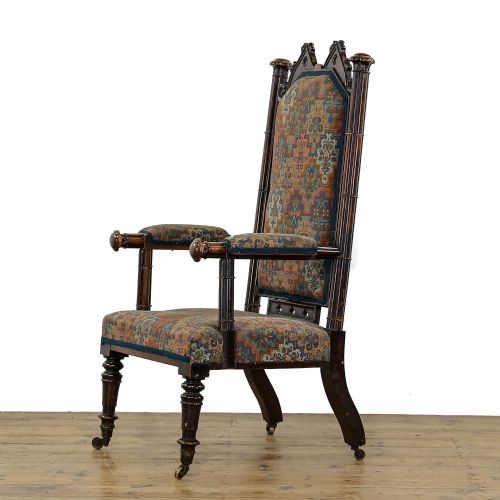
Upholstered Gothic Armchair
An upholstered gothic armchair brings grand architectural lines and heavy carved detail straight into a modern room.
Upholstered Gothic Armchair
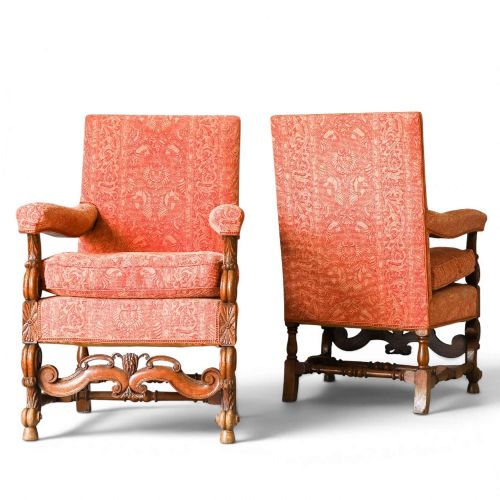
An upholstered gothic armchair combines heavy wooden framing with padded seating, drawing directly on medieval architectural motifs and ecclesiastical design.
The versions most common on this page date from the nineteenth century, emerging during the Victorian Gothic Revival and utilising robust timbers like oak and walnut.
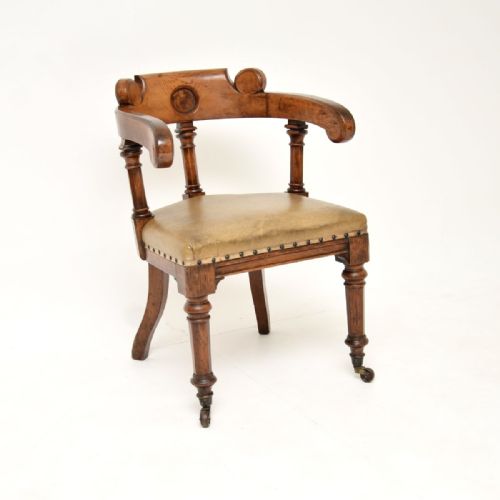
These seating pieces range from sturdy library desk chairs to large throne chairs featuring carved lion heads or green man motifs.
How they were made
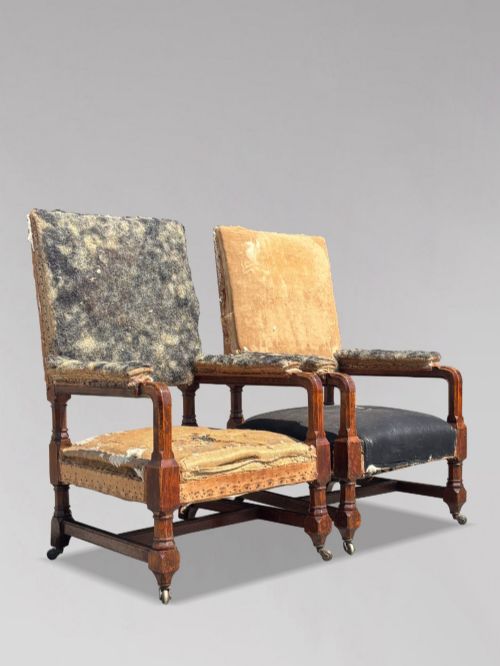
Makers built the primary frames using solid hardwoods, predominantly oak and walnut, alongside rosewood and pitch pine.
Joinery relied on traditional heavy framing, often incorporating complex hand-carved ornamentation such as linenfold panels, tracery, and sculptural heads.
Upholstery was applied over supportive stuffing, utilising traditional textiles, leather, tapestry, and fabric secured with brass detailing.
Some nineteenth-century models arrived as folding campaign chairs, proving that even medieval gothic drama needed to pack flat.
What varies in quality
The depth and crispness of the hand-carving define the upper tier of pieces, where details like lion heads or foliage show genuine sculptural competence rather than mechanical repetition.
Substance of timber selection also divides the range, with dense solid oak and walnut providing superior structural integrity compared to lighter or softer secondary woods.
Charles Bevan·Pugin
The Upholstered Gothic Armchair Glossary
- Gothic Revival
- An architectural and decorative style drawing inspiration from medieval design, pointed arches, and heavy structural forms. It dominated much of nineteenth-century British and French furniture production.
- Throne Chair
- A large, high-backed armchair designed with imposing proportions and heavy ornamentation, frequently incorporating solid timber frames and deep upholstery.
- Green Man
- A sculptural architectural motif representing a human face surrounded by or entwined with leaves and vines, often carved onto nineteenth-century oak furniture.
- Cross-Frame
- A structural arrangement where the legs cross in an "X" shape underneath the seat, providing rigid support in certain period armchair designs.
- Pitch Pine
- A dense, resinous softwood utilised in some nineteenth-century seating for its strong grain pattern and durability.
Upholstered Gothic Armchair: Frequently Asked Questions
How do I place an upholstered gothic armchair in a modern room?
These strong pieces work well as standalone focal points in a sitting room or study, contrasting sharply against minimalist walls and plain flooring.
Allow enough surrounding space for the heavy carved timber arms and high backs to breathe without crowding other furniture.
Were these chairs used at desks or for relaxing?
Many nineteenth-century examples functioned as library armchairs or desk chairs, designed for reading and writing in large institutional or domestic studies.
Others took the form of low easy chairs or grand throne chairs intended purely for formal reception rooms.
How can I tell a Victorian gothic chair from an earlier piece?
Most pieces matching this description date from the nineteenth century, reflecting the Victorian revival of medieval design rather than actual medieval manufacture.
Examine the tool marks, timber ageing, and upholstery construction methods to confirm nineteenth-century production dates.
What materials should I expect on these frames?
Solid oak and walnut form the backbone of these listings, though occasional examples feature rosewood, beechwood, or pitch pine.
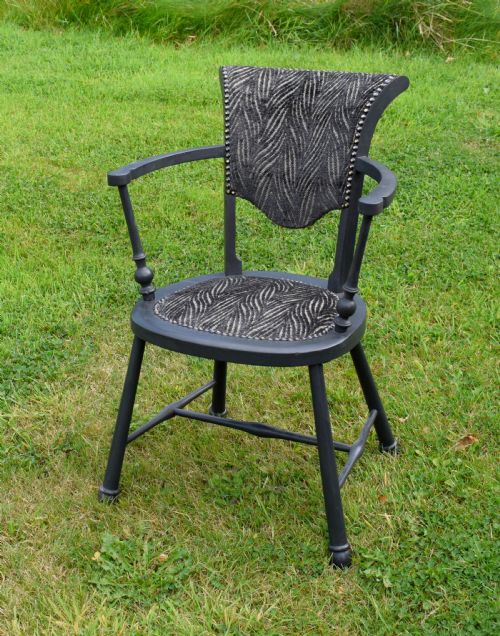
Upholstery materials typically include heavy fabric, leather, tapestry, and occasionally brass studwork.