



Upholstered Drawing Room Sofa
An upholstered drawing room sofa brings period elegance and deep seating comfort to a formal interior, anchoring the room with rich timber and textile textures.
Upholstered Drawing Room Sofa
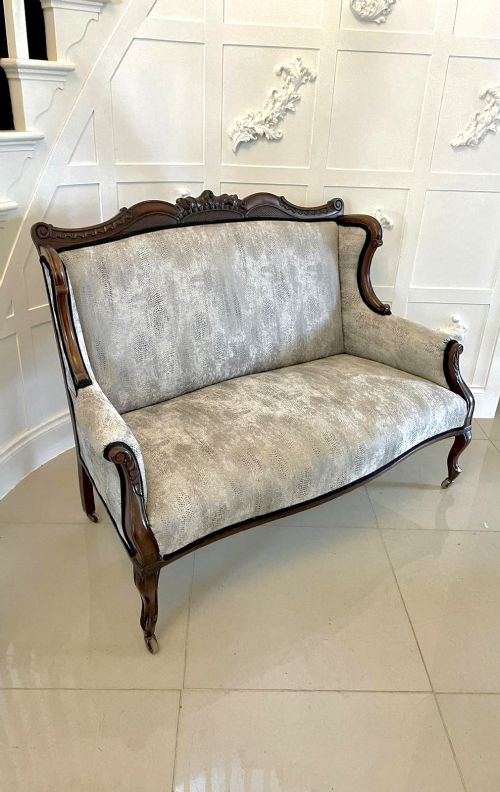
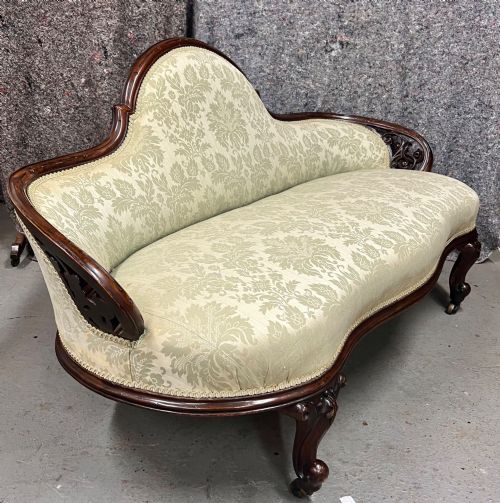
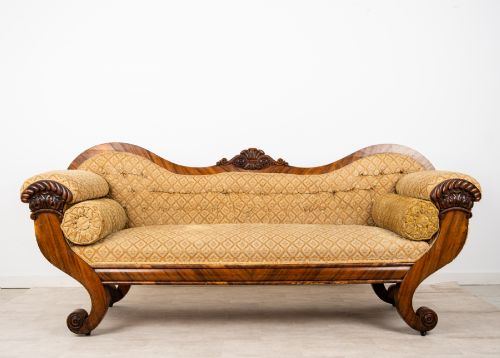
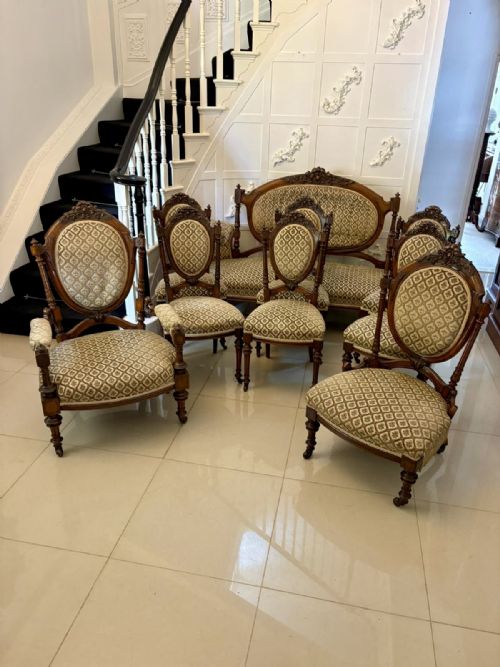
An upholstered drawing room sofa encompasses substantial seating designed for formal reception rooms, ranging from compact settees to complete salon suites. Buyers seeking an upholstered drawing room sofa will encounter nineteenth-century and early twentieth-century examples shaped by Victorian, Edwardian, and William IV aesthetics.
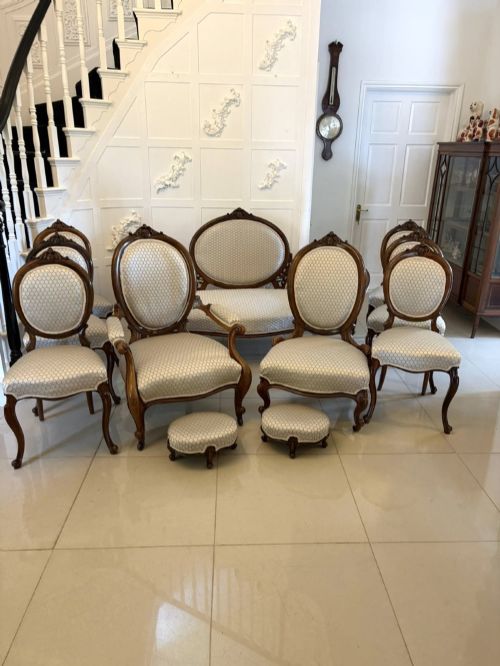
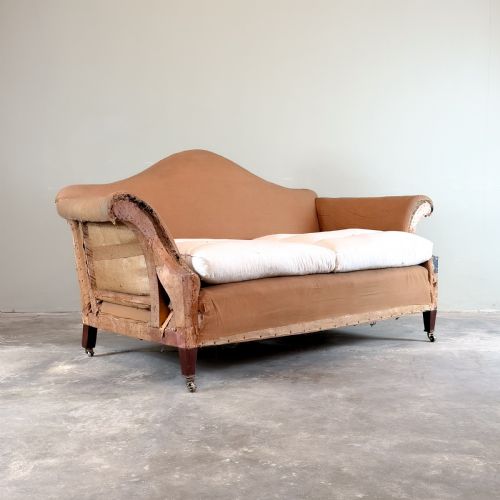
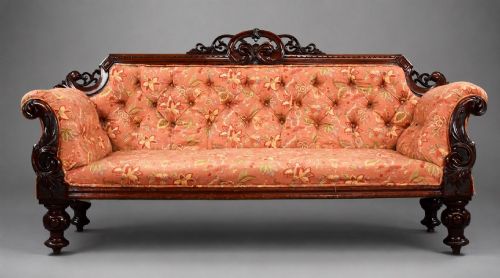
The selections span mahogany, rosewood, and walnut show frames paired with diverse textiles like damask and traditional upholstery fabric. Forms vary from camel back silhouettes and scroll-ended settees to comprehensive parlour suites complete with matching chairs.
Originating across different decades, these pieces reflect the shifting tastes of Victorian and Edwardian domestic interiors. Whether selecting a large two-seat settee or an inlaid rosewood sofa, the focus remains on craftsmanship that bridges structural timber with comfortable textile seating.
How they were made
Construction relies on robust timber frames shaped from mahogany, walnut, and rosewood to provide structural integrity and visible decorative appeal. Carved details, scroll ends, and inlaid motifs demonstrate traditional cabinetmaking techniques applied to show frames.
Textiles including damask and upholstery fabric are secured over padded surfaces, occasionally incorporating brass elements for functional or decorative accents. These materials combine to create resilient seating designed for heavy use in nineteenth-century and early twentieth-century drawing rooms.
Upholstered Drawing Room Sofa Retail Price Guide 2026
Typical asking prices for upholstered drawing room sofa among the pieces listed under this phrase on Sellingantiques today, from the lower quarter to the upper quarter. They describe what is for sale here now, not the wider market.
Available pieces span the Victorian, Edwardian, and William IV periods, including complete parlour suites.
What varies in quality
The refinement of timber carving and the complexity of frame inlay distinguish standard examples from exhibition quality pieces. Elaborate show frames featuring detailed scroll ends or marquetry demand higher levels of joinery skill.
The integrity of the structural timber and the selection of high-grade show woods like rosewood or walnut dictate the overall stature of the furniture. Completeness also influences the piece, particularly when a sofa forms part of a larger matched salon or parlour suite.
Morison and Co Edinburgh
The Upholstered Drawing Room Sofa Glossary
- Damask
- A reversible figured textile traditionally woven with intricate patterns, frequently utilised for formal nineteenth-century upholstery.
- Camel back
- A traditional sofa silhouette featuring a graceful, undulating curved top rail that rises centrally before sloping towards the arms.
- Salon suite
- A matched set of reception room furniture comprising a central sofa alongside complementary armchairs and side chairs.
Upholstered Drawing Room Sofa: Frequently Asked Questions
What defines an upholstered drawing room sofa?
An upholstered drawing room sofa is a formal reception seat featuring a visible wooden show frame and textile upholstery. These pieces were designed for nineteenth-century and early twentieth-century entertaining.
They combine structural timbers like mahogany or walnut with padded seating surfaces. Forms range from compact settees to large two-seat sofas with carved scroll ends.
How do I identify a Victorian sofa?
Victorian sofas are identified by their characteristic use of dense hardwoods such as mahogany, walnut, and rosewood. They frequently display rich carvings, scroll ends, or deep buttoned upholstery.
Design influences span from ornate revival styles to refined mid-nineteenth-century cabinetmaking. Examining the timber frame and joinery helps confirm the period of manufacture.
Where should I place a settee?
A settee functions well as a primary seating anchor in a living room, drawing room, or large hallway. Its formal silhouette complements traditional or transitional interior schemes.
Positioning the piece away from direct sunlight protects the delicate textiles and polished timber frame. Pairing the settee with complementary seating creates a cohesive conversation area.
How do I care for antique upholstery?
Maintaining antique upholstery involves gentle vacuuming with a soft brush attachment to remove dust without stressing the fabric. Avoiding direct sunlight prevents the textile colours from fading.
Professional cleaning is recommended for delicate materials like damask to preserve the fibres. Periodically checking the stability of the wooden show frame ensures long-term preservation.