

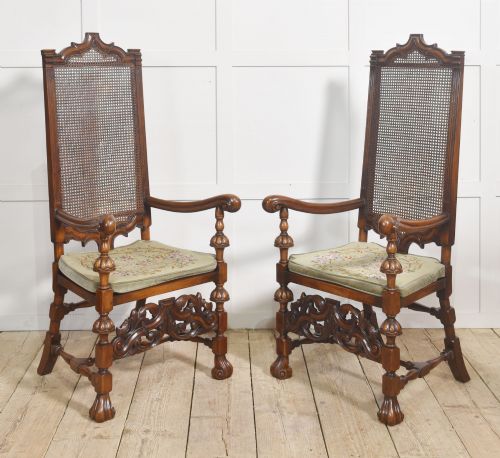
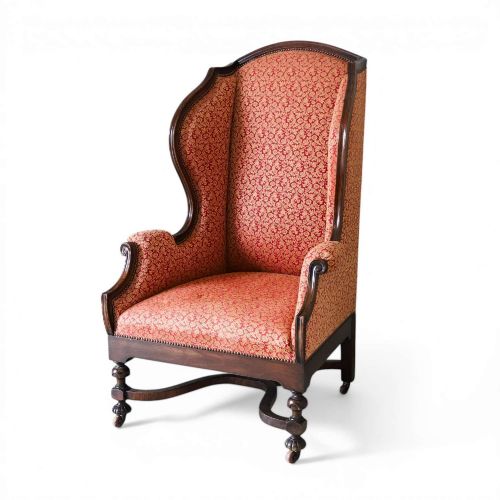
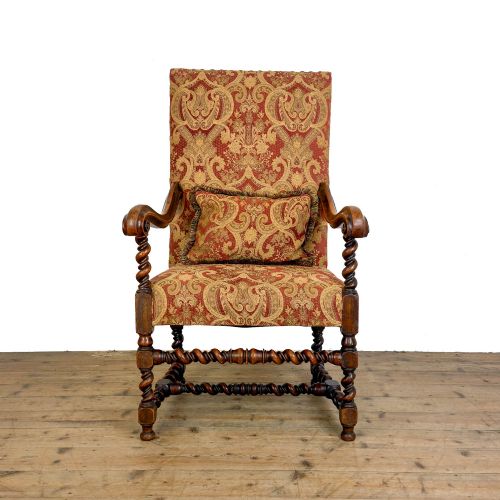


Upholstered Carolean Chairs
Upholstered carolean chairs bring seventeenth-century grandeur to a room, offering high backs, carved woodwork, and tactile textiles.
Upholstered Carolean Chairs
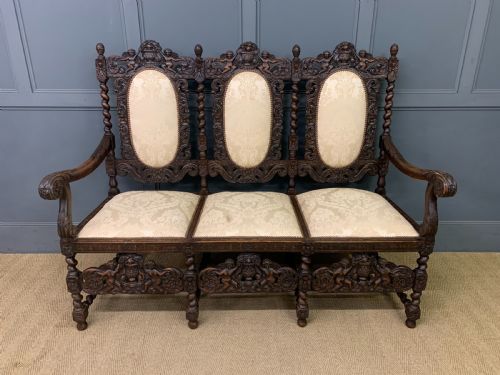
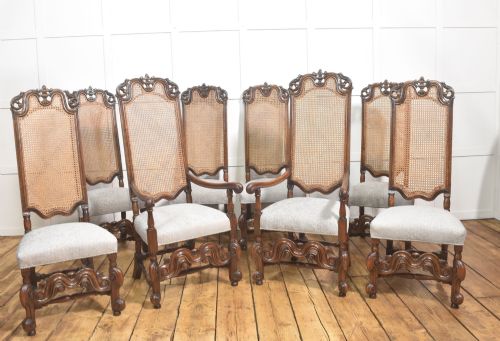
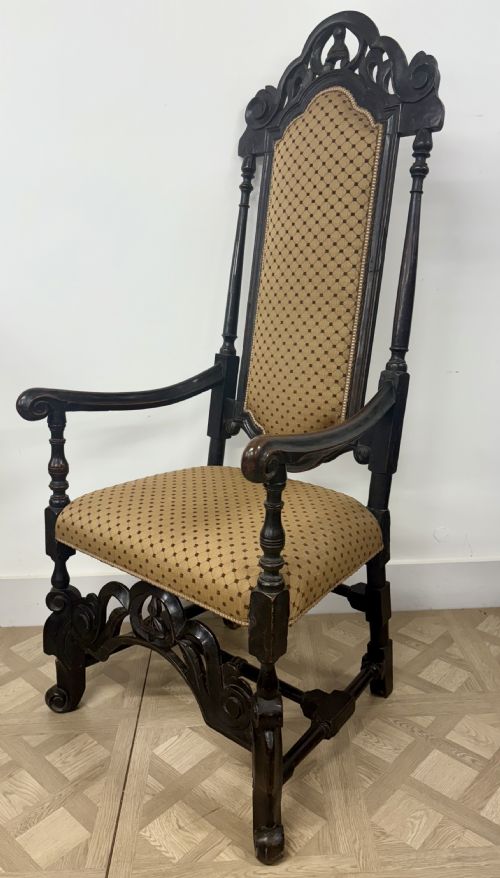
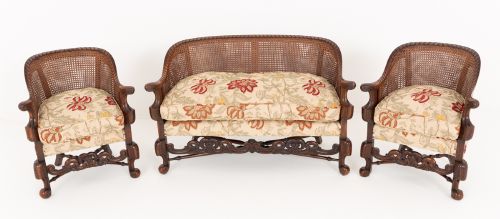
Upholstered carolean chairs encompass high-back dining chairs, imposing armchairs, and matching settees designed for formal domestic spaces. Buyers seeking these items encounter genuine late seventeenth-century examples alongside Victorian revival pieces made in imitation of the earlier style.
Origins span authentic seventeenth-century English workshops as well as later nineteenth-century revival periods. Walnut and oak form the structural foundation of these seating options.
Materials and Construction
Carpenters shaped the structural frames using native hardwoods such as walnut, oak, and laburnum. Artisans joined these timbers with traditional methods to support upright high backs and scroll arms.
Textiles played a central role in finishing the frames, utilising upholstery fabric, tapestry, and cane panels. Brass tacks frequently secured the fabric edges to the wooden rails.
Upholstered Carolean Chairs Retail Price Guide 2026
Typical asking prices for upholstered carolean chairs among the pieces listed under this phrase on Sellingantiques today, from the lower quarter to the upper quarter. They describe what is for sale here now, not the wider market.
Some nineteenth-century makers added provenance notes to their library chairs, ensuring future owners knew exactly whose study they had previously inhabited.
Distinctions in Quality
Depth and crispness of the carved ornamentation separate standard production from superior examples. Skilled carvers produced intricate foliage and scrolls with sharp relief rather than shallow, soft detailing.
Selection of timber density and grain figure dictates the strength and visual weight of the frame. Sound construction in the joints ensures stability across high-back profiles and heavy armchairs.
The Upholstered Carolean Chairs Glossary
- Carolean
- Pertaining to the reign of King Charles II, characterised by lavish woodcarving, scrollwork, and rich textiles. This aesthetic defines the foundational style of these seating pieces.
- Caning
- Woven rattan material used to form light, patterned panels for chair backs and seats. It offers flexibility and texture within a rigid wooden frame.
- Wing back
- An upholstered armchair featuring protective side panels designed to shield the sitter from draughts. These extensions flow down from the high backrest to the arm rests.
- Farthingale
- A nineteenth-century or earlier descriptor for a wide, armless chair originally proportioned for voluminous period skirts. These compact seats provide upright support.
- Bergere
- An enclosed upholstered armchair with solid wooden sides and a padded back. This form appears within nineteenth-century revival suites.
Upholstered Carolean Chairs: Frequently Asked Questions
How do I spot a seventeenth-century original?
Examine the timber shrinkage, tool marks, and construction joints beneath the upholstery. Genuine early examples show hand-cut joinery and aged patination unique to centuries of use.
Revival pieces from the nineteenth century often display machine-tooled elements and tighter, more uniform timber seasoning.
Can I use these chairs every day?
Most sturdy oak and walnut frames accommodate regular daily sitting when the internal webbing and padding remain sound. Lighter cane panels require gentle treatment to prevent snapping.
Placing them away from direct heat sources protects the old wood and textiles from drying out.
What is the difference between carolean and jacobean styles?
Carolean design emerged later in the seventeenth century, favouring lighter proportions, elaborate scrollwork, and open carved crowns. Jacobean pieces tend to be heavier, straighter, and more rigidly geometric.
Revival makers often blended these vocabulary traits during the Victorian era.
How should I clean the carved wood?
Dust the intricate carvings regularly with a soft, dry bristle brush to prevent particle buildup in the recesses. Avoid modern liquid polishes that leave sticky residue in the grain.
Applying microcrystalline wax periodically helps nourish the timber surface without harming the finish.