


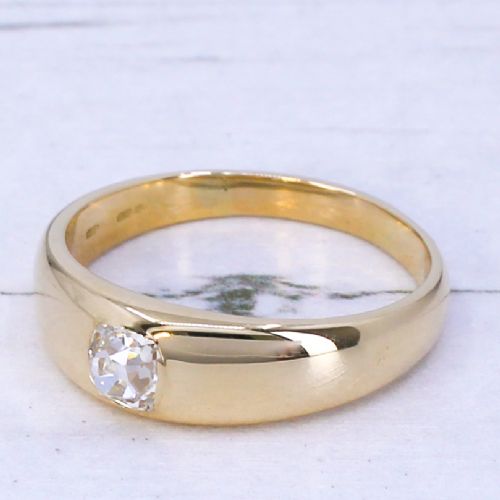


Unisex Gold Ring
A unisex gold ring offers a versatile piece of jewellery spanning periods from the Victorian era to the mid-century, prized for enduring craftsmanship.
Unisex Gold Ring
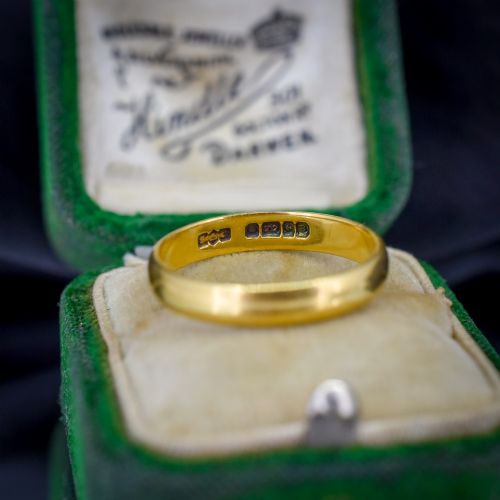
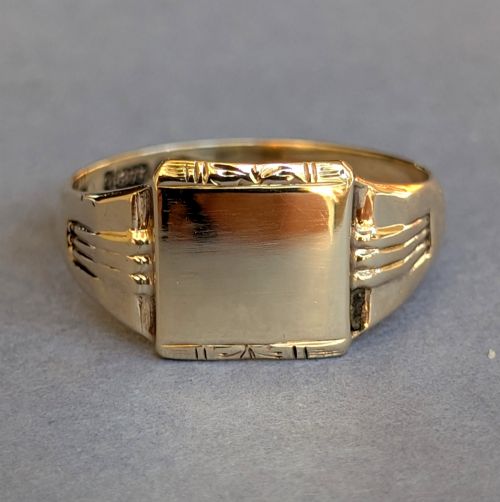
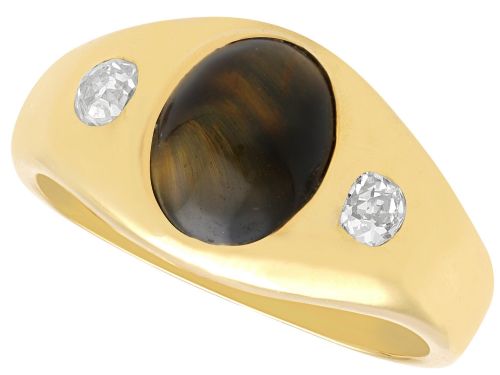
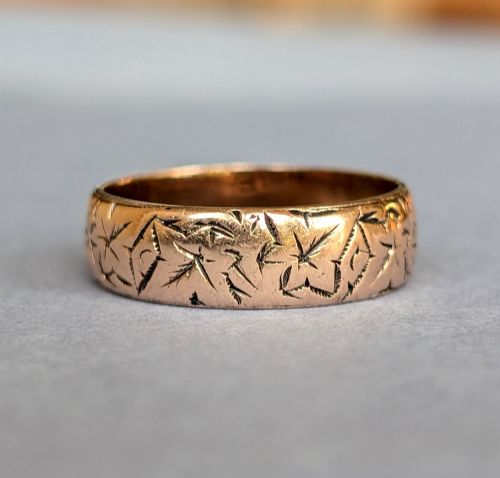
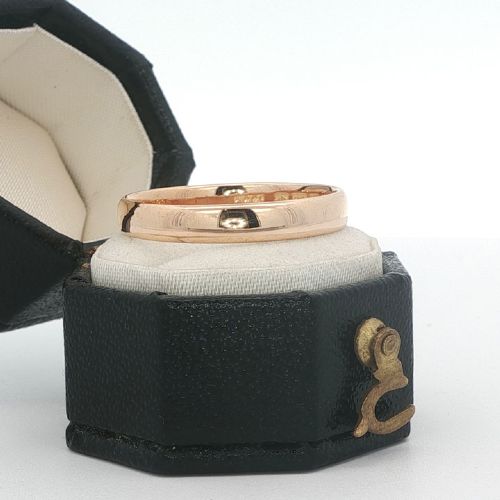
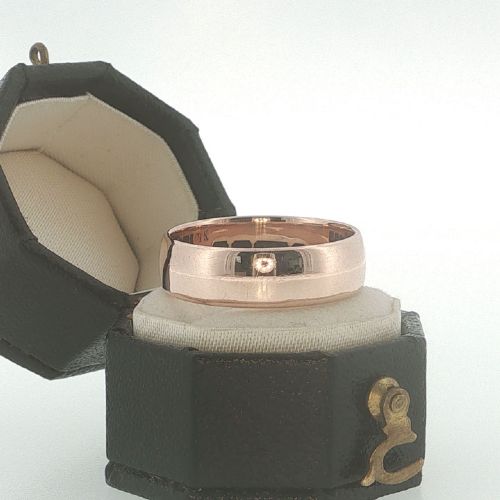
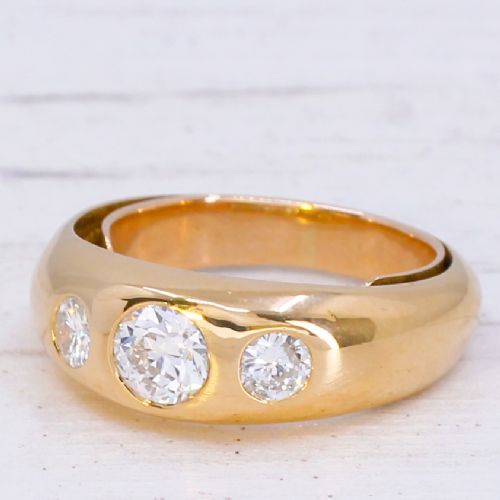
A unisex gold ring typically takes the form of a classic wedding band or a low-profile gypsy ring set with old cut diamonds. These pieces cross stylistic boundaries, drawing on traditional British designs as well as Art Deco and Edwardian aesthetics.
Buyers exploring a unisex gold ring often encounter nineteenth-century examples alongside 1930s vintage pieces and mid-century modernist designs. This mix reflects changing tastes in metalwork while maintaining a consistent focus on practical ring forms.
How they were made
Maker techniques rely heavily on solid yellow gold and rose gold across different purities, ranging from nine carat up to twenty-two carat standard. Traditional British bench methods ensure substantial weight and durability in these bands.
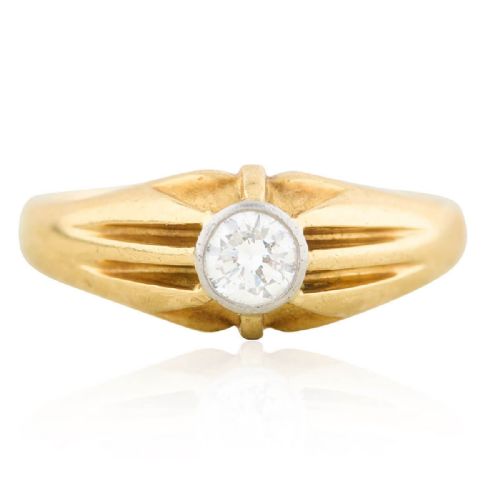
Diamond settings on gypsy rings utilise flush or star-setting techniques to secure old cut stones directly into the heavy gold shoulders. Hallmarks stamped into the interior of the bands provide a reliable record of origin and metal purity.
Unisex Gold Ring Retail Price Guide 2026
Typical asking prices for unisex gold ring among the pieces listed under this phrase on Sellingantiques today, from the lower quarter to the upper quarter. They describe what is for sale here now, not the wider market.
What varies in quality
Quality differences stem from the weight of the gold and the preservation of original hallmarks and engraving. Higher tier examples display crisp definition in their stamps and substantial metal thickness across the entire band.
Diamond quality introduces another tier of distinction, particularly in gypsy and solitaire rings featuring old cut stones. The clarity, colour, and proportions of these hand-cut diamonds elevate the piece above standard utility bands.
W. E. D. L·Piaget
The Unisex Gold Ring Glossary
- Gypsy ring
- A style of ring where the stone is set flush into the sloping shoulders of the metal band. This design gained popularity during the Victorian and Edwardian periods for daily wear.
- Old cut diamond
- A diamond cut by hand before modern machinery, characterised by a smaller table, higher crown, and open culet. These stones exhibit a distinctive warm scintillation under candlelight.
- Solitaire ring
- A piece of jewellery featuring a single gemstone, most commonly a diamond mounted centrally. This minimalist setting focuses attention entirely on the quality of the primary stone.
- Hallmark
- An official stamp applied to precious metals indicating the purity, maker, and assay office. These marks offer definitive evidence of a piece's authenticity and date.
- Wedding band
- A plain, unadorned circular metal ring exchanged during marriage ceremonies. Antique examples often feature high carat gold content such as twenty-two carat.
Unisex Gold Ring: Frequently Asked Questions
How are antique wedding bands measured?
Antique rings are sized using standard alphanumeric ring gauges that correspond to the inner diameter of the band. Jewelers can often adjust these solid gold bands by a small margin.
Buyers should verify the exact millimeter width and ring size listed to ensure a comfortable fit for daily wear on either hand.
How do I care for antique gold?
Antique gold benefits from gentle cleaning with warm soapy water and a soft brush to remove everyday oils. Avoid harsh chemical dips that can damage softer stones like old cut diamonds.
Storing each ring in a separate fabric pouch prevents scratching against other pieces in your collection.
What does twenty-two carat gold mean?
Twenty-two carat gold consists of twenty-two parts pure gold alloyed with two parts other metals for durability. This high purity content yields a rich, deep yellow hue characteristic of older bands.
Such high gold content is softer than nine carat or eighteen carat alternatives, developing a soft patina over decades of use.
How can I tell the era of a ring?
Eras are identified through a combination of hallmark stamps, gemstone cutting styles, and overall manufacturing techniques. Victorian and Edwardian pieces often display distinct decorative conventions.
Comparing the shank construction and mounting style helps confirm whether a piece belongs to the nineteenth century or the mid-century.