
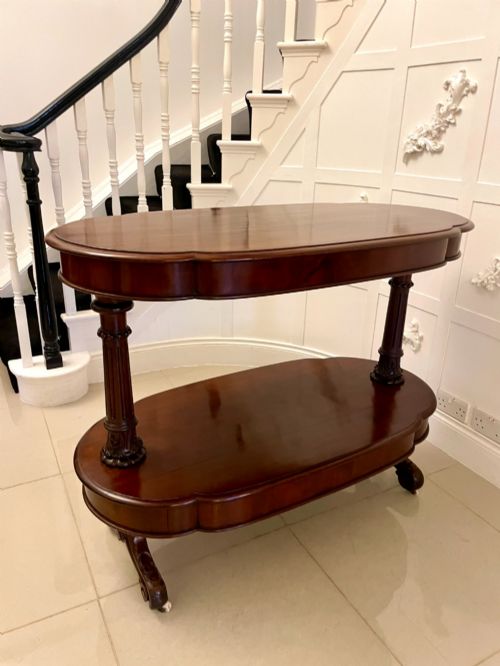
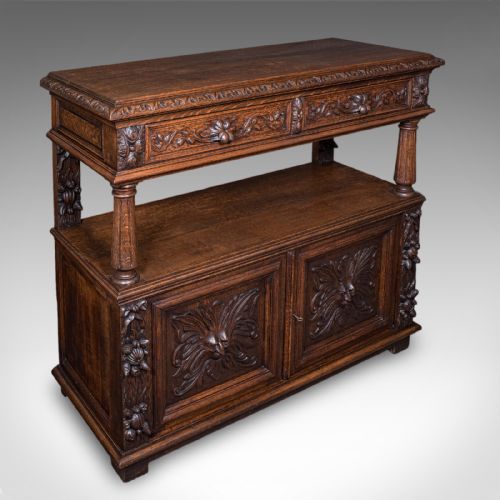
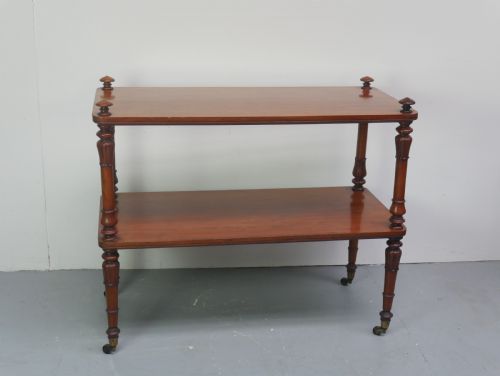


Two Tier Buffet Server
These two tier buffet server designs offer tiered practicality in mahogany, oak, and walnut, bringing period dining elegance to modern rooms.
Two Tier Buffet Server
A two tier buffet server encompasses multi-level serving tables, dumbwaiters, and sideboards originating from the Georgian, Regency, and Victorian periods. Buyers search for these pieces to provide functional tiered display and serving space during formal dining or daily use.
The most common examples on this page are Victorian mahogany pieces alongside earlier Georgian and Regency designs in oak and pollard oak. These items appear in formats ranging from revolving dumbwaiters on tripod bases to carved oak sideboards with lower shelves and cabinets.
Formations vary from oval freestanding console tables to round tiered side tables with folding shelves and bow front buffet drinks cabinets. Such variety reflects the evolving demands for dining room hospitality throughout the eighteenth and nineteenth centuries.
Distinctions in construction and finish
Superior examples demonstrate refined timber selection, such as figured mahogany or highly grained pollard oak, matched with crisp hand-carved details. Lesser pieces rely on plainer timber stocks and simpler mechanical execution without decorative depth.
The integrity of revolving tiers, drop-down folding shelves, and supporting tripod columns dictates the structural success of dumbwaiter designs. Finer pieces maintain smooth articulation across multi-tier joints and solid weight distribution throughout the frame.
Stare too long into a carved oak Green Man tier, and you may find the foliage staring right back from your sideboard.
James Shoolbred & Co.·Gillows of Lancaster and London
The Two Tier Buffet Server Glossary
- Dumbwaiter
- A multi-tiered freestanding serving piece with rotating or fixed circular shelves designed to hold dishes without attendants. These typically stand on a central pillar supported by tripod legs.
- Pollard oak
- Timber taken from trees that have been pollarded, producing a dense wood with highly decorative, clustered grain patterns. Cabinet makers prized this material for statement buffet surfaces.
- Ebonised wood
- Timber treated with chemical stains or dark finishes to imitate costly ebony. This technique gained popularity during the Victorian and Aesthetic movement periods.
- Parcel gilt
- A decorative treatment where selected portions of a carved wooden surface receive a thin layer of gold leaf while the underlying wood remains visible. This highlights specific mouldings and carved motifs.
- Aesthetic movement
- A late nineteenth-century design style emphasising visual beauty over narrative subject matter, often utilising walnut and dark woods. Pieces from this movement display clean architectural lines.
Two Tier Buffet Server: Frequently Asked Questions
What is a two tier buffet server?
A two tier buffet server is a multi-level wooden furnishing used historically for holding food, wine, and tableware during dining occasions. These items range from revolving dumbwaiters to fixed serving tables with lower shelves.
Such pieces combine display space with practical storage, adapting to different dining room layouts through compact footprints and tiered shelving.
How were dumbwaiters used?
Dumbwaiters functioned as unattended service stations placed beside dining tables during meals. Diners could access extra dishes, glassware, and drinks without summoning household staff.
Revolving tiers allowed guests to spin the shelves and reach items independently, making these tables essential for private or intimate dining settings.
Where should I place a two tier buffet server?
These servers fit well against dining room walls, in hallways, or as freestanding console tables in living spaces. Their multi-level design makes them useful for displaying ceramics, books, or serving drinks.
Ensure the piece has adequate clearance around it, particularly if the design includes revolving shelves or folding side leaves.
How do I distinguish Georgian from Victorian pieces?
Georgian pieces typically feature restrained classical proportions in mahogany with simpler turned supports or straight legs. They date from the eighteenth and early nineteenth centuries and focus on understated utility.
Victorian examples often incorporate heavier carved decoration, such as Green Man motifs or Gothic revival elements, reflecting nineteenth-century industrial manufacturing and eclectic tastes.