

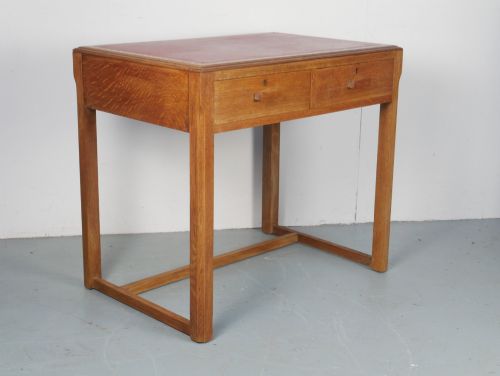
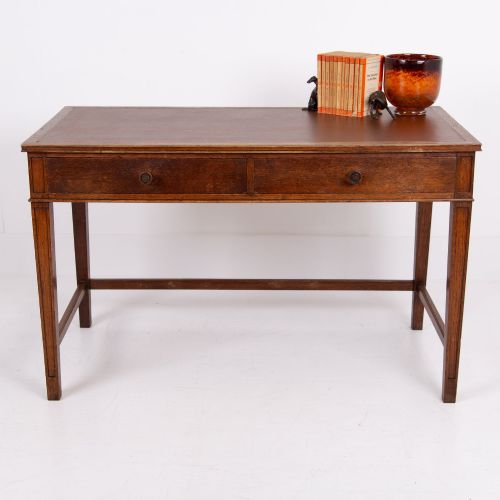
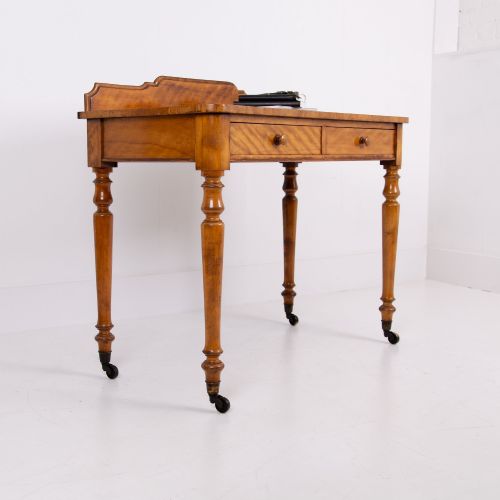
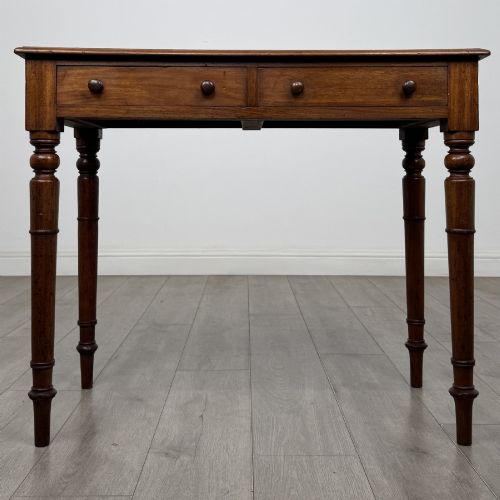
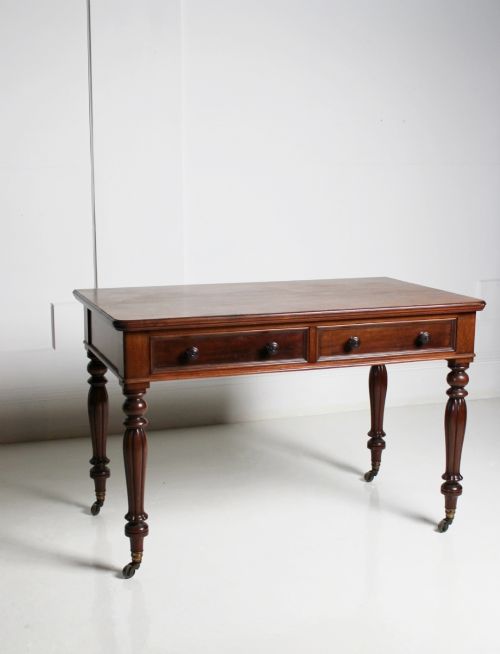
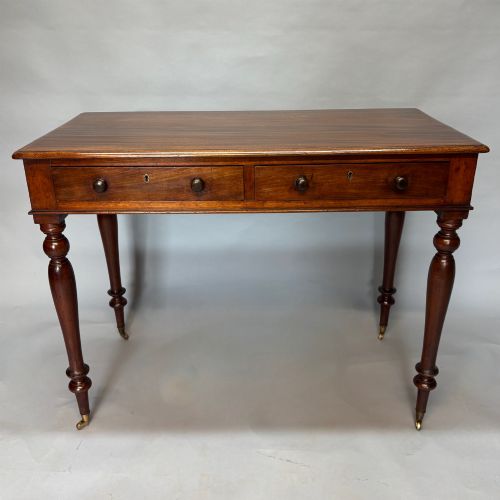
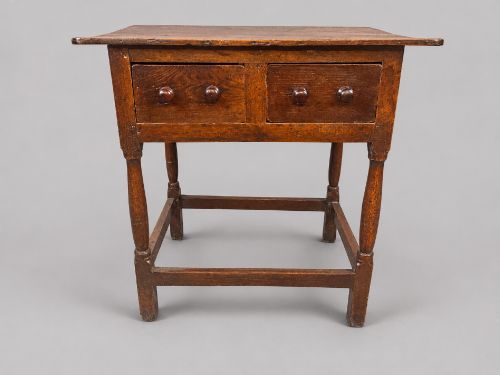
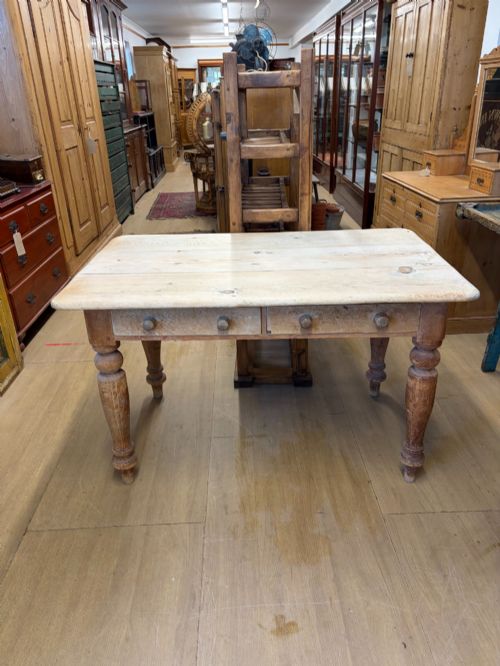
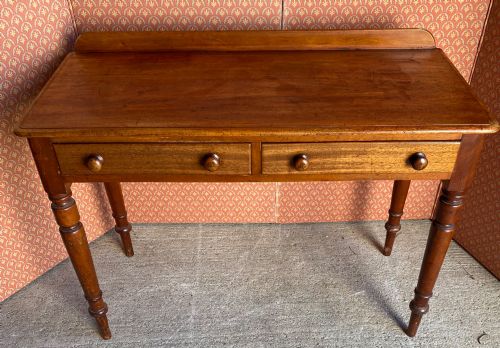
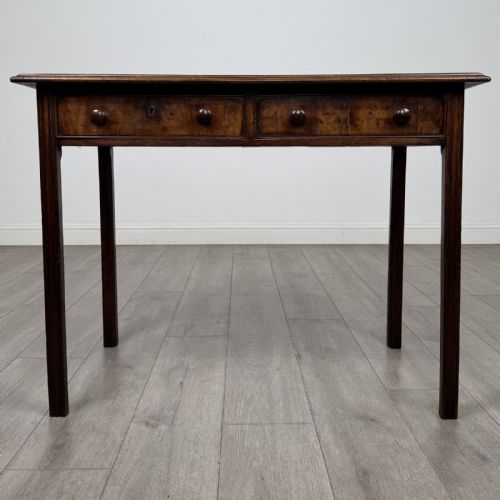
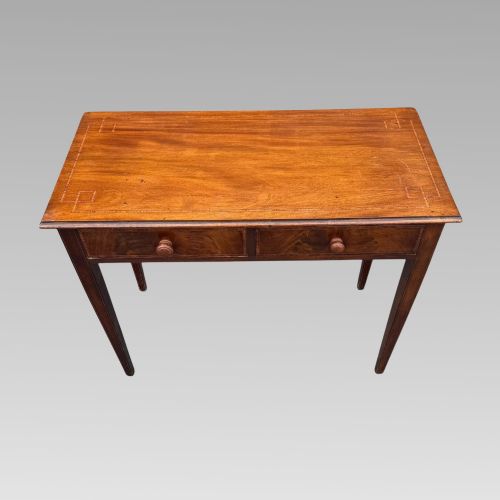
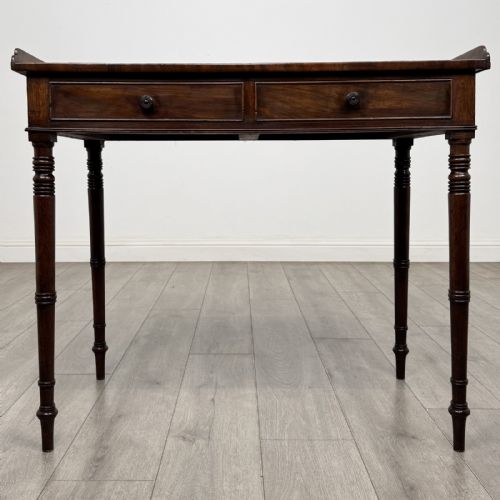
Two Sided Writing Desk
A two sided writing desk brings double-sided functionality and period character to a room, offering finished drawers and pedestals accessible from both faces.
Two Sided Writing Desk
A two sided writing desk serves as a freestanding centrepiece in a study or library, allowing a user to sit comfortably on either side. These pieces surface most frequently from the Victorian, Georgian, and Regency periods, constructed with finished backs designed to face into an open room rather than stand against a wall.
The form encompasses dedicated writing tables alongside large pedestal desks and library tables fitted with opposing banks of drawers. Mahogany and oak dominate the surviving examples, often paired with inset leather writing surfaces and turned or tapering legs.
Materials and construction
Cabinet makers relied primarily on dense timbers such as mahogany, oak, and walnut, frequently enhancing surfaces with figured burr walnut or satinwood veneers. Brass hardware, including handles and drawer pulls, provides structural accents, while leather insets furnish the writing surface.
Joinery techniques reflect traditional cabinet making standards of the eighteenth and nineteenth centuries, utilising solid drawer linings and precision dovetailing. Frames support substantial timber tops designed to withstand daily correspondence and administrative work.
Two Sided Writing Desk Retail Price Guide 2026
Typical asking prices for two sided writing desk among the pieces listed under this phrase on Sellingantiques today, from the lower quarter to the upper quarter. They describe what is for sale here now, not the wider market.
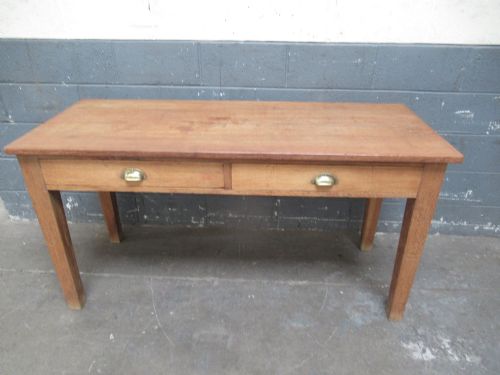
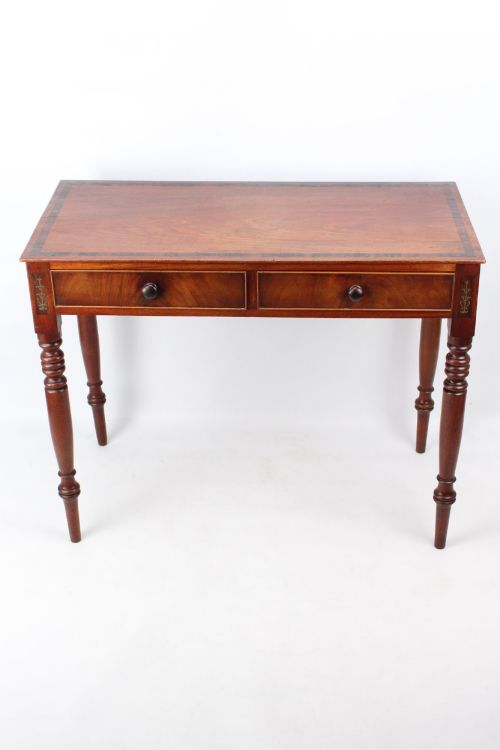
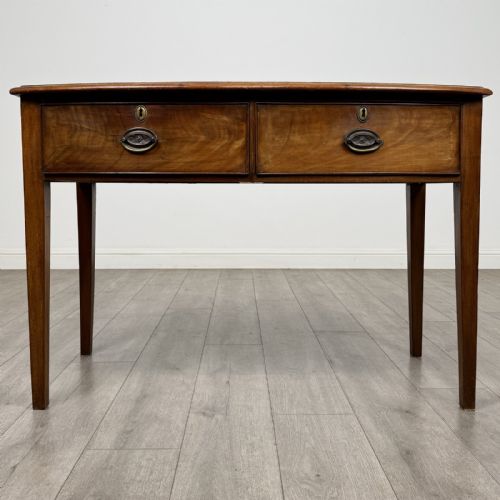
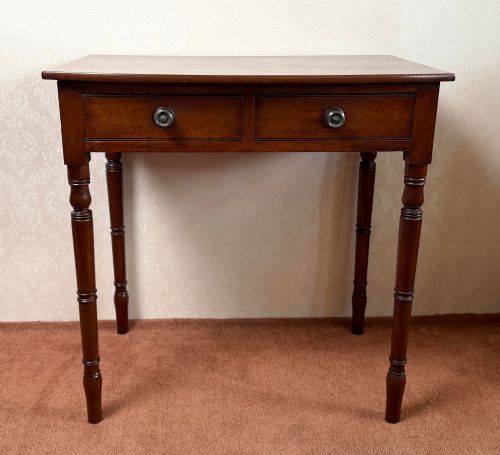
The inventory records functional variations including side tables, console tables, sofa tables, and dedicated writing desks.
Quality variations
Excellence in a two sided writing desk rests on the selection of timber figures, such as highly grained burr walnut or rich mahogany, matched symmetrically across both working faces. Superior examples exhibit refined secondary woods in drawer construction and meticulous attention to the hidden back panels.
Proportion and leg form separate standard utilitarian pieces from exceptional cabinet work. Pieces featuring crisply turned legs, fine brass inlay, or untouched original leather writing surfaces represent the upper echelon of the market.
Hubert Simpson of Kendal·J A Mein Edinburgh Cabinet Maker
The Two Sided Writing Desk Glossary
- Pedestal desk
- A heavy freestanding writing table featuring two separate stacks of drawers that support the main desktop. This form allows a user to sit centrally with storage flanking both legs.
- Satinwood
- A lustrous timber native to India and Ceylon displaying a golden yellow sheen, frequently utilised for fine stringing or full veneer panels during the Georgian and Victorian eras.
- Dovetail
- A traditional wood joint formed by interlocking wedge-shaped fingers, prized for its exceptional tensile strength in drawer construction. This joint secures the corners of period desk drawers.
- Gallery
- A low decorative railing or raised timber edge fitted to the rear or sides of a desktop to prevent items from rolling off. Galleries appear frequently on Victorian writing tables.
Two Sided Writing Desk: Frequently Asked Questions
Where should a two sided writing desk go?
These desks are designed to stand away from walls, functioning best in the middle of a room or library where both sides remain fully accessible.
Positioning the piece centrally highlights the finished rear panels and allows two people to work opposite one another.
How do I identify a Georgian desk?
Georgian pieces typically display restrained classical proportions, solid mahogany construction, and simple drawer configurations without excessive ornamentation.
Legs often feature tapering designs or spade feet, reflecting the prevailing neoclassical tastes of the eighteenth century.
Are these desks practical for daily work?
Many survivors offer generous writing surfaces and functional drawers suited for modern laptops and paperwork storage.
Their sturdy timber frames and robust construction ensure they withstand regular daily use just as they did centuries ago.
What is the difference between a side table and a desk?
A writing desk incorporates kneehole space and specific drawer arrangements designed for seated administrative tasks.
Side tables generally feature shallower depths and simpler underframes intended for display rather than prolonged writing.