

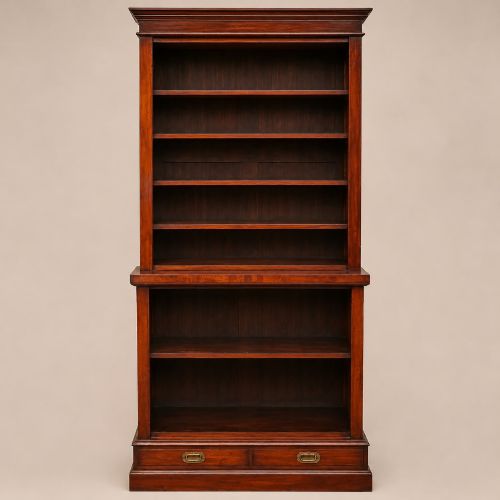
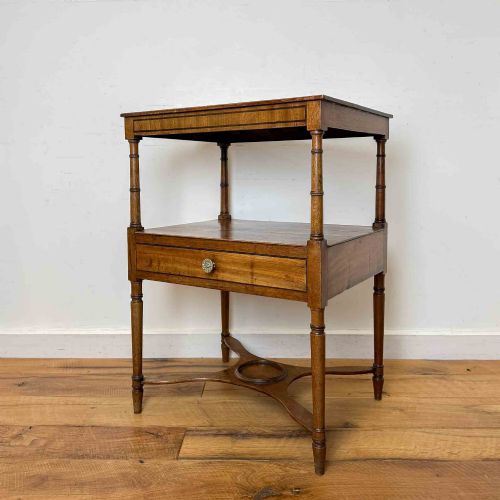
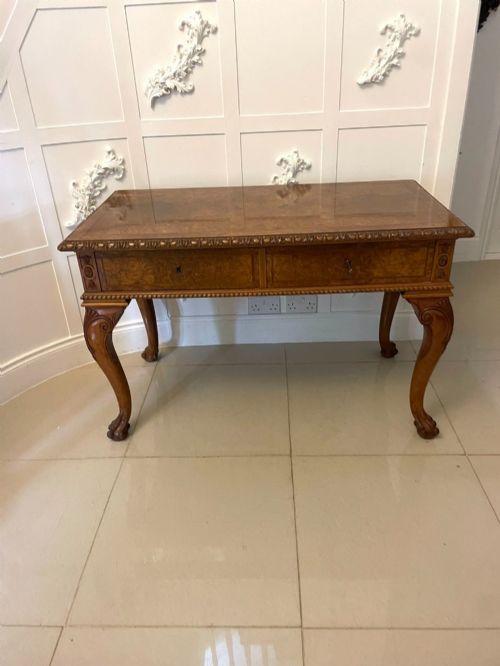
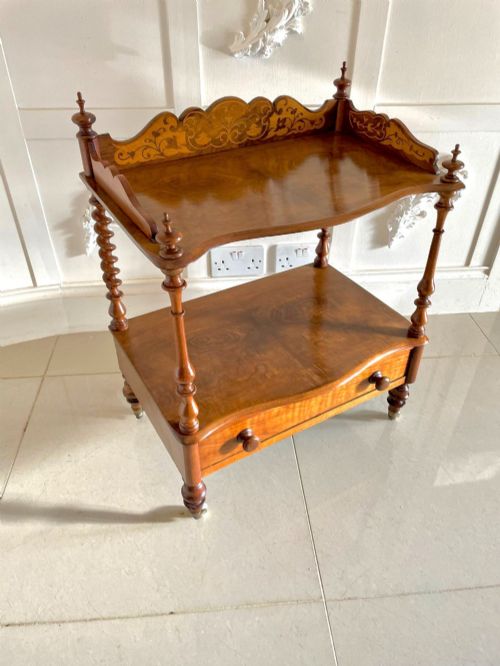




Two Drawer Stand
A two drawer stand brings compact utility and timeless craftsmanship to any room, offering versatile storage across diverse historical periods.
Two Drawer Stand
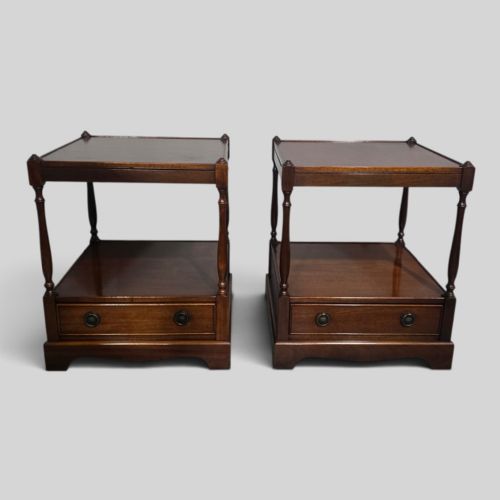
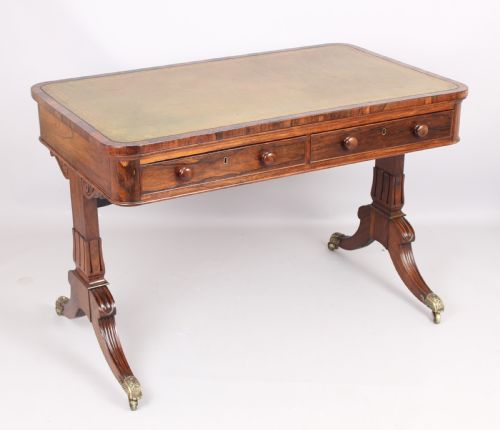
A two drawer stand combines functional surface space with accessible storage, appearing in forms such as side tables, chests on stands, and console tables. These pieces serve practical roles in hallways, living rooms, and studies.
The selection ranges from seventeenth-century oak chests on stands to twentieth-century burr walnut console tables and mahogany lamp tables. Buyers frequently encounter Victorian and Edwardian examples alongside earlier Georgian and seventeenth-century forms.
Materials and construction
Cabinet makers utilised dense hardwoods including mahogany, oak, walnut, and rosewood, often enhancing surfaces with burr walnut veneers or satinwood inlays. Brass hardware frequently secures drawers and adds functional detail.
Joinery techniques evolved across the centuries, transitioning from heavy oak frames to refined mahogany and walnut construction. Surfaces display traditional polishing methods that highlight the natural grain of the timber.
Two Drawer Stand Retail Price Guide 2026
Typical asking prices for two drawer stand among the pieces listed under this phrase on Sellingantiques today, from the lower quarter to the upper quarter. They describe what is for sale here now, not the wider market.
Clerks once carried campaign desks across continents, trusting recessed brass corners to survive bumpy journeys.
Distinctions in quality
Quality rests upon the selection of timber figures, such as highly figured burr walnut or dense mahogany, and the precision of inlaid details. Superior examples exhibit harmonious proportions and uncompromised structural integrity.
The refinement of drawer construction and the retention of original brass handles or distinct period characteristics elevate certain pieces above standard utilitarian furniture.
The Two Drawer Stand Glossary
- Chest on stand
- A two-part form comprising a drawer section elevated upon a separate base or frame. This design lifts storage off the floor.
- Burr walnut
- A highly prized wood harvested from the wart growths of walnut trees. It creates complex, swirling grain patterns across tabletops and drawer fronts.
- Inlay
- A decorative technique where contrasting woods or materials are inserted into recesses within the primary surface. Satinwood is commonly utilised for this purpose on mahogany pieces.
- Campaign desk
- A portable writing table designed for travel, featuring recessed brass handles and sturdy construction. These pieces fold or separate for transport.
Two Drawer Stand: Frequently Asked Questions
How do I place a two drawer stand?
These versatile pieces fit easily into narrow hallways, beside seating areas, or as compact writing desks in studies.
Their restrained proportions allow them to function alongside existing furniture without dominating the room.
Are these stands suitable for daily use?
Solid hardwood construction ensures durability for everyday tasks such as holding lamps, books, or writing materials.
Regular polishing with appropriate wax maintains the protective finish on the timber surfaces.
How do I identify seventeenth-century oak stands?
Seventeenth-century pieces display heavier framing, pegged joinery, and simpler structural lines compared to later decorative styles.
The oak timbers often show deep patination accumulated over centuries of use.
What distinguishes Victorian tables from Georgian ones?
Victorian examples often incorporate denser carving, burr walnut veneers, and heavier proportions influenced by earlier revival styles.
Georgian furniture generally favours cleaner architectural lines and understated mahogany or walnut surfaces.