


Two Branch Wall Sconces
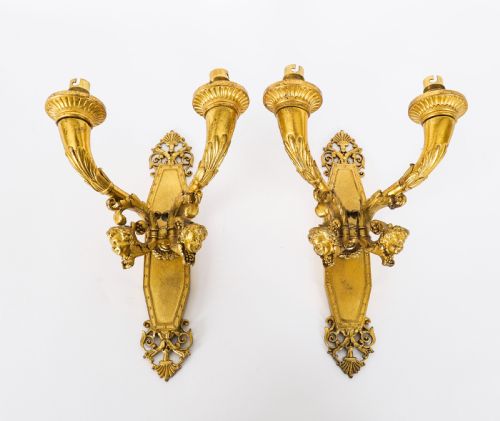
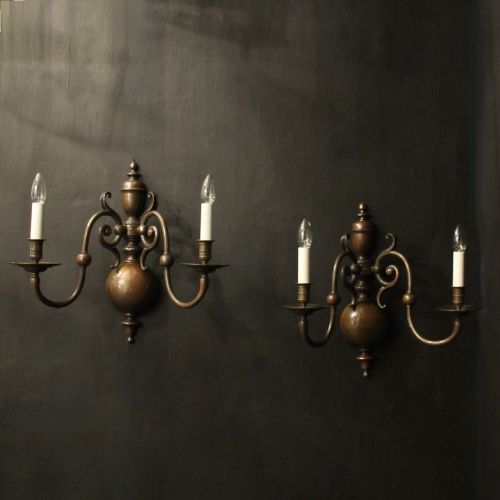
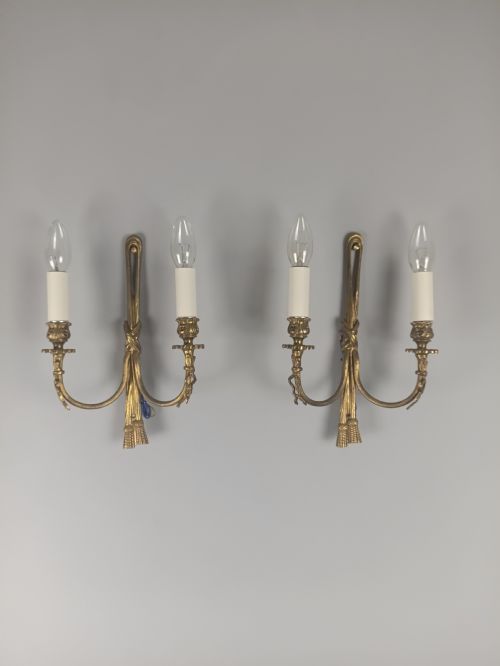
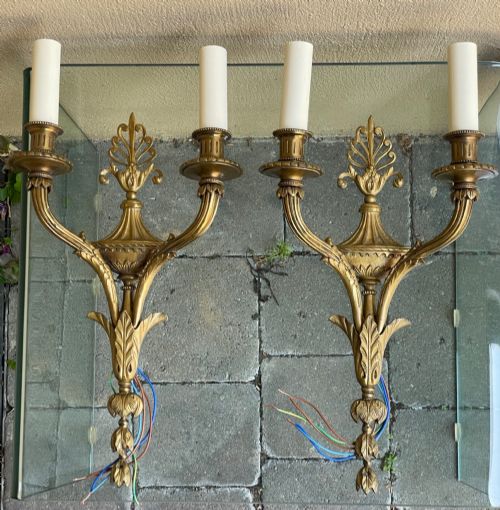
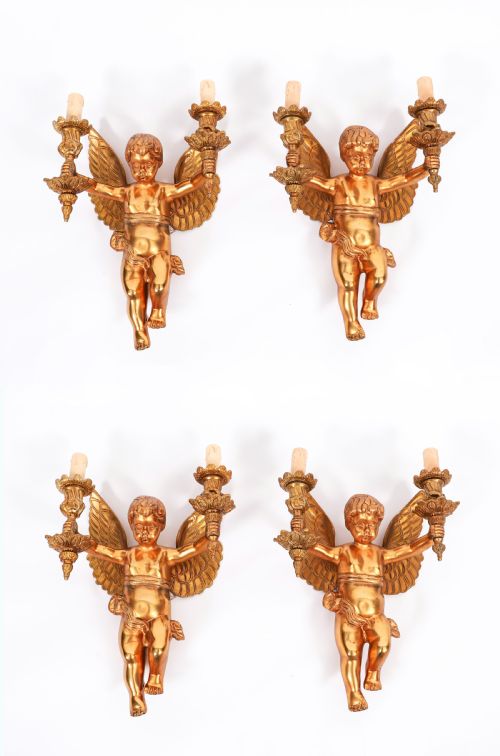
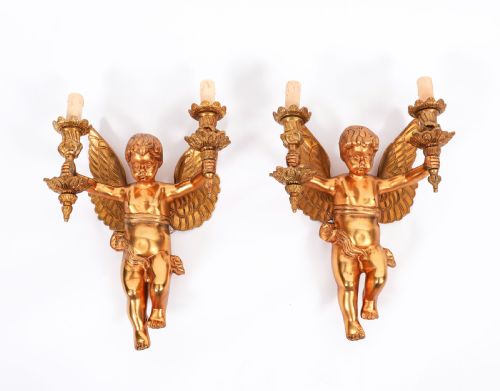
These two branch wall sconces bring focused candle or electric light to a room, cast in bronze, brass, and giltwood.
Two Branch Wall Sconces
When you search for two branch wall sconces, you encounter pairs and sets designed to mount directly to a wall and project twin arms of light. These fixtures trace back through the nineteenth and twentieth centuries, originating predominantly in French, English, Dutch, and Italian workshops.
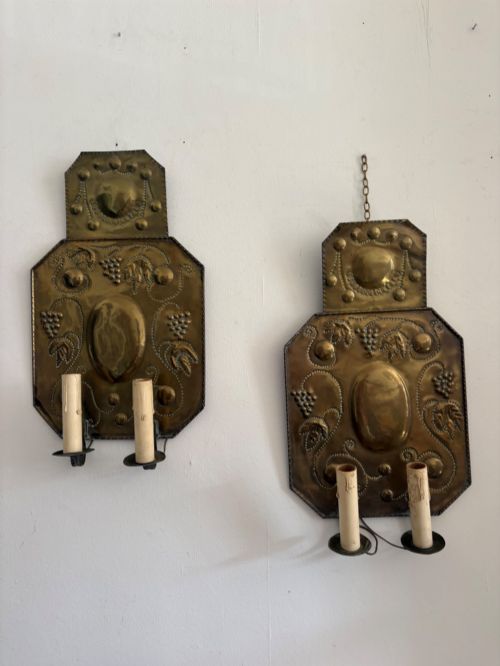
The most common versions met on this page are French examples cast in ormolu, gilt bronze, and gilt brass, often bearing stylistic revivals of the Louis XIV and Louis XVI periods. Alongside these, Dutch repousse brass and English brass or bronze twin arm configurations appear frequently.
Forms range from restrained Neoclassical and Adam designs to exuberant Rococo curves, Art Nouveau sweeps, and playful cherub motifs. Buyers select them to frame mirrors, fireplaces, and doorways, providing balanced illumination at eye level.
Materials and construction methods
Foundry work dominates the construction of these pieces, utilising bronze, brass, and metal cast with intricate detail before receiving applications of gold leaf, gilt, or ormolu finish. Ormolu relies on mercury gilding or modern electroplating over bronze to achieve a rich, durable golden lustre that holds its tone.
Repousse work appears on brass pieces, shaping the metal from the reverse using hammers and punches to create raised surface patterns. Assembly typically involves threaded rods and screws securing the backplate, arms, and drip pans together.
Two Branch Wall Sconces Retail Price Guide 2026
Typical asking prices for two branch wall sconces among the pieces listed under this phrase on Sellingantiques today, from the lower quarter to the upper quarter. They describe what is for sale here now, not the wider market.
Listings feature pieces spanning from the 1800s through the 1930s, encompassing Victorian, Edwardian, Art Nouveau, and revival styles.
Distinguishing quality in design and execution
Weight and rigidity also separate the tiers of production, as heavier bronze and thick ormolu resist bending and support the twin arms securely over decades of use. Thinner stamped brass lacks this structural heft, often feeling flexible at the joints.
Surface finish reveals the maker's original intent, where genuine fire gilding or heavy gold leaf ages with a soft, warm patina rather than the harsh, uniform shine of modern lacquer.
The Two Branch Wall Sconces Glossary
- Ormolu
- Gilded bronze, produced by applying a gold amalgam to a bronze base and heating it to drive off the mercury. It yields a rich, matte golden surface characteristic of fine French decorative metalwork.
- Repousse
- A metalworking technique where the artisan hammers the metal from the reverse side to form a raised design in relief. It is frequently seen on Dutch brass wall sconces.
- Girandole
- A branched wall light or sconce, often incorporating a mirror backplate to reflect and multiply the candlelight. The term derives from the Italian for a Catherine wheel firework.
- Dore
- A French term denoting gilded or golden, commonly applied to bronze objects finished with a bright gold coating. It highlights the reflective quality of high-grade metalwork.
- Backplate
- The flat or shaped structural plate that fastens flat against the wall and supports the projecting arms. It distributes the weight of the fixture safely across the mounting surface.
Two Branch Wall Sconces: Frequently Asked Questions
How do I mount two branch wall sconces safely?
These fixtures require secure fixing to wall studs or the use of appropriate wall anchors capable of supporting the combined weight of the metal and arms.
For wired examples, ensure the electrical supply is switched off at the mains before connecting internal wires to the household circuit.
Can these wall sconces be converted for electricity?
Many surviving examples have already been rewired for modern electric bulbs, replacing original candle sockets with internal sleeves or miniature lampholders.
Unconverted pieces designed for candles can be adapted by professional electricians using concealed wiring or miniature candle tubes that preserve the antique appearance.
How do I clean gilt bronze and ormolu?
Dust the surfaces gently with a soft, dry brush or microfiber cloth to prevent dirt accumulation in the recessed chased details.
Avoid using abrasive metal polishes, harsh chemical cleaners, or water, as these can strip away the delicate gold leaf or historic ormolu surface.