





Twisted Leg Furniture
Twisted leg furniture brings spiral turned columns and supports to tables, cabinets, and chests across multiple centuries.
Twisted Leg Furniture
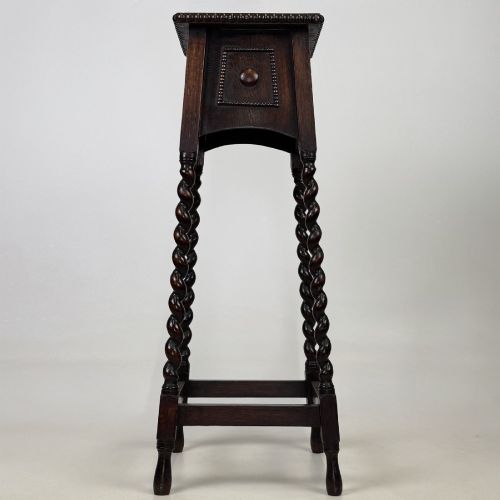
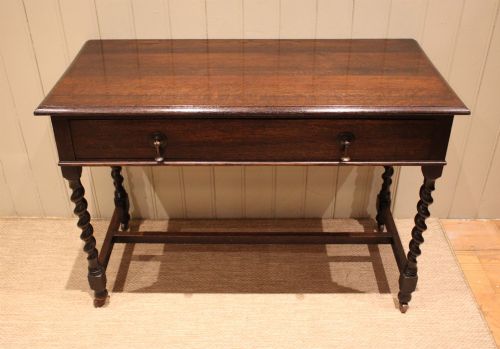
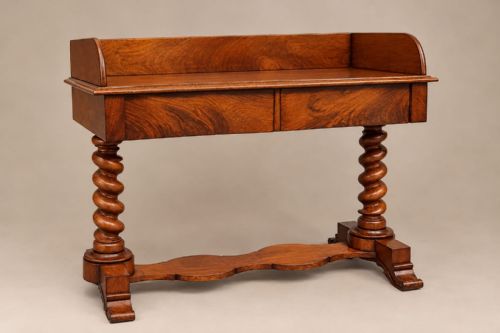
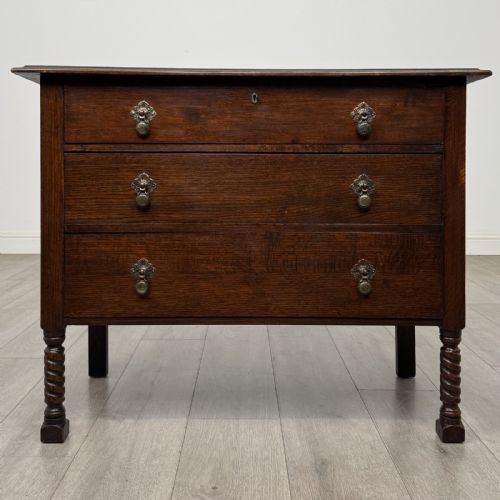
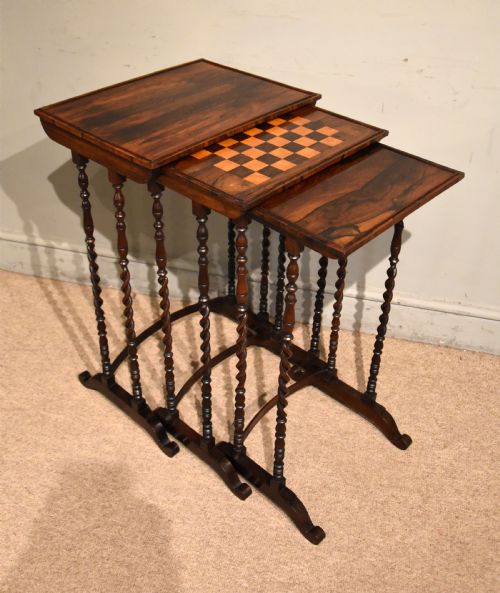
Twisted leg furniture encompasses tables, cabinets on stand, chests of drawers, and washstands featuring spiral turned uprights. These pieces span from seventeenth-century William and Mary designs through to Edwardian and early twentieth-century revivals.
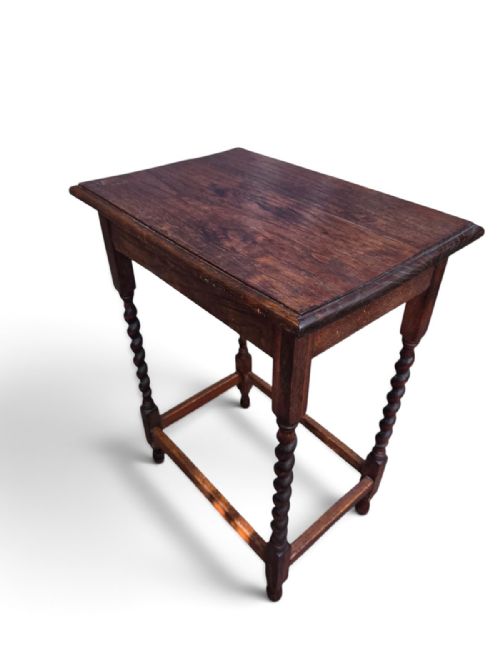
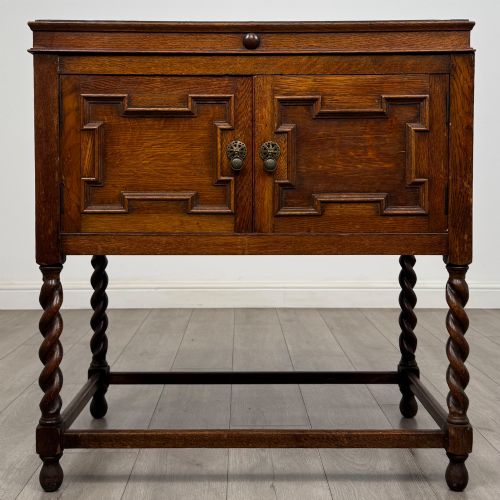
The oak side table or chest of drawers with barley twist legs is the most common form met here. Pieces range widely in scale, from miniature Portuguese rosewood tables to substantial Flemish cabinets on stand.
How they were made
Cabinetmakers utilised timbers such as oak, mahogany, walnut, rosewood, and kingwood, often enhanced with ebonising or marquetry inlay. Specialised turning techniques shaped the solid wood into consistent spiral columns for supports and legs.
Surface ornamentation included bone inlay, oyster veneers in olive, laburnam, and holly, alongside intricate carvings of lion masks on Flemish oak structures.
Twisted Leg Furniture Retail Price Guide 2026
Typical asking prices for twisted leg furniture among the pieces listed under this phrase on Sellingantiques today, from the lower quarter to the upper quarter. They describe what is for sale here now, not the wider market.
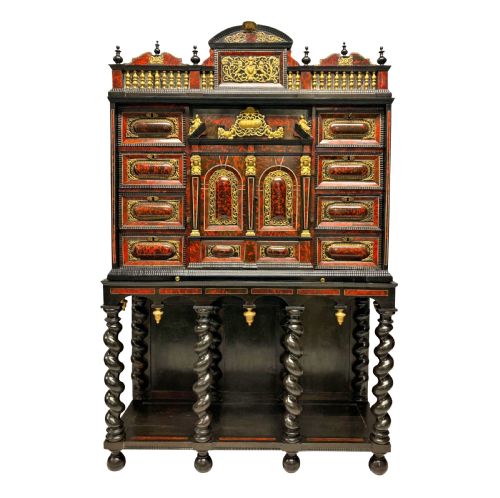
Lion masks peer from seventeenth-century Flemish cabinets, keeping watch over centuries of spilled ink and polishing wax.
What varies in quality
The precision of the woodturning and the crispness of the spiral twist define the primary tier of craftsmanship. Superior examples display harmonious proportions between the turned legs and the main body of the table or cabinet.
Choice of timber and complexity of secondary decoration, such as marquetry panels or architectural mouldings, separate standard utility pieces from more ambitious decorative works.
Liberty and Co
The Twisted Leg Furniture Glossary
- Barley twist
- A spiral turning resembling a stalk of barley, frequently found on seventeenth-century and revival table legs. This form requires careful lathe work to maintain uniform curves.
- Cabinet on stand
- A cabinet designed to sit upon a separate supporting frame with legs. These pieces often incorporate drawers or cupboards raised high off the floor.
- Oyster veneer
- Thin circular slices cut across small branches to create patterned wooden surfaces. This technique appears on seventeenth-century and revival tabletops and drawer fronts.
- Marquetry
- Inlaid patterns of wood, bone, or other materials fitted into a veneer background. It decorates the surfaces of Dutch and English tables and cabinets.
- Snap-top
- A tabletop hinged to tilt flat when not in use. This mechanism allows occasional tables to be stored compactly against a wall.
Twisted Leg Furniture: Frequently Asked Questions
What periods feature twisted leg furniture?
Twisted leg furniture appears across the seventeenth, eighteenth, nineteenth, and early twentieth centuries. The form originates in seventeenth-century styles like William and Mary and Flemish Baroque, returning in Victorian and Edwardian revival periods.
Twentieth-century pieces often imitate earlier seventeenth-century oak and walnut forms, using similar barley twist supports on side tables and cupboards.
How are twisted legs made?
The spiral form is achieved by turning timber on a lathe or by hand carving the helix shape along the length of the leg. Craftsmen shape the wood to maintain an even rhythm down the column.
Hardwoods like oak, walnut, and mahogany hold the crisp edges of the twist better than softer woods, ensuring the turning remains sharp over centuries of use.
Where should I place a twisted leg table?
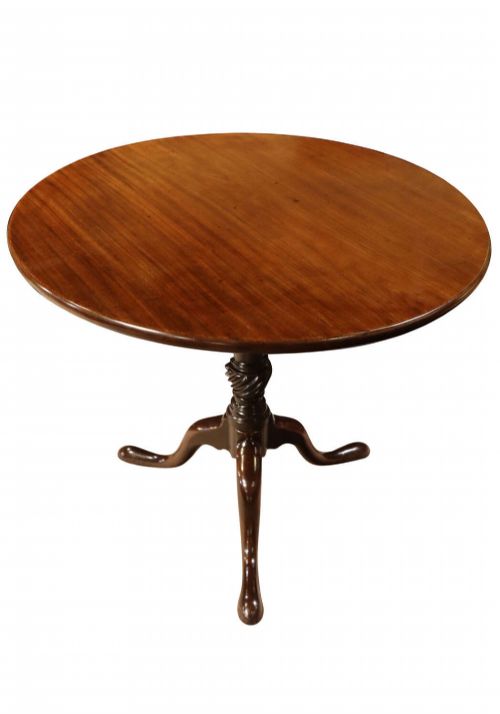
Occasional tables and side tables with spiral legs suit hallways, living rooms, and bedrooms as lamp or display surfaces. Their slender turned supports keep the silhouette visually light in smaller spaces.
Larger cabinets on stand require more floor space and a considered backdrop to showcase the carved details and timber grain without crowding the room.
How do I distinguish old twists from revivals?
Seventeenth-century originals often show hand-tool marks and the distinct ageing of timbers like oak or walnut. Revival pieces from the Victorian and Edwardian eras typically display more mechanical uniformity from machine turning.
Construction methods, joint types, and secondary woods inside drawers or behind panels help clarify whether a piece dates to the seventeen hundreds or the nineteen hundreds.