



Twisted Leg Cabinets
Twisted leg cabinets bring architectural weight and rich timber grain to an interior, anchored by iconic spiral turnings.
Twisted Leg Cabinets
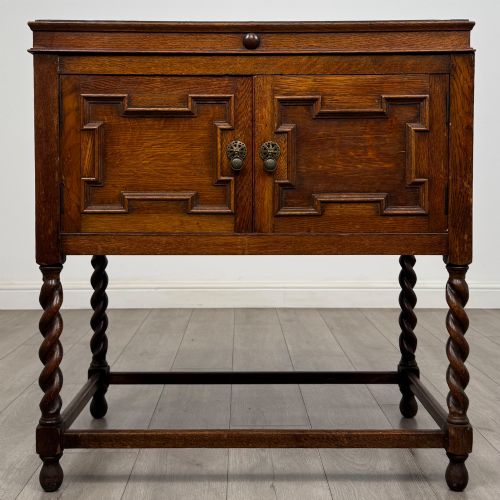
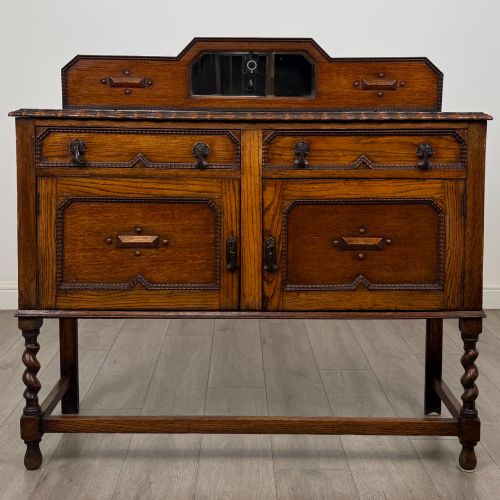
Twisted leg cabinets encompass storage furniture raised on spiral-turned supports, spanning centuries from seventeenth-century masterworks to early twentieth-century revivals. The listings demonstrate that buyers most frequently encounter oak and walnut pieces from the Edwardian era and the nineteen-twenties executed in the Jacobean style.
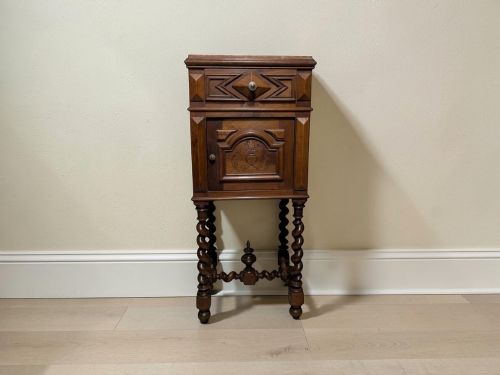
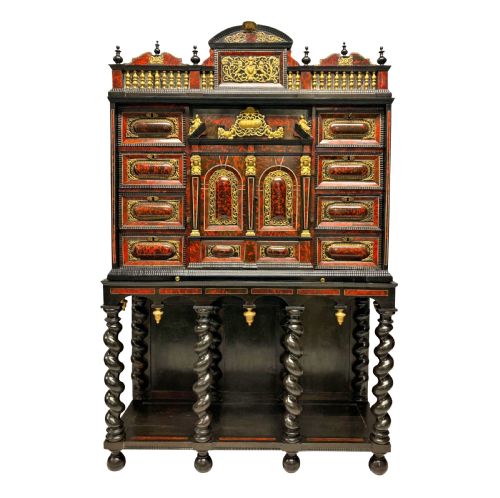
The forms vary considerably across the selection, ranging from bureau bookcases and sideboards to elaborate cabinets on stand and compact bedside tables. These diverse shapes share a distinct vertical emphasis where the turned supports elevate substantial timber bodies.
Origin and period markers define the character of each piece, linking seventeenth-century Flemish and William and Mary origins directly to later revivals. Buyers evaluate whether a piece follows seventeenth-century proportions or adopts the lighter Golden Oak of the Edwardian period.
Judging quality and execution
Quality reveals itself in the selection of timber veneers and the sharpness of the spiral turnings, where superior examples exhibit fluid curves and matched grain patterns. The integration between the upper cabinet and the supporting stand separates ambitious masterworks from simpler utility pieces.
Carved enrichments, such as lion masks or architectural pediments, demonstrate the hand of a skilled artisan rather than mechanical repetition. Original hardware, including brass mounts and hinges, preserves the integrity of the period.
Twisted Leg Cabinets Retail Price Guide 2026
Typical asking prices for twisted leg cabinets among the pieces listed under this phrase on Sellingantiques today, from the lower quarter to the upper quarter. They describe what is for sale here now, not the wider market.
Fierce lion masks glare steadily from nineteenth-century oak stands, daring anyone to misplace a key.
The Twisted Leg Cabinets Glossary
- Barley twist
- A spiral turning resembling a twisted rope, commonly found on the legs and supports of seventeenth-century and revival furniture. This technique creates dynamic play of light and shadow along the vertical posts.
- Oyster veneer
- Slices of small branches cut transversely to reveal circular annual growth rings resembling oyster shells. Cabinetmakers arranged these veneers in geometric patterns across drawer fronts and top panels.
- Cabinet on stand
- A freestanding storage compartment raised upon an independent frame with four or more legs. This form elevates display and storage to eye level while lightening the visual weight.
- Jacobean style
- An English design aesthetic from the seventeenth century characterised by solid proportions, geometric mouldings, and dark oak. Revival iterations revive these sturdy architectural elements in later centuries.
- Bureau bookcase
- A dual-purpose writing desk featuring a sloping fall-front combined with upper shelving or enclosed book storage. These pieces integrate practical workspace with prominent display capabilities.
Twisted Leg Cabinets: Frequently Asked Questions
What defines a twisted leg cabinet?
These pieces combine enclosed storage, such as cupboards or bureau compartments, with prominent spiral-turned supports that elevate the main body. The design draws on seventeenth-century traditions popularised during later revival periods.
They serve as focal points in rooms, offering both display space and concealed storage within an architectural silhouette.
How do I date a twisted leg cabinet?
Dating relies on timber selection, construction methods, and stylistic cues such as hardware and veneer types. Seventeenth-century originals feature hand-cut joints and dense hardwoods, whereas Edwardian and nineteen-twenties pieces often utilise Golden Oak and machine-finished turnings.
Comparing the secondary woods and interior drawer construction helps distinguish period originals from later revival interpretations.
Where should I place a cabinet on stand?
These taller forms require walls with adequate vertical clearance and minimal competition from other large furniture items. Entrances, living rooms, and studies provide suitable settings where the detailed stands and turned legs remain fully visible.
Positioning them away from direct heat sources protects vulnerable veneers and aged timber joints from drying out.
What is the difference between oak and walnut versions?
Oak examples typically present a robust, heavily grained surface associated with Jacobean and Edwardian vernacular furniture. Walnut versions frequently incorporate finer decorative techniques like oyster veneers and elaborate marquetry.
Walnut pieces often signal higher status or continental origin, while oak variants lean towards sturdy domestic utility and revival strength.