

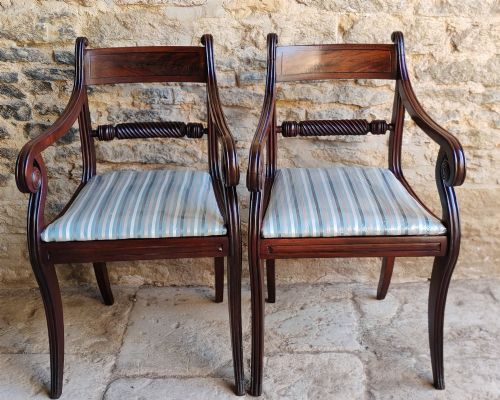
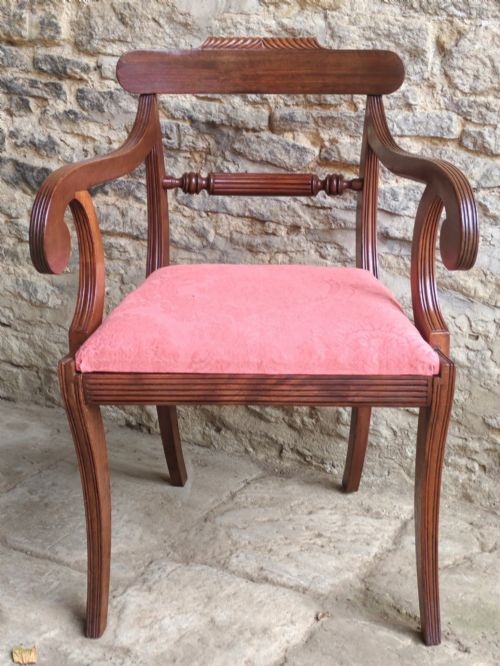


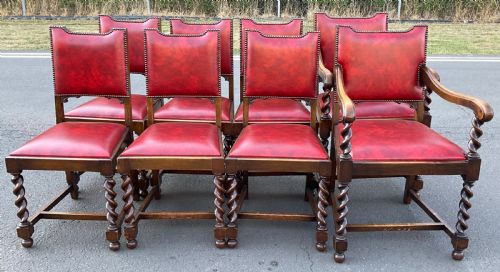

Twisted Leg Armchairs
Twisted leg armchairs bring structural vigour and tactile warmth to a room, offering robust timber framing paired with supportive seating.
Twisted Leg Armchairs
Twisted leg armchairs combine sturdy wooden frames with supportive seating, taking forms such as carver chairs, dining chairs, library chairs and grand throne chairs. When you search for twisted leg armchairs, you encounter diverse seating designed for both formal display and daily repose.
The pieces span centuries, appearing in periods from the seventeenth century through the Georgian and Regency eras into the Victorian age and the early twentieth century. Oak and mahogany dominate the selection, often accompanied by walnut or laburnum timber.
You meet various revival styles among these listings, including Jacobean Revival, Victorian Gothic Revival, Carolean and Baroque Revival. Pieces range from single statement armchairs to matched sets of dining and carver chairs.
How they were made
Cabinet makers and joiners shaped these frames from dense hardwoods such as oak, mahogany, walnut and laburnum. The distinctive leg form requires precise turning or carving to create the spiralling twist.
Upholstery methods evolved across the periods, incorporating fabrics like leather, velvet, cotton calico and woven upholstery fabric. Brass details and bergere panels occasionally accent the timber framework.
Twisted Leg Armchairs Retail Price Guide 2026
Typical asking prices for twisted leg armchairs among the pieces listed under this phrase on Sellingantiques today, from the lower quarter to the upper quarter. They describe what is for sale here now, not the wider market.
What varies in quality
The choice of timber dictates much of the character, with figured mahogany, rich walnut and dense early oak sitting at the upper end of the scale. The crispness of the twist on the leg indicates the skill of the original maker.
Proportion and structural integrity define the best examples, particularly where arms and legs meet the main seat frame. Original upholstery materials and period fabric choices enhance the historical integrity of a piece.
The Twisted Leg Armchairs Glossary
- Carver chair
- An armchair, often designed en suite with a set of dining chairs, featuring arms to accommodate the head of the household. These chairs typically match the simpler side chairs in timber and style.
- Bergere
- An enclosed upholstered armchair with woven cane or wicker sides and back panels. This French style gained popularity in various periods for library and drawing room seating.
- Jacobean Revival
- A nineteenth or twentieth century architectural and furniture style emulating the heavy oak forms of the early seventeenth century. It frequently incorporates the twisted turnings seen on earlier seating.
- Carolean
- Pertaining to the reign of King Charles II, characterised by lavish Baroque decoration and dynamic turning. Original seventeenth century examples set the template for later revival pieces.
Twisted Leg Armchairs: Frequently Asked Questions
How do I date an armchair?
Examine the timber species, construction joints and tool marks visible on the underside of the frame. Different periods favoured distinct woods, such as early oak and laburnum versus later mahogany and walnut.
Compare the overall silhouette and stylistic motifs against known eras like the Georgian, Regency or Victorian periods. Secondary woods and fixings often provide additional clues to the exact decade of manufacture.
Can I use these chairs daily?
Most antique armchairs are structurally robust enough for daily use, provided the frame joints remain tight and secure. Oak and mahogany offer exceptional durability for regular seating.
Consider having older upholstery or webbing checked by a professional conservator to ensure proper support. Periodic waxing helps protect the timber surfaces from everyday wear and tear.
What is a carver chair?
A carver chair is an armchair traditionally placed at the head of a dining table, matching a set of smaller side chairs. These pieces feature integrated armrests designed for added comfort during long meals.
In many listings, carvers appear individually or as matched pairs alongside larger dining sets. They function equally well as standalone desk or accent chairs in living spaces.
How do I care for timber frames?
Maintain antique timber by applying a microcrystalline wax or traditional beeswax polish sparingly every few months. Buff the surface gently with a soft cloth to preserve the natural lustre of the wood.
Keep chairs away from direct heat sources and strong sunlight to prevent the timber and upholstery from drying out or fading. Stable indoor humidity protects both the wood and any glued joints.