






Twist Leg Oak Chairs
Twist leg oak chairs are seating pieces defined by turned timber supports, offering sturdy construction and enduring character for daily use.
Twist Leg Oak Chairs
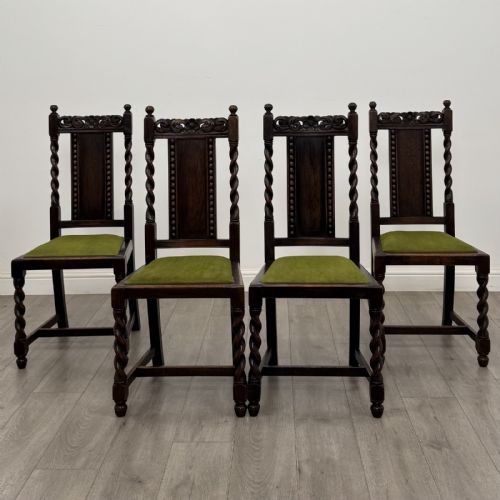
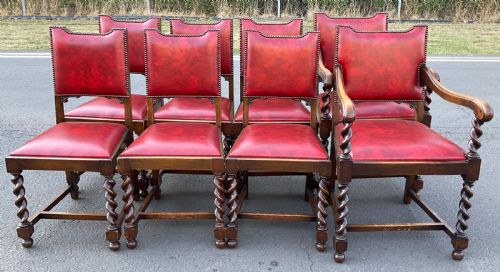
When you search for twist leg oak chairs, you encounter dining chairs, armchairs, and side chairs spanning the nineteenth and early twentieth centuries. The selection includes sets of chairs alongside pairs and individual library armchairs.
You are most likely to meet Edwardian and nineteen-twenties sets designed for dining, alongside Victorian farmhouse and Gothic revival armchairs. These pieces draw upon Jacobean revival and Arts and Crafts traditions, using solid timber frames.
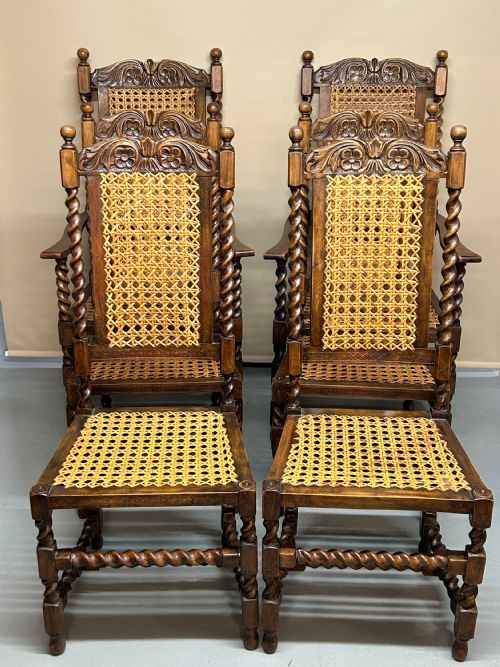
The forms range from high-backed dining seats with cane or upholstered panels to open-arm library chairs. Each piece combines traditional joinery with turned wood supports.
Construction and materials
These pieces are built using solid oak and elm for the primary frames, providing structural strength and heavy weight. The timber is shaped and joined using traditional methods suited to domestic seating.
Supports are turned on a lathe to create spiral and barley twist profiles on the legs and stretchers. Seats and backs incorporate cane work, leather, brass detailing, and various upholstery fabrics.
Twist Leg Oak Chairs Retail Price Guide 2026
Typical asking prices for twist leg oak chairs among the pieces listed under this phrase on Sellingantiques today, from the lower quarter to the upper quarter. They describe what is for sale here now, not the wider market.
A sturdy set of barley twist chairs can endure a century of family dinners and still demand a straight-backed posture.
Assessing quality and craftsmanship
Quality rests in the crispness of the timber turning and the tightness of the frame joinery. Superior examples maintain structural rigidity without excessive movement in the joints.
The choice of seating material, whether woven cane or upholstered fabric, alters the finish and comfort of the piece. Matching sets demonstrate higher consistency across all items than assembled groups.
Liberty & Co
The Twist Leg Oak Chairs Glossary
- Barley twist
- A carved wooden leg shaped like a spiralling rope or barley sugar. This decorative turning style appears frequently on furniture from the seventeenth century onwards.
- Cane
- Woven rattan material used for seat panels and chair backs. It provides a flexible and breathable surface for seating.
- Bergere
- An enclosed upholstered armchair with a wooden frame and cane back and sides. This French-inspired form gained popularity in British libraries and drawing rooms.
- Jacobean Revival
- A style of design mimicking the heavy, carved aesthetic of the early seventeenth century. Makers utilised dark timber and turned supports to evoke this earlier period.
Twist Leg Oak Chairs: Frequently Asked Questions
What are twist leg oak chairs?
These are wooden seating pieces featuring spirally turned legs and stretchers, constructed mainly in oak and elm.
They appear as dining sets, armchairs, and side chairs across various nineteenth and twentieth-century styles.
How were they used historically?
They served primarily as formal dining seating or as library and parlour armchairs for daily domestic life.
Larger houses utilised matching sets around dining tables, whilst single armchairs stood in studies and reception rooms.
How do I care for cane seats?
Cane panels require occasional gentle cleaning with a damp cloth to maintain their moisture and prevent snapping.
Keeping them away from direct heat sources stops the natural rattan material from becoming brittle over time.
How can I tell the period?
Dating relies on timber colour, joint construction methods, and stylistic cues such as Arts and Crafts influences or Victorian proportions.
Earlier nineteenth-century examples often feature heavier frames, whilst nineteen-twenties pieces frequently appear in larger matching sets.