



Twist Leg Dining Table
A twist leg dining table brings centuries of British joinery straight into a room, offering sturdy oak timbers and clever folding leaves for daily dining.
Twist Leg Dining Table
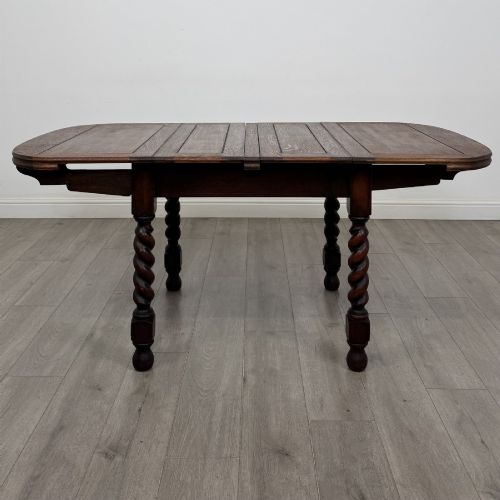
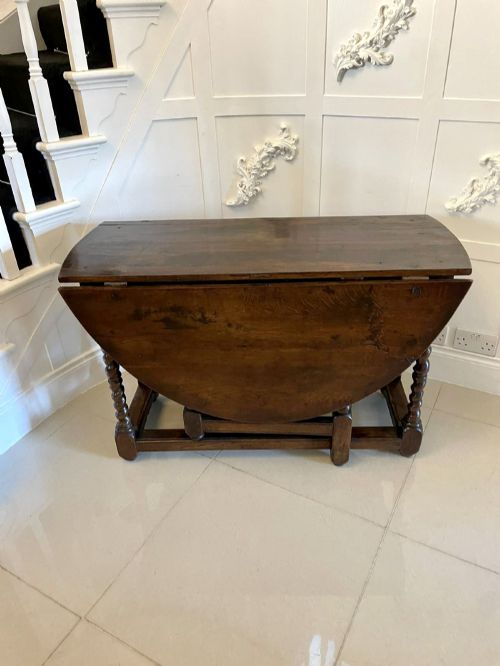
A twist leg dining table is primarily found on this page as an oak gateleg or drop-leaf dining table originating from the 17th century through to the 1920s. These pieces span Jacobean revival styles down to Edwardian interpretations, using hinged flaps to expand surface area when required.
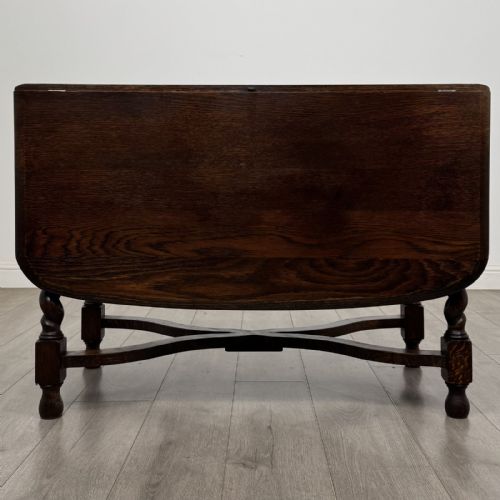
The form relies on a central framework supported by swinging legs that pivot outwards to hold up the drop leaves. Oak is the dominant timber across these examples, shaped with oval tops designed to seat multiple diners once extended.
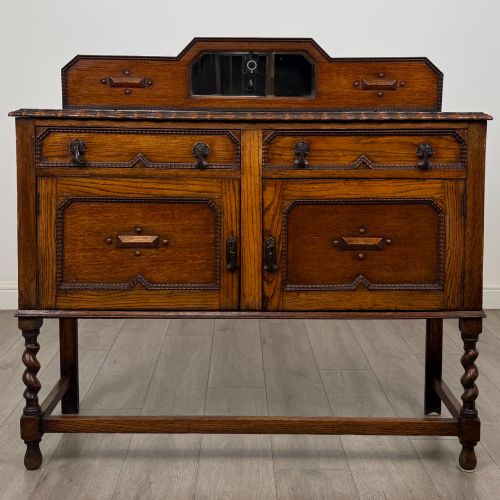
Buyers searching for a twist leg dining table encounter forms varying from small gateleg tables to large 18th century and early 20th century dining tables. The presence of barley twist legs unites these pieces, linking seventeenth-century revival designs with twentieth-century production.
How they were made
These tables were constructed primarily from solid oak, utilising timber joined by traditional framing methods to support the pivoting gateleg mechanism. Carpenters turned the legs on lathes to create the characteristic spiral or barley twist profile.
Drop leaves and oval tops required precise edge jointing of timber boards to ensure a flat surface when opened. Brass hinges and iron fittings frequently secured the moving flaps and folding leg frames.
Twist Leg Dining Table Retail Price Guide 2026
Typical asking prices for twist leg dining table among the pieces listed under this phrase on Sellingantiques today, from the lower quarter to the upper quarter. They describe what is for sale here now, not the wider market.
Listings on this site feature oak materials predominantly, accompanied by mahogany, brass, and iron elements spanning the 17th century to the 1920s.
What varies in quality
Quality in a twist leg dining table rests upon the crispness of the turned spiral legs and the selection of the timber. Dense oak boards with uniform grain and deep colour command greater appreciation than softer or more heavily restored framing.
The structural integrity of the gateleg pivot mechanism determines daily usability. Tables retaining original hinges, sturdy pivoting joints, and straight, well-aligned twist legs represent the upper standard of surviving examples.
The Twist Leg Dining Table Glossary
- Gateleg table
- A table with hinged leaves supported by legs that swing outward like a gate. This construction allows the surface area to reduce or expand easily.
- Barley twist
- A turned wooden column resembling a spiral rope or the stem of barley. This decorative form defines the legs of many Edwardian and 17th-century revival pieces.
- Drop-leaf
- A table design featuring a central fixed board flanked by hinged flaps that drop down at the sides. It provides adjustable surface space for dining.
- Jacobean Revival
- A 19th and 20th-century style copying the dark oak furniture and turning techniques of the early 17th century. It appears frequently in early 20th-century tables.
- Oval top
- A curved table surface shape commonly found on gateleg dining tables. It softens the room's angles while accommodating seated guests.
Twist Leg Dining Table: Frequently Asked Questions
How do I date a twist leg dining table?
Dating relies upon examining the timber characteristics, construction joints, and the sharpness of the leg turning. Seventeenth-century examples display hand-split oak and peg joinery, whereas Edwardian and 19th-century pieces often utilise machine-cut elements and standardised hardware.
Hardware such as brass hinges and the specific style of the barley twist further clarify the production period. Comparing the grain density and patination helps distinguish an 18th-century piece from a later revival version.
Are these tables practical for daily dining?
These drop-leaf tables function effectively for everyday meals because their leaves fold down to save space when not in use. Opening the gatelegs provides a stable surface large enough for multiple diners.
Placing chairs around an oval top requires checking the clearance beneath the frame for leg room. The sturdy oak construction handles regular family use well.
How do I care for an oak surface?
Maintaining an antique oak top involves using dry or slightly damp cloths to remove dust without introducing excess moisture. Regular waxing nourishes the timber and preserves the natural finish accumulated over the decades.
Avoiding direct heat sources and placing protective mats beneath hot dishes prevents the wood from warping or cracking. Gentle care maintains the rich patination of the oak.
What is the difference between a gateleg and a drop-leaf?
A gateleg table is a specific type of drop-leaf table where the supporting legs swing out on a hinged frame resembling a gate. Standard drop-leaf tables may rely on simpler brackets or pull-out wooden supports instead.
Twist leg models on this page predominantly utilise the gateleg mechanism to hold up their heavy oak leaves. This structural design provides the necessary support for the extended oval surface.