

Twist Back Chairs
Twist back chairs bring architectural turning to domestic seating, offering solid timber frames shaped by revivalist tastes.
Twist Back Chairs
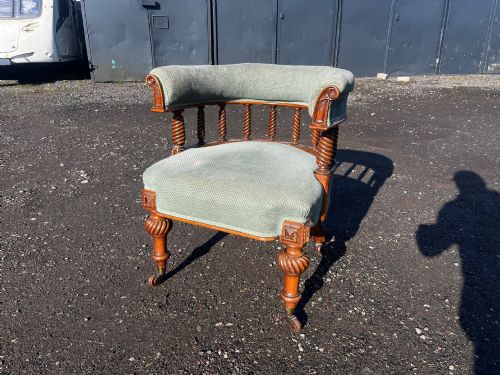
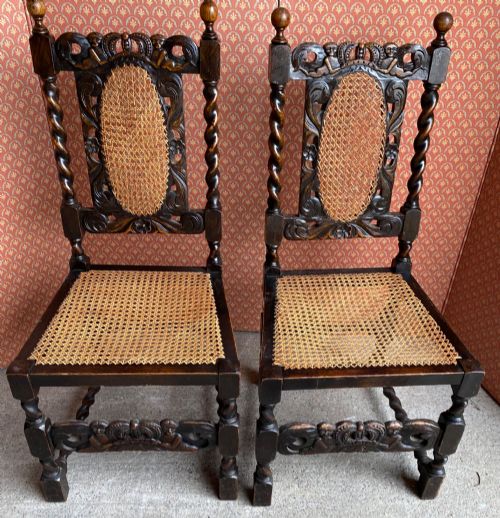
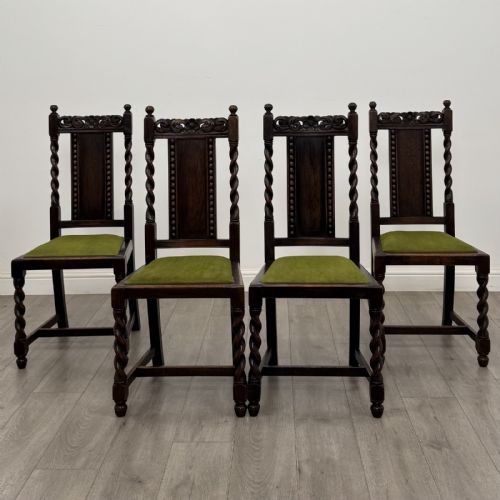
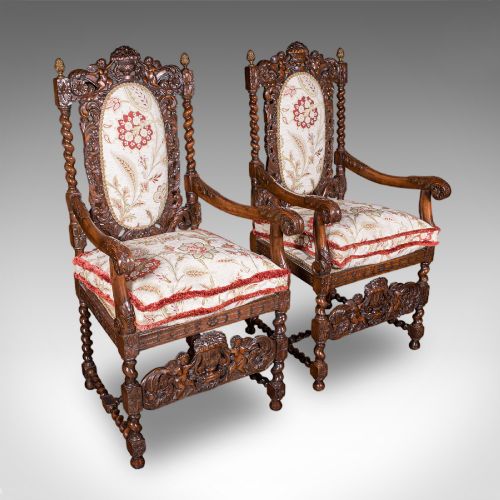
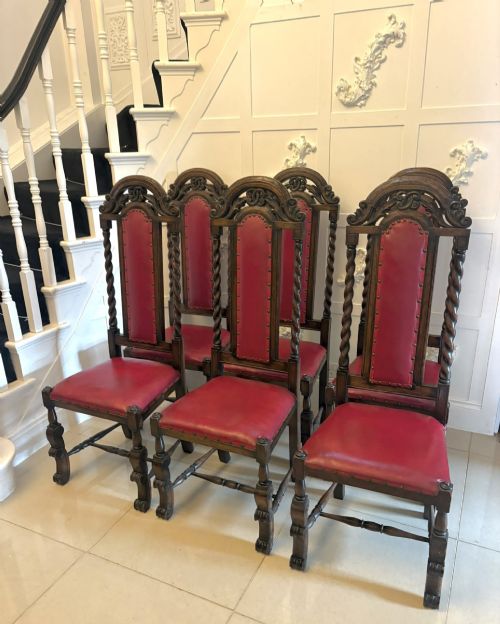
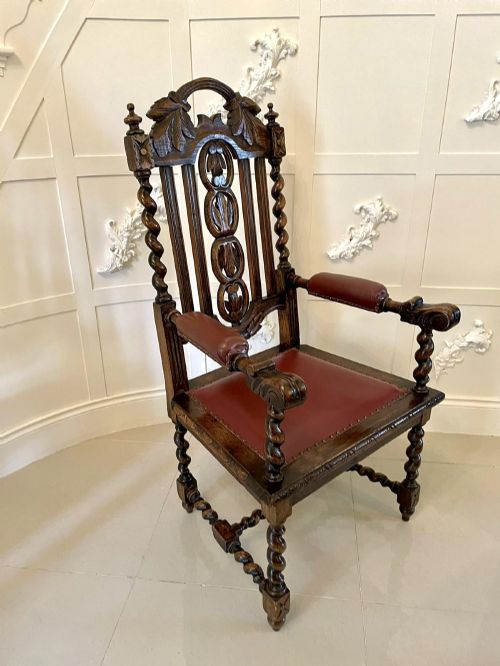
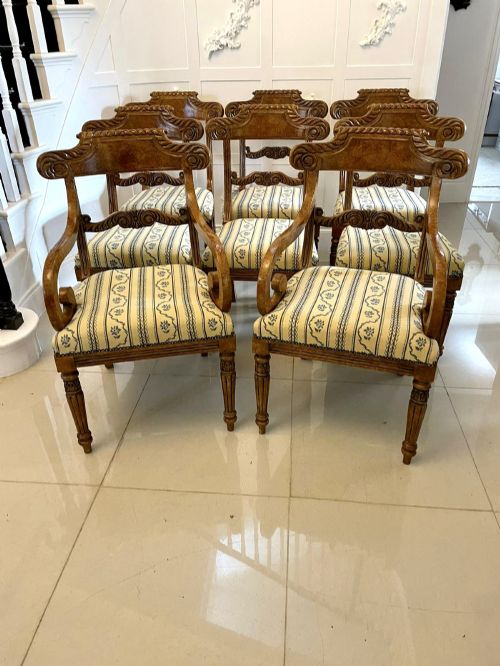
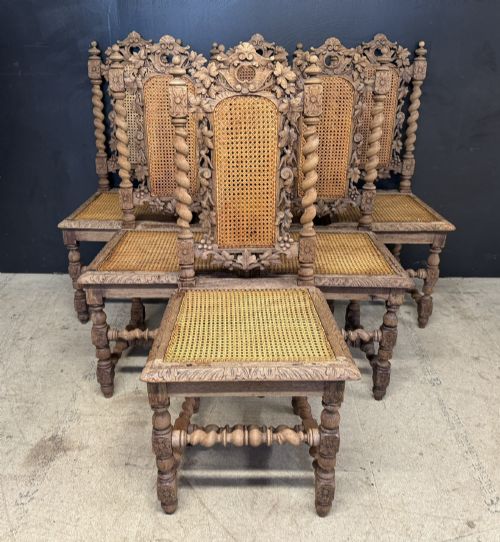
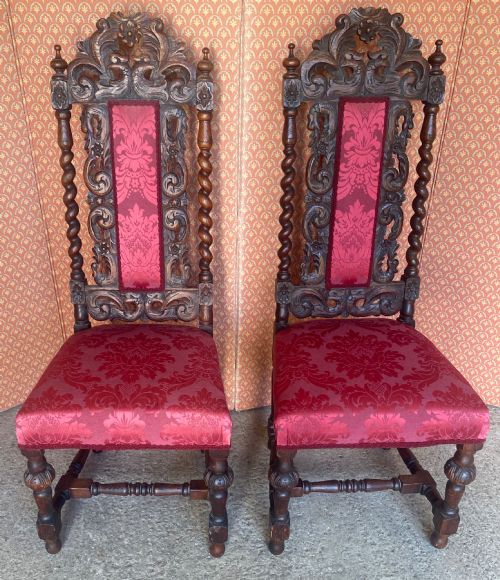
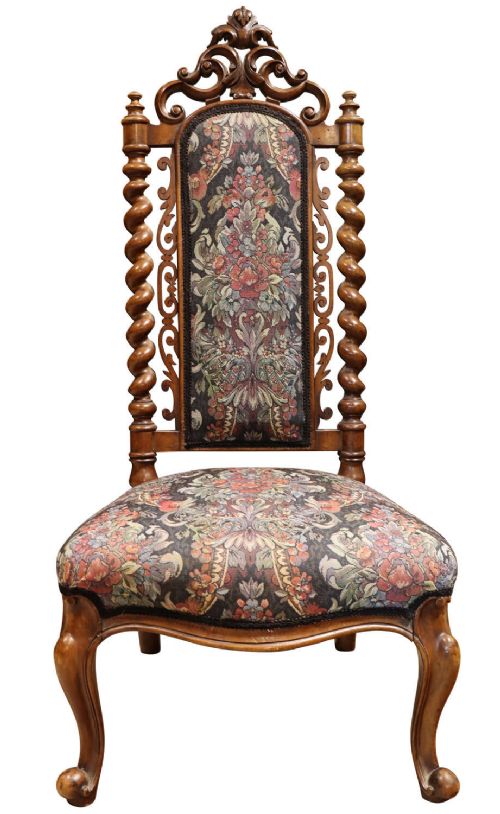
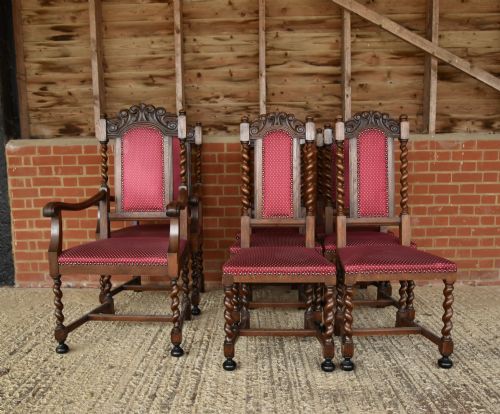
When you search for twist back chairs, you encounter seating built around turned wooden members, predominantly framed in oak or walnut. The selection spans formal dining sets, individual armchairs, and hall chairs influenced by Carolean, Jacobean, and Victorian revival styles.
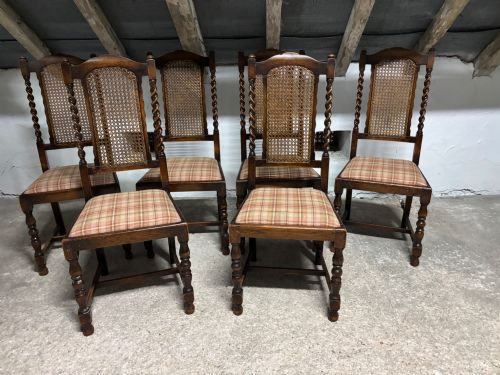
Victorian and Edwardian interpretations dominate the selection, often mirroring 17th-century turning techniques paired with upholstered pads or carved top rails. These pieces emerge in matched sets for the dining room as well as solitary parlour armchairs and office desk seats.
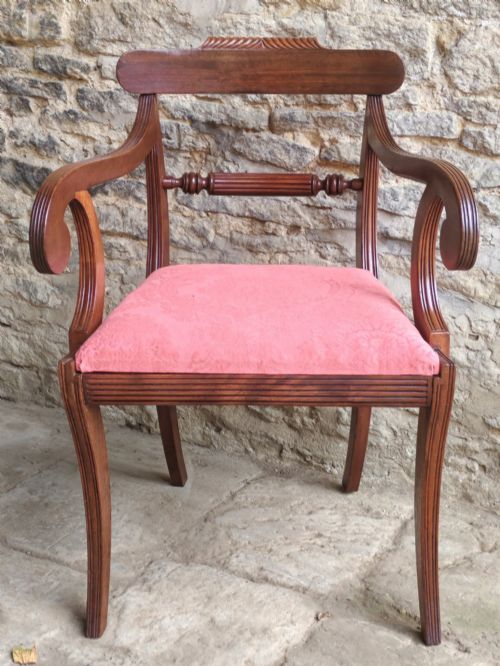
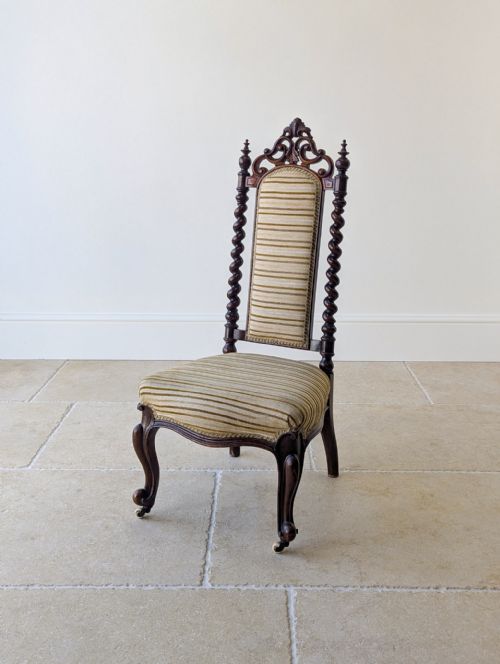
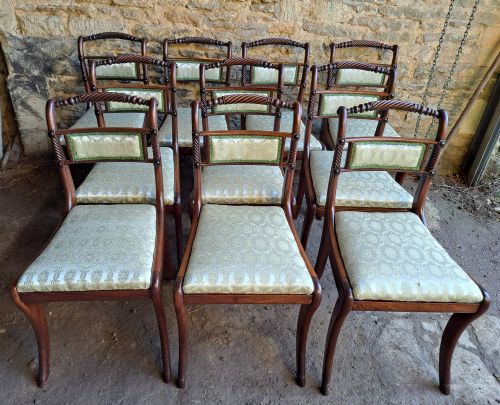
The aesthetic bridges several historic periods, drawing on Regency craftsmanship alongside heavy Victorian Gothic and Renaissance revival forms. Buyers find everything from compact side chairs to high-backed parlour seating featuring intricate spindlework.
Materials and construction
Makers shaped structural supports from dense hardwoods, primarily selecting oak and walnut for their ability to hold deep, crisp turning without splintering. Less common variants incorporate mahogany, satinwood, or faux birds eye maple to alter the visual weight of the frame.
The signature spiral or barley twist components were produced using lathe turning or hand carving to create continuous helical ridges along legs, stretchers, and uprights. Joinery relied on traditional mortise and tenon methods, occasionally reinforced with brass fittings or detailed carved crest rails.
Upholstery materials range from leather and cane to textile, velvet, and tapestry inserts secured with heavy brass tacking. Caned back panels provide lightweight flexibility, while padded seats utilise internal stuffing finished with durable fabric coverings.
Twist Back Chairs Retail Price Guide 2026
Typical asking prices for twist back chairs among the pieces listed under this phrase on Sellingantiques today, from the lower quarter to the upper quarter. They describe what is for sale here now, not the wider market.
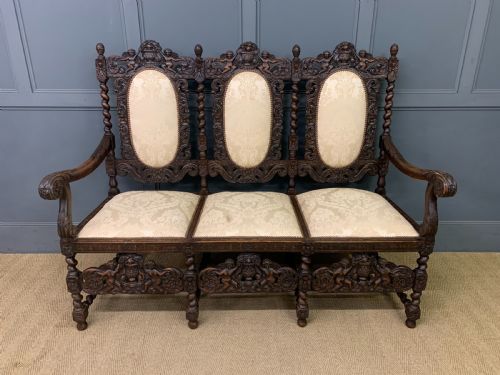
The inventory encompasses diverse seating forms including settes, hall chairs, office desks seats, and complete dining sets.
Assessing quality in twist back chairs
The distinction between standard examples and superior pieces rests on the depth and crispness of the timber carving and turning. Tighter, more uniform helical twists carved directly into solid hardwood indicate greater bench skill than superficial shaping.
Timber selection dictates overall longevity, with dense grain figures in walnut and oak elevating the physical presence of the frame. Matched sets displaying consistent wood colour and uniform grain patterns across all chairs command higher regard than assembled groupings.
Original upholstery surfaces and intact caning preserved alongside healthy timber frames represent superior preservation. Finer examples maintain structural rigidity through tight joinery without relying on excessive modern reinforcement.
C. Hindley & Sons·Liberty & Co
The Twist Back Chairs Glossary
- Barley twist
- A cylindrical wooden component carved or turned into a continuous spiral resembling a stalk of barley. This profile defines the structural legs and supports of many revival chairs.
- Carolean revival
- A design movement looking back to the reign of Charles II, notable for heavily carved walnut frames, elaborate crest rails, and spiralled uprights. Pieces from this aesthetic emphasise ornate woodwork.
- Cane
- Thin strips of peeled rattan woven into an open mesh pattern to form backrests or seats. It offers a lightweight, flexible surface within a rigid wooden frame.
- Stretcher
- A horizontal wooden rail connecting the legs of a chair to provide structural rigidity. On twist back chairs, these stretchers frequently feature matching spiral turning.
- Top rail
- The uppermost horizontal member of a chair back, often shaped, carved, or stamped with decorative motifs. It serves as the visual crown of the seating silhouette.
Twist Back Chairs: Frequently Asked Questions
What periods do twist back chairs come from?
The selection spans original 17th-century interpretations alongside later revival periods from the Victorian and Edwardian eras. Makers recreated these historic turning styles well into the early 20th century.
Most examples date between the mid-19th century and the 1920s, reflecting recurring interest in Carolean and Jacobean aesthetics.
Are these chairs comfortable for daily dining?
Many feature upright timber frames and padded upholstered seats designed for formal dining use rather than lounging. High backs offer solid posture support during extended seating.
Models equipped with arms or wider upholstered pads provide a softer sit compared to plain wooden hall chairs.
How do I tell an old twist chair from a reproduction?
Examine the construction joints, timber oxidation, and tool marks hidden beneath the seat or along the frame. Hand-turned spiral members often display subtle irregularities absent in modern factory production.
Period pieces exhibit natural wear patterns and wood shrinkage consistent with age rather than artificial distressing.
How do I care for antique wood and cane?
Maintain stable indoor humidity levels to prevent timber from drying out and cane panels from becoming brittle. Clean surfaces gently with a soft cloth, avoiding harsh chemical polishes.
Keep cane panels lightly conditioned with damp wiping when necessary to preserve the natural flexibility of the woven material.