



Twin Pillar Table
A twin pillar table provides a stable, elegant surface built for dining, uniting period design with practical versatility.
Twin Pillar Table
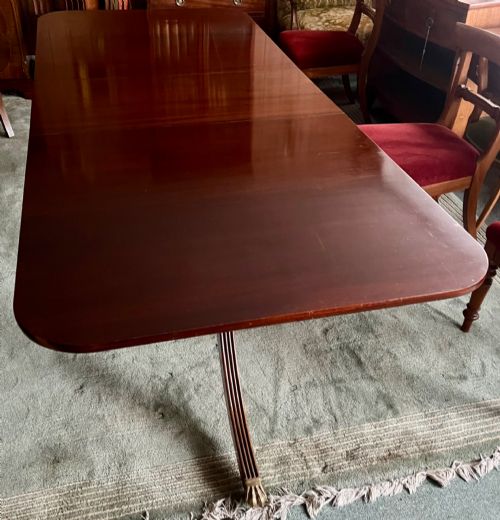
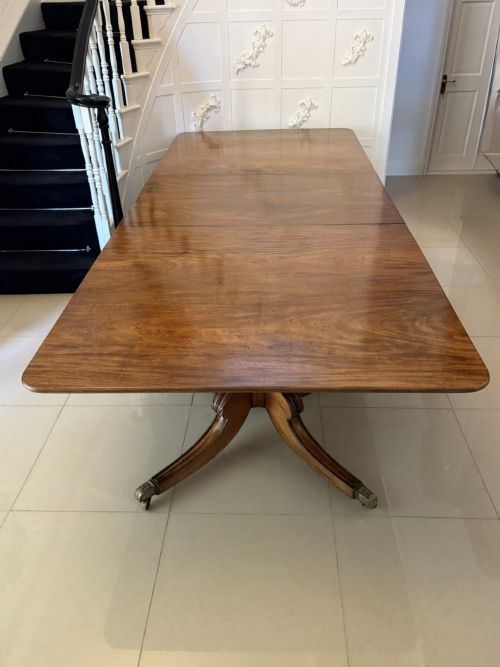
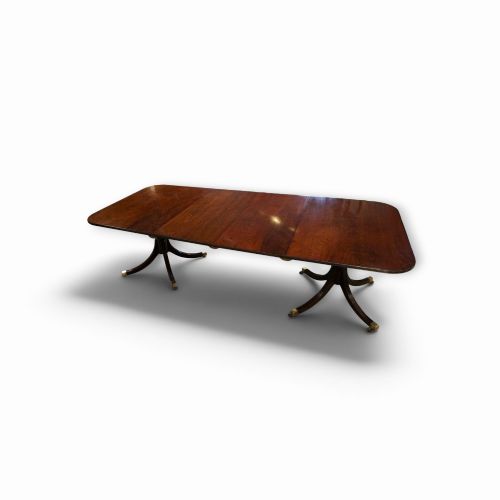
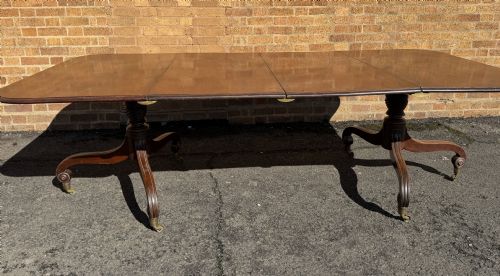
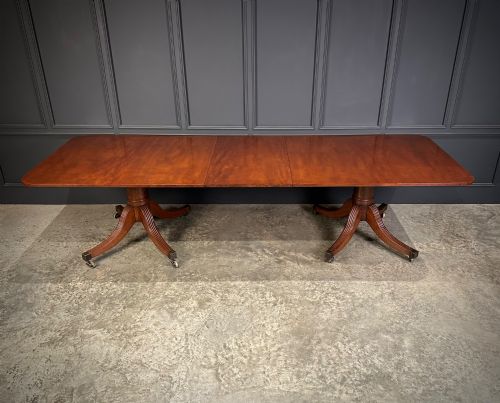
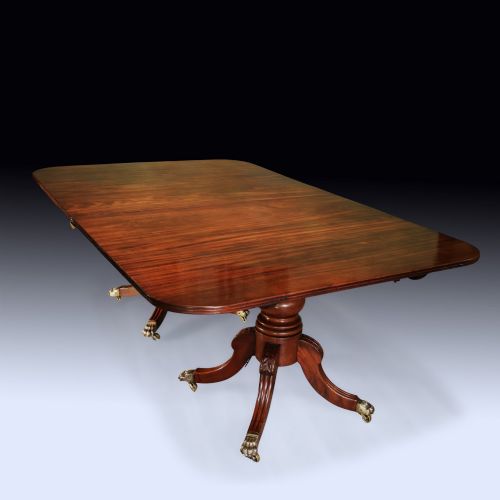
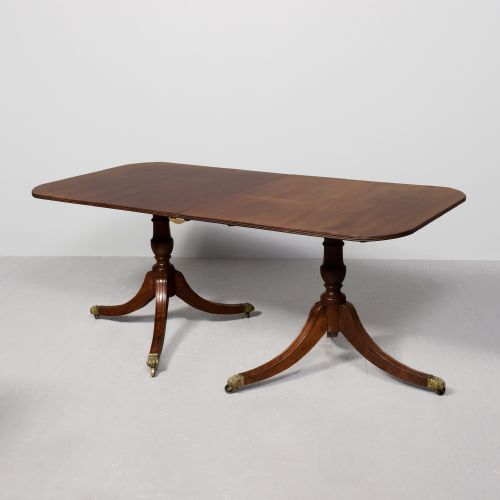
A twin pillar table is fundamentally a dining table supported by two central pedestals rather than four corner legs, allowing for greater legroom and flexibility. When searching this phrase, buyers encounter examples primarily from the Georgian, Regency, and Victorian eras, alongside later twentieth-century revivals.
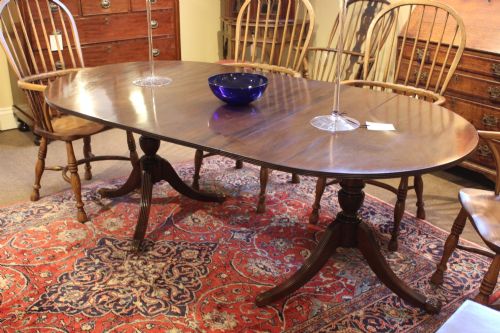
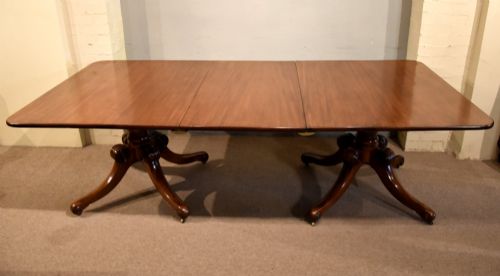
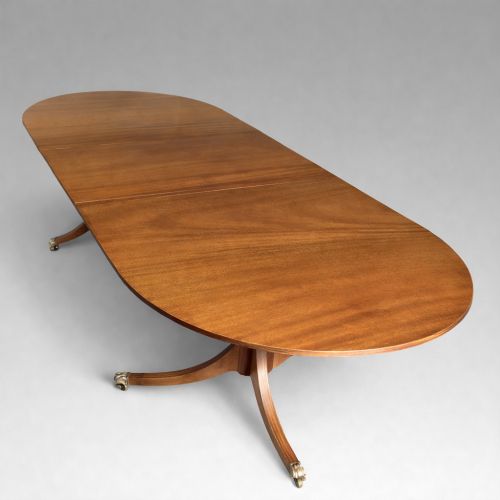
The form typically comprises two separate pedestals, each fitted with splayed legs, carrying a long top that often accepts removable leaves for extension. Mahogany dominates the surviving forms, frequently matched with period styles such as George III or Regency Revival.
How They Were Made
Cabinetmakers constructed these tables using solid and veneered timbers, predominantly mahogany, selecting figured or flame grains for the primary surfaces. The pedestals required substantial turning and carving to support the weight of long leaves, while brass castors frequently finished the feet.
Joinery techniques included substantial block connections beneath the tops and precise brass box fittings to secure the removable leaves. Secondary woods like pine or oak appear internally in the framing and drawer boxes where applicable.
Twin Pillar Table Retail Price Guide 2026
Typical asking prices for twin pillar table among the pieces listed under this phrase on Sellingantiques today, from the lower quarter to the upper quarter. They describe what is for sale here now, not the wider market.
Clockwork ingenuity occasionally crosses boundaries, as seen in twin-fusee bracket clocks sharing space with these grand dining surfaces.
What Varies in Quality
Quality rests heavily on the selection of timber, where deeply figured mahogany and balanced grain patterns separate superior examples from plain stock. The crispness of the pedestal carving and the integrity of the original brass fittings further distinguish workshop standards.
Construction robustness dictates longevity, visible in how securely the central columns meet the splayed legs and how smoothly the extension mechanism operates. Tables retaining their original leaves and matching patination command greater appreciation among collectors.
William Trotter
The Twin Pillar Table Glossary
- Twin pillar
- A table design utilising two separate pedestals to support a single long top. This arrangement maximises seating capacity by eliminating corner legs.
- Pedestal
- The central column supporting the tabletop, typically rising from a splayed tripod or tetrapod base. It provides the primary structural support and aesthetic focus.
- Flame mahogany
- A veneer cut from the fork of the mahogany tree where the branch meets the trunk. It creates a distinctive, fiery pattern prized in high-end cabinetmaking.
- D end
- A table end shaped in the semi-circular form of the letter D. These sections often detach or serve as standalone consoles when the central leaves are removed.
- Cross-banded
- A border technique where thin strips of veneer are laid perpendicular to the main grain. This frames the tabletop edge with a contrasting decorative band.
Twin Pillar Table: Frequently Asked Questions
How many people can sit at a twin pillar table?
Seating capacity depends on the length of the top and the presence of extension leaves. Many standard examples comfortably accommodate six to eight diners.
Larger versions featuring multiple leaves or robust proportions can extend to seat twelve or more guests. The absence of corner legs significantly eases the placement of chairs around the perimeter.
Can these tables be made smaller for daily use?
Most dining examples incorporate removable leaves that lift out from the centre. This allows the two end sections to be pushed together into a compact footprint.
Without the leaves, the table functions as a smaller gathering surface or separates into independent console arrangements depending on the specific construction.
How do I identify a Regency period table?
Regency pieces often display characteristic details such as reeded edges, brass inlays, and sabre legs ending in brass paw castors. The timber selected is typically rich mahogany with a deep natural patina developed over generations.
Proportions tend to be classical and restrained, reflecting the architectural influences of the early nineteenth century. Comparing the base construction with known period examples helps confirm the date.
What maintenance do mahogany surfaces require?
Mahogany benefits from regular dusting with a soft, dry cloth to prevent particulate buildup. Applying a quality beeswax periodically nourishes the timber and maintains a soft lustre.
Avoiding direct sunlight and excessive heat sources protects the finish from fading and the underlying wood from splitting. Using mats and coasters prevents moisture rings on the polished top.