





Twin Leaf Table
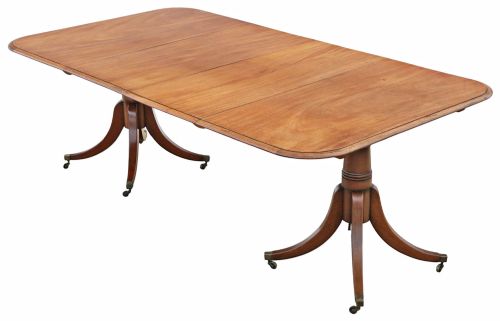
A twin leaf table brings together drop-leaf sofa tables and pillar dining tables with extension leaves from the Georgian, Regency, and Victorian periods.
Twin Leaf Table
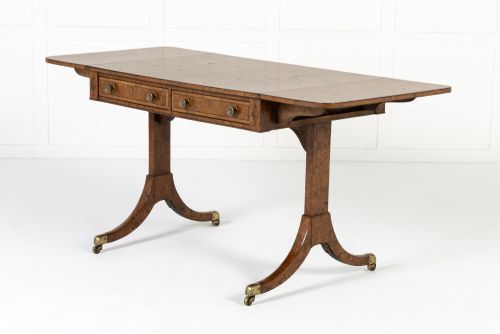
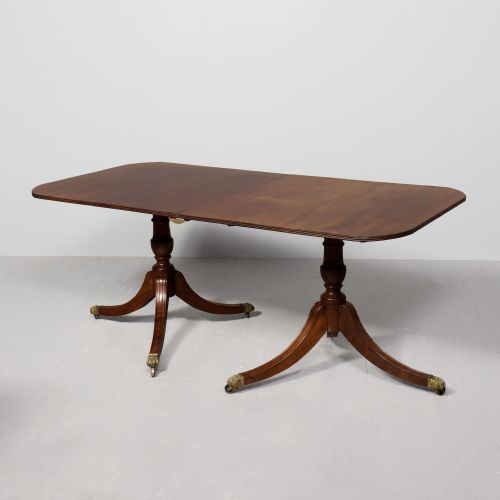
A twin leaf table primarily encompasses sofa tables with drop leaves and twin pillar dining tables fitted with extra leaves, originating from periods such as the Georgian, Regency, and Victorian eras. These forms were designed for flexibility in domestic spaces, allowing surfaces to expand for dining or writing and contract when space was at a premium.
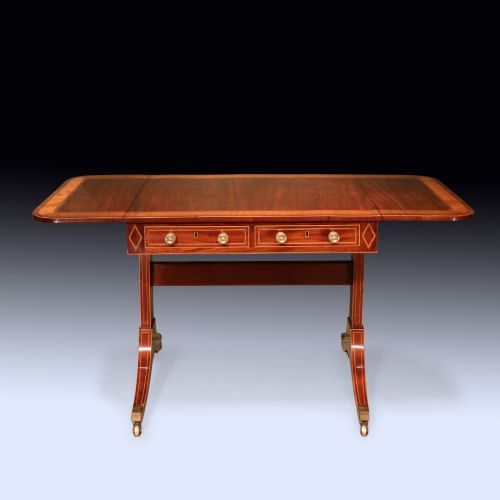
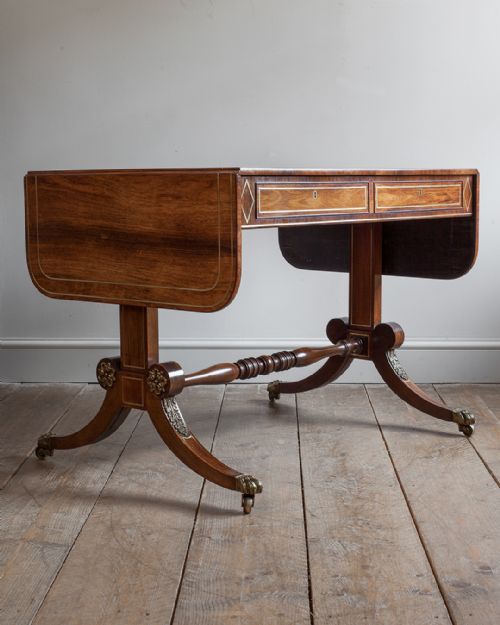
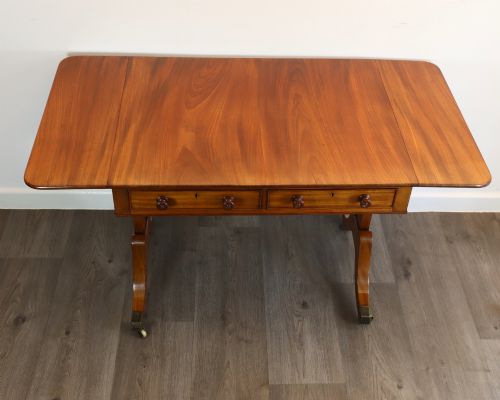
Sofa tables dominate the selection, often taking the form of freestanding library or writing tables intended to sit behind a sofa, while dining variants utilise twin pedestals and removable leaves. Examples range from compact elm and yew pieces to grand rosewood and mahogany versions inlaid with brass.
Origins trace principally to the United Kingdom, spanning the late eighteenth century through to the early twentieth century with later revival styles. Buyers encounter both original period pieces and later Georgian-style reproductions made in the early decades of the twentieth century.
Materials and construction
Cabinet makers relied heavily on timber selection, utilising dense imported hardwoods like mahogany and rosewood, alongside native British woods such as elm, yew, and carved oak. Flame mahogany veneers and satinwood bandings added decorative contrast to the top surfaces of sofa tables.
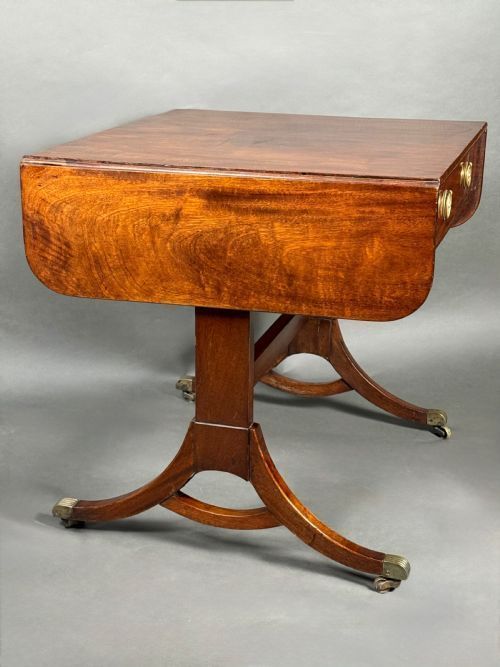
Construction techniques involved sturdy pillar and pedestal supports for dining versions, sometimes resting on brass castors, and drop-leaf hinges or sliding leaves for flexibility. Inlaid brass stringing and bone details frequently embellished the more decorative Regency writing and sofa tables.
Twin Leaf Table Retail Price Guide 2026
Typical asking prices for twin leaf table among the pieces listed under this phrase on Sellingantiques today, from the lower quarter to the upper quarter. They describe what is for sale here now, not the wider market.
Listings feature extensive examples in mahogany, rosewood, and satinwood, spanning Georgian, Regency, and Victorian periods.
Distinctions in quality
Quality rests upon the selection of timber figures, such as highly grained flame mahogany or rich rosewood, matched across the table top and extending leaves. Superior examples display crisp brass inlay, finely carved pedestal mounts, and original turning without structural compromise.
The integration of the leaves defines the craftsmanship, ensuring drop leaves align smoothly when raised and pedestal mechanisms operate evenly. Secondary timbers used in drawer linings and the precision of joinery also separate standard workshop output from exceptional cabinet work.
Gillington of Dublin
The Twin Leaf Table Glossary
- Drop leaf
- A table top configuration featuring hinged flaps on either side that fold down to save space or lift up supported by swing brackets.
- Twin pillar
- A dining table construction supported by two distinct central pedestals, usually resting on tripod or quadruped brass-castored feet.
- Sofa table
- A narrow freestanding table traditionally placed behind a sofa, typically fitted with two drawers and drop leaves at each end.
- Stringing
- A narrow inlay of contrasting wood or brass set into the surface of furniture to create decorative borders and linear outlines.
Twin Leaf Table: Frequently Asked Questions
What is a twin leaf table?
A twin leaf table refers to furniture items featuring two operable leaves or sections, primarily covering drop-leaf sofa tables and twin pedestal dining tables with extension leaves.
These pieces originate mostly from the Georgian and Regency eras, valued for their adaptability and refined timber construction.
Where were sofa tables placed?
Sofa tables were traditionally designed to stand directly behind a sofa or in the centre of a room rather than against a wall.
Their finished backs and freestanding proportions allowed them to serve dual purposes for writing, dining, or displaying decorative objects.
How do I identify a Regency table?
Regency tables are characterised by classical proportions, dark imported woods like mahogany and rosewood, and distinctive brass inlay or lyre-shaped supports.
They date from the early nineteenth century and often reflect classical architectural influences popular during that period.
Can these tables be used daily?
These tables are robust enough for daily use provided they are treated with appropriate care regarding moisture, heat, and weight distribution.
Regular polishing with beeswax helps maintain the timber finish and protects antique surfaces from everyday wear.