

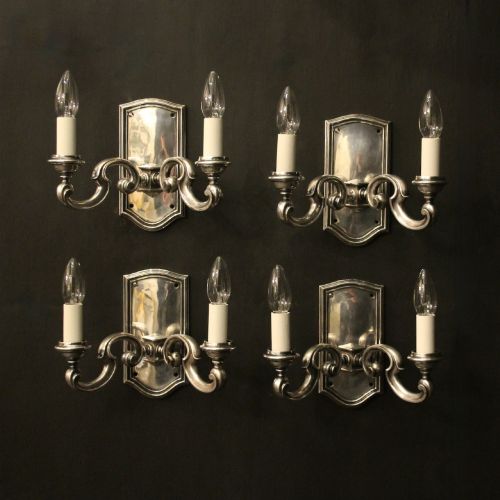
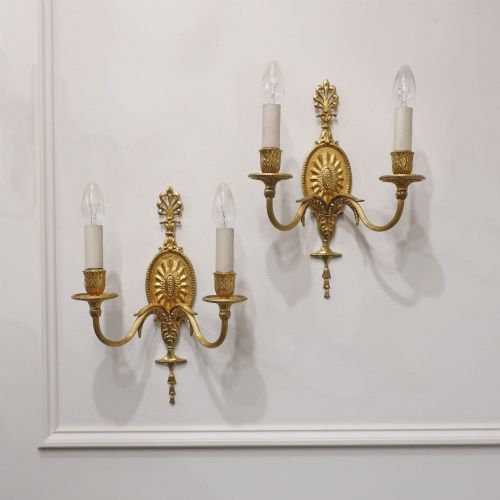
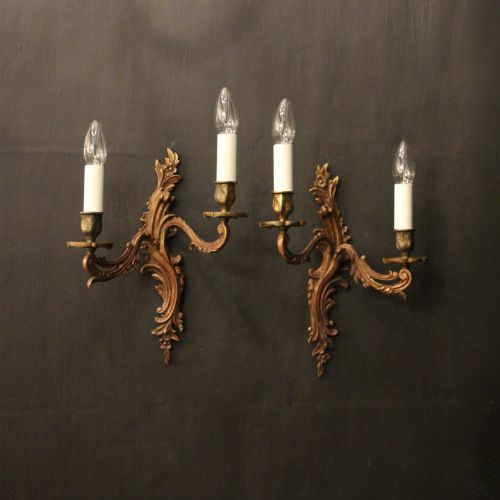
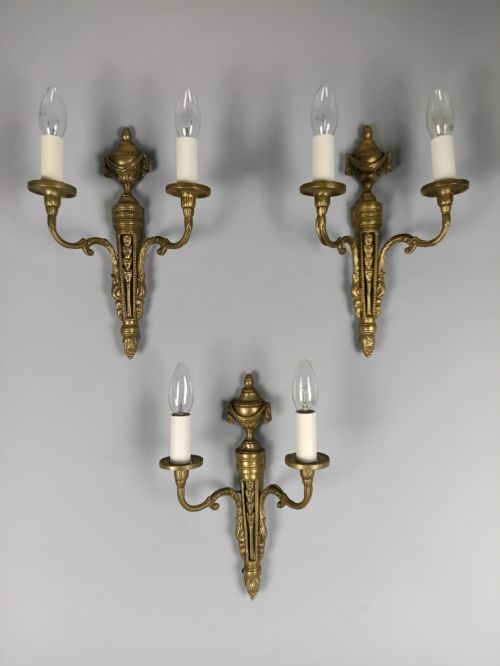
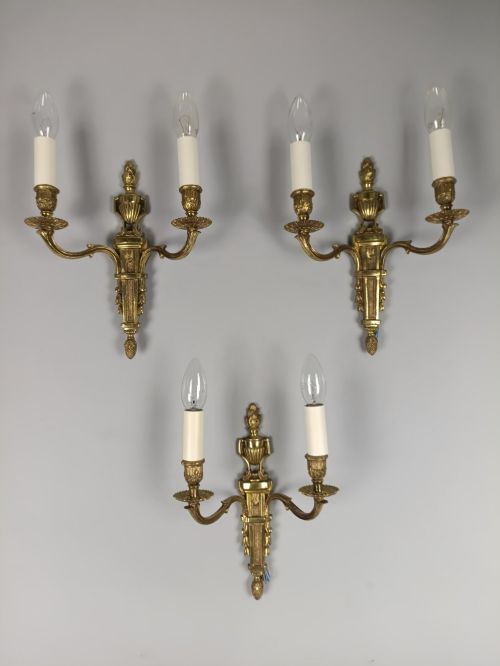
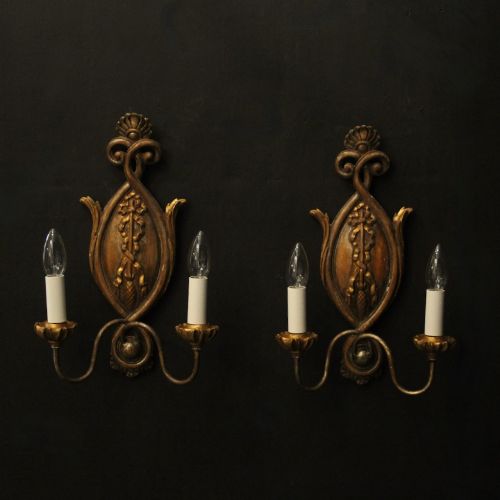
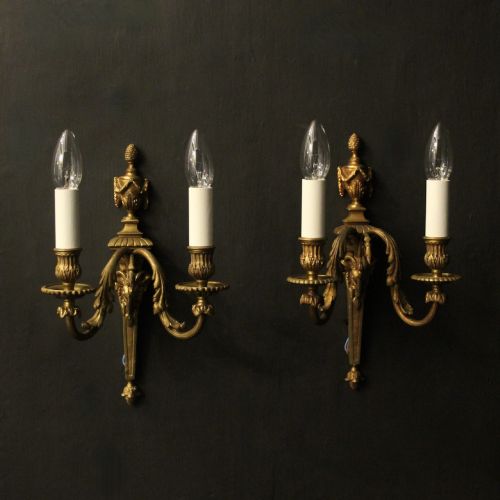
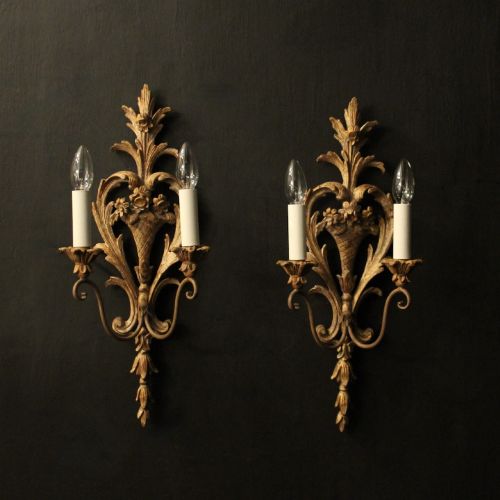
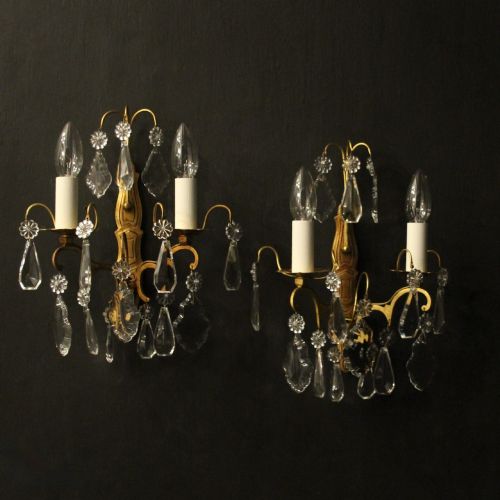
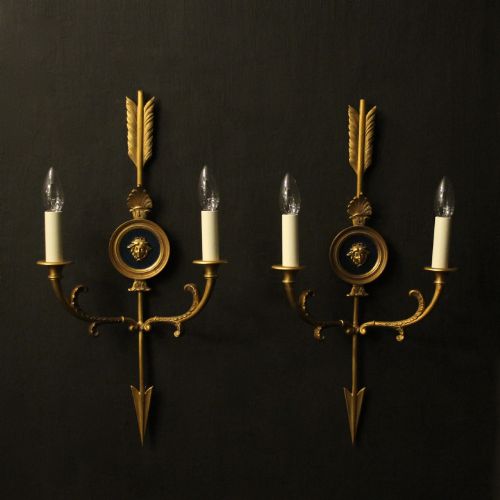
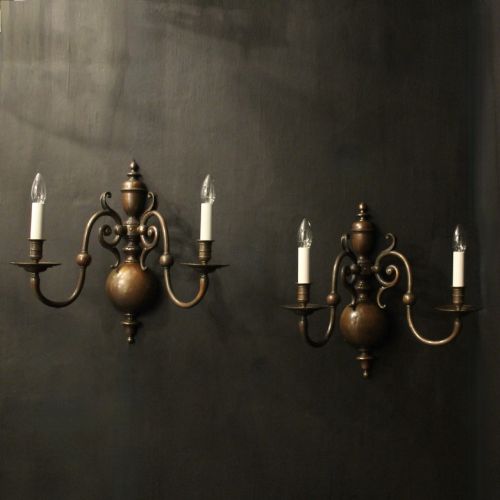
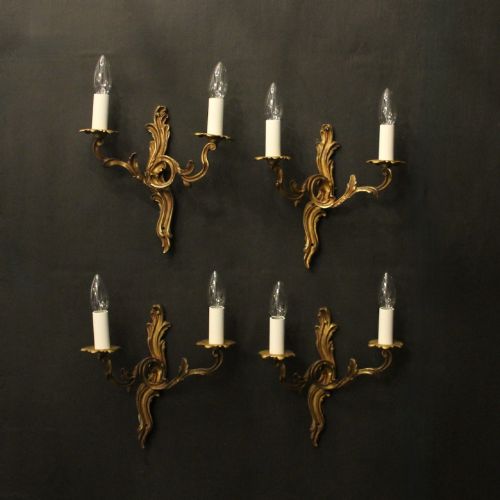
Twin Armed Wall Sconce
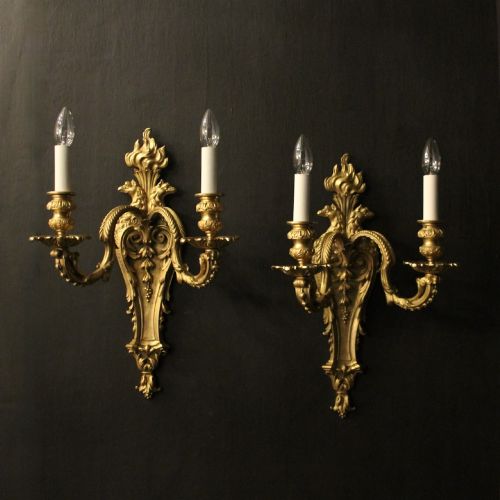
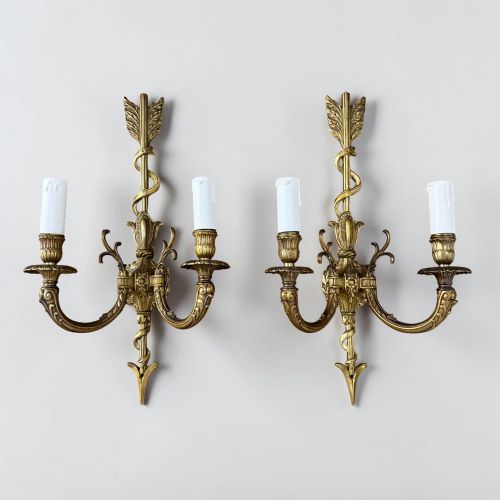
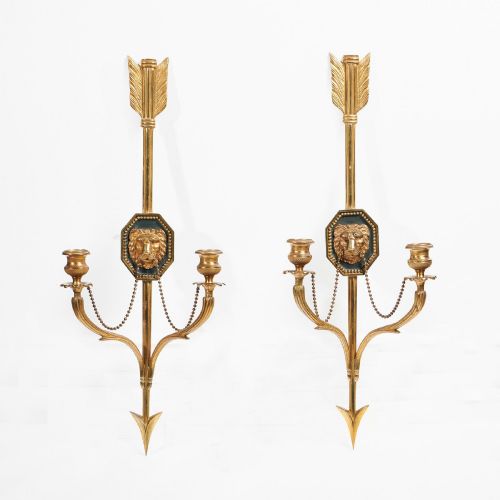
A twin armed wall sconce brings period illumination and sculptural presence to an interior.
Twin Armed Wall Sconce
A twin armed wall sconce is a dual-branch lighting fixture designed to mount directly onto a vertical surface. Buyers search for this phrase to find wall lights and girandoles that project warmth and historical character into a room.
The pieces appearing on this page span the Victorian and Edwardian eras through to the early decades of the twentieth century, with a concentration of items from the 1920s and 1930s. French origins dominate, alongside English and Italian examples.
Materials and construction methods
Metal forms the backbone of these fixtures, utilising brass, bronze, gilt bronze and gilded brass cast into ornate shapes. Silver plating and silver gilding provide alternative metallic finishes across English and French workshops.
Twin Armed Wall Sconce Retail Price Guide 2026
Typical asking prices for twin armed wall sconce among the pieces listed under this phrase on Sellingantiques today, from the lower quarter to the upper quarter. They describe what is for sale here now, not the wider market.
Makers occasionally added delicate carved wooden ribbons to brass wall lights, ensuring even rigid metal fixtures appeared ready to flutter.
Distinguishing quality in design and execution
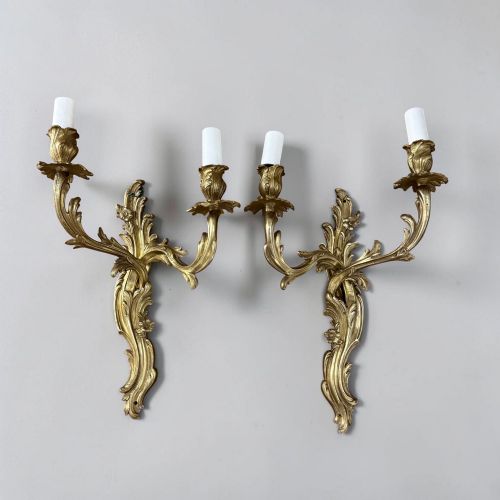
Quality rests upon the crispness of the casting and the depth of the applied gilding or metal finish. Finer pieces display sharply rendered rococo scrolls or neoclassical motifs rather than soft, commercial repetition.
The choice of base material influences the character of the object, with solid bronze and giltwood standing apart from simpler plated alternatives. Intricate details such as carved wooden ribbons or integrated mirror plates elevate the execution.
Bruce Talbert·Casier
The Twin Armed Wall Sconce Glossary
- Twin-branch wall light
- A lighting fixture featuring two arms projecting from a wall-mounted backplate. These pieces hold two distinct candles or electric bulbs.
- Girandole
- An ornamental wall sconce featuring a mirror backplate that reflects and multiplies the light. They frequently appear in giltwood during the early twentieth century.
- Gilt bronze
- Metal cast in bronze and treated with a gold leaf finish or mercury gilding. It provides a durable and luminous surface common in French decorative arts.
- Giltwood
- Timber carved and coated with gold leaf. This material defines many Florentine and French decorative pieces from the period.
- Rococo
- A decorative style characterised by asymmetrical scrolls, plant motifs and elaborate curves. It recurs frequently in French lighting designs from the 1920s and 1930s.
Twin Armed Wall Sconce: Frequently Asked Questions
What is a twin armed wall sconce?
A twin armed wall sconce is a wall-mounted lighting fixture featuring two distinct branches for illumination. These objects were historically designed to hold candles and later adapted for electricity.
They serve both a functional and decorative purpose, often mounted in pairs to frame architectural focal points within a room.
Where were twin armed wall sconces placed?
These fixtures typically hung in formal reception rooms, hallways and parlours where additional side lighting complemented central chandeliers. Placing them beside mirrors or above mantlepieces maximised the spread of light.
Pairs and sets allowed for balanced symmetry across interior walls during the Victorian, Edwardian and later periods.
How do I identify French rococo wall lights?
French rococo wall lights exhibit characteristic asymmetrical scrollwork, naturalistic leaf motifs and curved arm designs. These pieces often feature gilded bronze or brass construction.
Many examples date from the 1920s and 1930s revival periods, echoing earlier eighteenth-century French aesthetics.
What materials are common in antique wall sconces?
Common materials include cast bronze, brass, giltwood and carved timber, occasionally accented with crystal elements. Finishes range from polished metal to applied gold leaf and silver gilding.
English pieces frequently utilise bronze or brass, while Florentine and French makers often employ carved wood and giltwood.