


Twentieth Century Chest
A twentieth century chest brings robust storage and distinct period character to a room, ranging from industrial utility pieces to lacquer blanket boxes.
Twentieth Century Chest
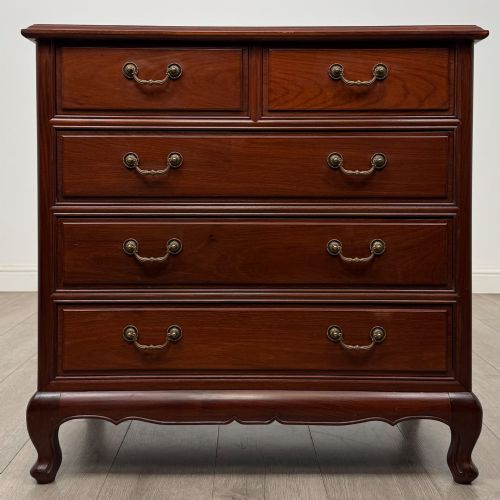
A twentieth century chest encompasses various forms such as chests of drawers, blanket boxes, coffers, tallboys, humidors, banks of drawers, and trunks. You are most likely to meet mahogany chests of drawers from the Edwardian period or from the 1920s and 1930s on this page.
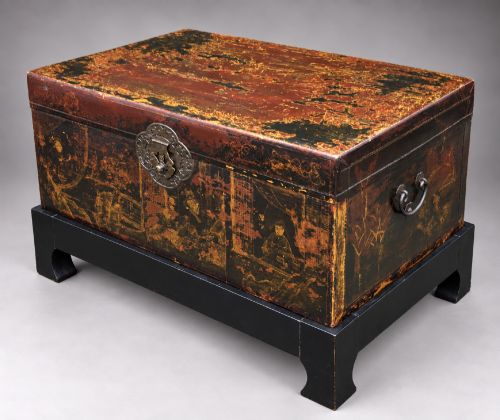
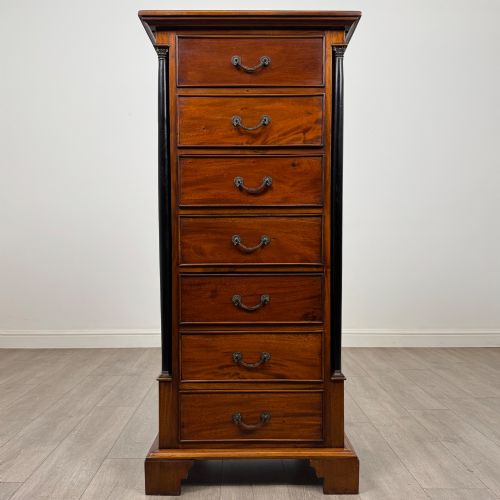
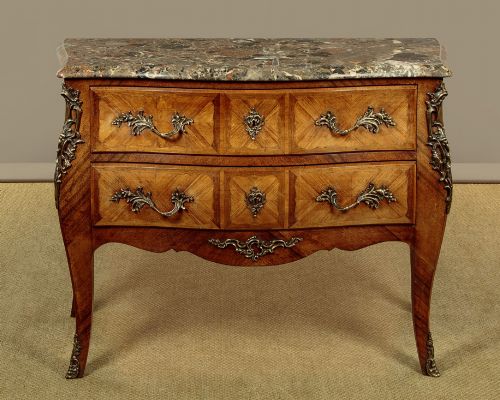
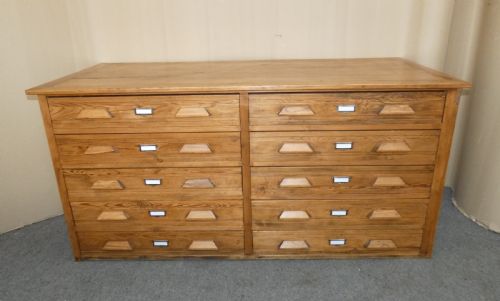
The selection extends to specific decorative items like Japanese Chinoiserie lacquered blanket boxes on stands, burr walnut tallboys, and Louis XV style bombe commodes. Industrial utility pieces and haberdashers or artists drawers also appear alongside campaign chests and leather steamer trunks.
Origins and styling span several decades from 1900 through the 1940s, capturing Edwardian craftsmanship, Arts and Crafts influences, and early French Deco designs. These functional containers served diverse domestic and travel needs across the period.
How they were made
Wood serves as the primary structural material, with mahogany, walnut, burr elm, oak, and limed oak shaping the solid bodies and drawer carcases. Cabinetmakers employed fine veneers and decorative lacquering, notably in Chinoiserie finishes and French Rococo revival styles.
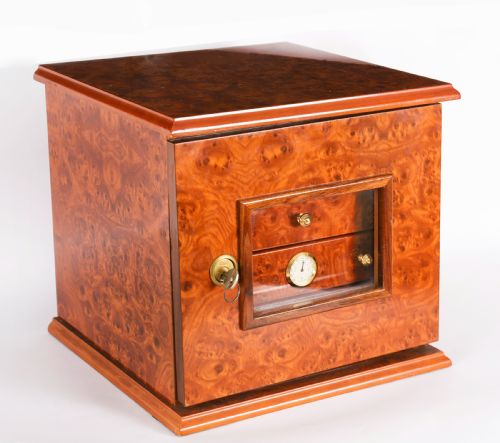
Hardware and decorative accents incorporate brass for handles, locks, and corners, alongside leather upholstery and gilt details on select trunks and commodes. Marble tops and specialised compartments appear on refined items such as cigar humidors and tallboys.
Listings feature woods including mahogany, walnut, burr elm, and oak, alongside brass, leather, lacquer, and marble elements.
What varies in quality
The distinction between standard items and superior examples lies in the choice of timber and veneer figure, such as richly patterned burr walnut or burr elm. Executed details like hand-carved motifs, specialised lacquer work, and quality brass mounts elevate the standing of a piece.
Construction integrity defines the upper tier, visible in the precision of drawer joints, the weight and durability of leather or canvas coverings on trunks, and the authenticity of period revival styling whether Regency, Queen Anne, or French Deco.
The Twentieth Century Chest Glossary
- Tallboy
- A tall chest of drawers, often consisting of one chest stacked upon another, providing high vertical storage capacity.
- Commode
- A decorative chest of drawers or low cabinet, frequently associated with French styles such as Louis XV bombe forms.
- Campaign chest
- A modular chest designed in sections with recessed brass fittings for easy transport during military campaigns.
- Humidor
- A specialised cabinet or box designed to store cigars at a controlled humidity, often fitted with fine wood interiors.
- Haberdashers drawers
- A bank of shallow drawers originally utilised in retail shops to sort ribbons, buttons, and small garments.
- Bombe
- A convex or bulging shape characteristic of ornate continental furniture styles, swelling outward toward the base.
Twentieth Century Chest: Frequently Asked Questions
Where should I place a twentieth century chest?
These chests suit bedrooms, hallways, and living spaces where practical storage intersects with distinct period design.
Larger blanket boxes and steamer trunks work well as coffee tables or statement decor at the foot of a bed.
How do I care for wood and leather surfaces?
Maintain wooden surfaces with appropriate natural waxes and keep them away from direct heat sources to prevent timber splitting.
Leather trunks require gentle cleaning with specialised conditioners to preserve the material and prevent drying out over time.
What is the difference between a tallboy and a commode?
A tallboy offers vertical storage by stacking multiple drawers high, maximising capacity in rooms with limited floor space.
A commode provides a lower, wider profile that often serves as a decorative surface for lamps and objects while housing drawers.
How do I identify Art Deco pieces?
Early French Deco items typically feature clean geometric lines, streamlined silhouettes, and luxurious materials like lacquered finishes.
They reject excessive ornamentation in favour of sleek elegance and functional form.