


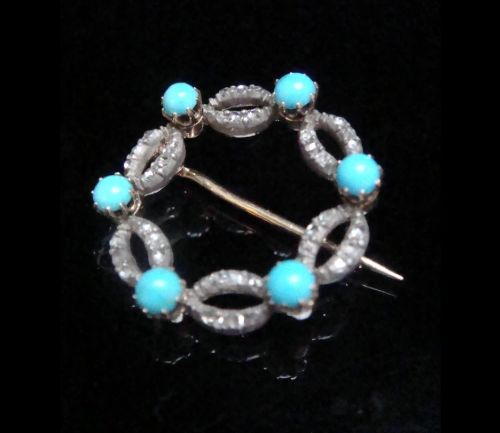


Turquoise Cluster Jewellery
Turquoise cluster jewellery brings together vibrant blue stones in rings, earrings, and brooches spanning from the Georgian era to the mid-century.
Turquoise Cluster Jewellery
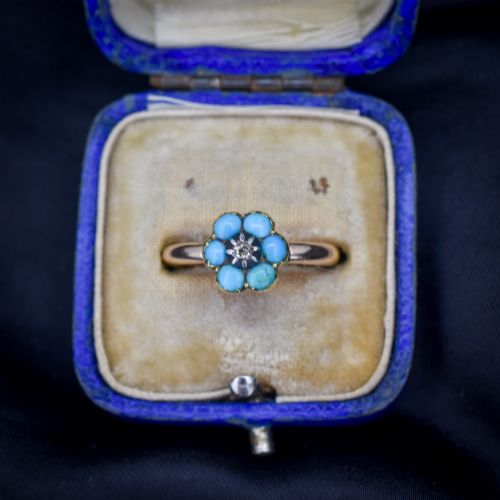
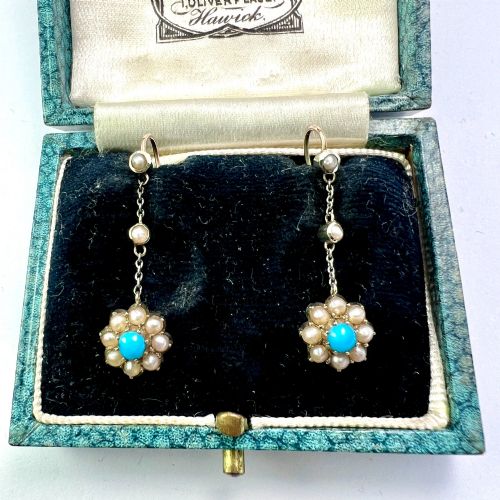
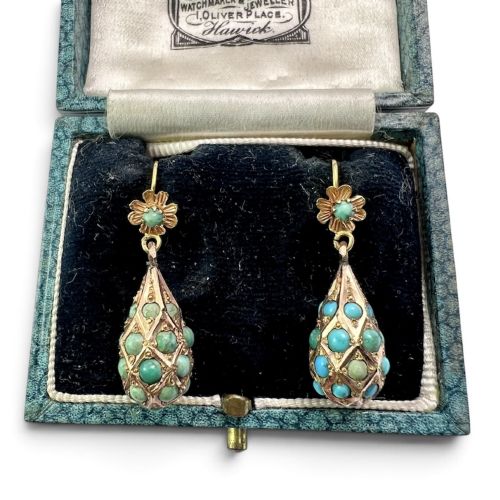
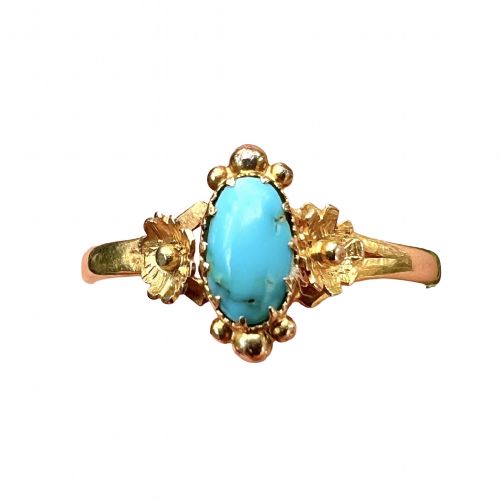
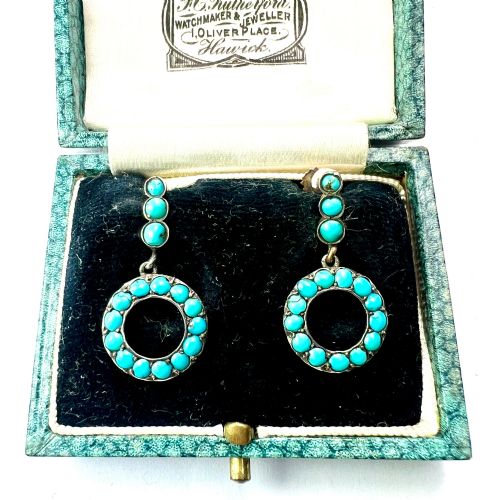
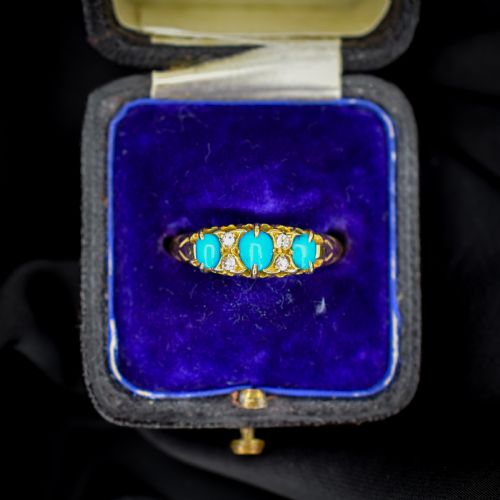
Turquoise cluster jewellery encompasses a broad range of rings, earrings, brooches, and pendants that place vibrant blue stones at the centre of the design. Buyers exploring this category encounter varied formations, from flower drop earrings to intricate boat-shaped and navette rings.
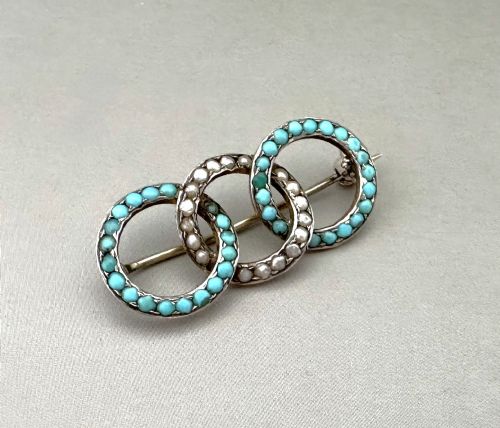
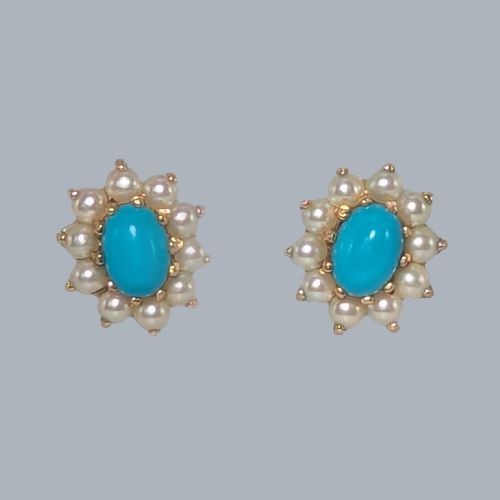
The pieces appearing on this page originate predominantly from the Victorian and Edwardian periods, alongside later twentieth-century iterations such as mid-century and 1960s designs. These earlier examples often pair the distinctive blue stones with split pearls, diamonds, and warm gold or silver settings.
Forms extend beyond simple rings to include matching jewellery suites, dangling hoop earrings, and elaborate pendants. Such items reflect changing tastes across eras, moving from traditional floral motifs to Arts and Crafts interpretations and retro styles.
Materials and construction techniques
Maker construction relies heavily on combinations of gold, silver, and precious gems, with 9ct, 15ct, and 18ct gold appearing alongside silver-topped gold techniques. These metals provide durable backdrops for arranging clusters of turquoise cabochons next to diamonds and split pearls.
Stones are typically set by hand into closed or open-backed mounts, often incorporating rose-cut diamonds and delicate seed pearls to enhance the central blue turquoise. Techniques span from traditional Georgian and Victorian claw or bezel settings to later mid-century manufacturing methods.
Turquoise Cluster Jewellery Retail Price Guide 2026
Typical asking prices for turquoise cluster jewellery among the pieces listed under this phrase on Sellingantiques today, from the lower quarter to the upper quarter. They describe what is for sale here now, not the wider market.
One Edwardian ring cleverly conceals an evil eye motif within its turquoise and pearl cluster.
Factors influencing quality
Quality in these pieces rests upon the uniformity and stability of the turquoise stones, as well as the preservation of any accompanying diamonds and pearls. Higher-grade examples maintain matching colour intensity across all cluster elements without significant matrix disruption.
The finesse of the metalwork also distinguishes finer items, evident in hand-carved floral details, secure setting work, and well-preserved hallmarks that denote specific assay offices and dates.
Dorrie Nossiter
The Turquoise Cluster Jewellery Glossary
- Cluster
- A stone arrangement where a central gem is surrounded by a ring of smaller stones. This layout maximises visual impact and light reflection.
- Cabochon
- A gem polished to a smooth, rounded convex top rather than faceted. This cut is standard for opaque stones like turquoise.
- Navette
- A boat-shaped gemstone setting with pointed ends, also known as a marquise shape. It creates an elongated silhouette on the finger.
- Parure
- A matched set of jewellery designed to be worn together, typically including earrings, a necklace or pendant, and a brooch or ring.
- Rose-cut
- A diamond cut featuring a flat base and a domed crown covered in triangular facets. This historic cut produces a soft, starry shimmer.
Turquoise Cluster Jewellery: Frequently Asked Questions
How do I care for turquoise jewellery?
Turquoise is a relatively soft and porous stone that absorbs oils, cosmetics, and water easily. Clean pieces gently with a dry, soft cloth and avoid chemical dips or ultrasonic cleaners.
Store items separately from harder gemstones to prevent scratching. Removing rings before washing hands preserves the integrity of both the stones and the metal settings.
How can I date a turquoise ring?
Dating relies on examining the mounting style, metal fineness marks, and cutting style of any secondary gems like rose-cut diamonds. Victorian and Edwardian pieces often utilise 15ct gold or silver-backed gold, accompanied by characteristic floral or navette cluster motifs.
Official hallmarks, where present, provide precise assay office symbols and date letters. Comparing the structural construction against known period benchmarks clarifies the era of manufacture.
Why do some turquoise stones turn green?
Turquoise contains copper, which can react over time with skin oils, soaps, acids, and environmental moisture. This chemical interaction alters the natural blue hue towards a greener shade.
While some colour shift is a natural result of age and wear, proper storage and minimal exposure to liquids help maintain the original tone.