





Turned Wood Spice Container
A turned wood spice container is a masterclass in domestic utility, offering clever tiered compartments crafted to preserve precious aromatics with genuine antique charm.
Turned Wood Spice Container
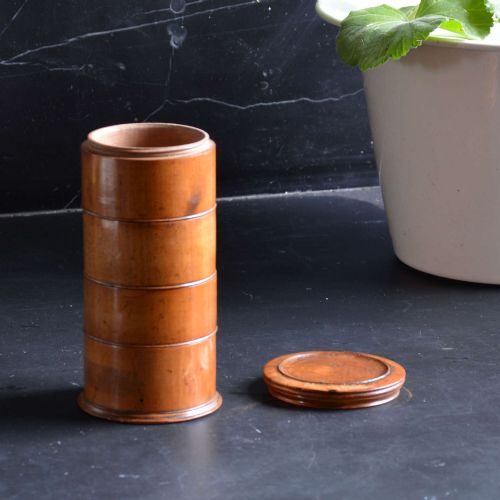
A turned wood spice container brings functional Georgian and Victorian kitchen treen into the modern home as a sculptural object. Buyers seeking a turned wood spice container find multi-tiered towers, lidded jars, and ingenious stacking pots designed to hold domestic spices.
The pieces appearing here span the Georgian, Victorian, and Edwardian eras, with nineteenth-century examples forming the core of the selection. Forms range from simple sycamore jars to complex four-tier towers and compartmentalised boxwood vessels.
Makers utilised domestic hardwoods to create these tactile objects, often combining portability with ingenious threading that allowed multiple sections to screw together securely. These items sit comfortably within kitchen collectables and English country treen.
How they were made
Craftsmen shaped these objects on a lathe using dense, tight-grained timbers like boxwood, fruitwood, sycamore, beech, and yew. This turning technique created precise cylindrical walls and tight-fitting lids that kept aromatic contents dry and contained.
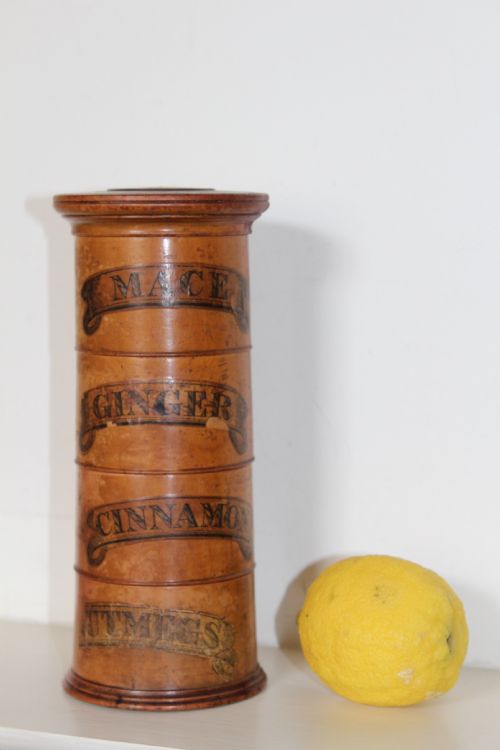
Makers occasionally incorporated applied elements such as paper labels to identify contents or utilised whitewood with Tunbridge Ware decoration for souvenir pieces. The natural grain of the timber remained the primary decorative feature, polished smooth through handling.
Turned Wood Spice Container Retail Price Guide 2026
Typical asking prices for turned wood spice container among the pieces listed under this phrase on Sellingantiques today, from the lower quarter to the upper quarter. They describe what is for sale here now, not the wider market.
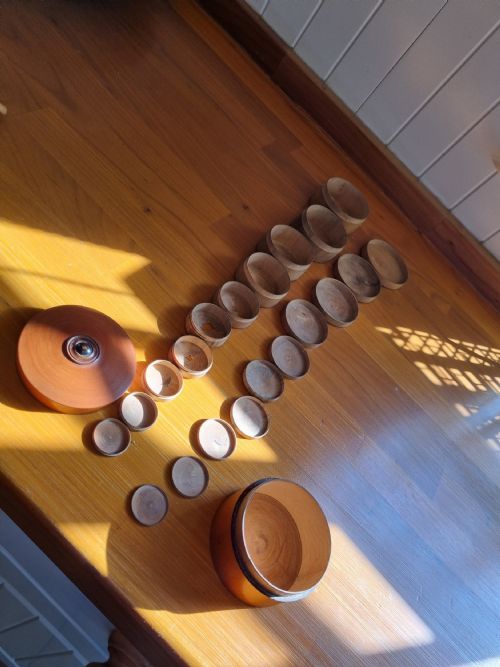
The selection includes both single lidded jars and complex multi-tiered towers containing up to ten smaller compartments.
What varies in quality
Quality rests in the crispness of the lathe turning and the precision with which threaded sections engage and align. Superior examples maintain smooth, matching grains across multiple tiers without warping or binding.
The complexity of the form dictates distinction, separating simple single-compartment jars from elaborate multi-tiered towers holding numerous smaller containers. Intact original surfaces and clear structural integrity elevate a piece far above heavily altered domestic survivals.
The Turned Wood Spice Container Glossary
- Treen
- Small, functional wooden household objects made by turning, carving, or cooperating. These items gained a distinct following among collectors for their tactile appeal and domestic history.
- Spice tower
- A vertical, multi-tiered turned wooden container with sections that stack or screw together. Each internal tier traditionally held a different culinary aromatic.
- Boxwood
- A dense, pale hardwood prized by turners for fine detail and smooth finishes. It frequently appears in high-quality nineteenth-century treen and small containers.
- Pomander
- A spherical container used to hold perfumes, spices, or aromatic herbs. In treen, these objects often feature pierced or lidded construction for releasing fragrance.
- Tunbridge Ware
- Woodware decorated with intricate mosaic patterns made from tiny wood blocks of various natural colours. This technique created elaborate geometric designs on souvenir pieces.
Turned Wood Spice Container: Frequently Asked Questions
What were spice towers used for?
These vessels stored expensive culinary spices and aromatics securely in domestic kitchens before the advent of commercial packaging. The stacked design kept different flavours separate while saving valuable shelf space.
Today, they serve as decorative display pieces rather than practical kitchen storage. Collectors appreciate them for their ingenious carpentry and warm wooden surfaces.
How do I date an antique turned wood container?
Dating relies on observing timber choices, tool marks, and overall wear patterns characteristic of specific eras. Georgian and Victorian examples often show distinct hand-turned ridges and patination built up over generations of handling.
Examining the construction methods, such as the threading on multi-tier towers, helps differentiate nineteenth-century pieces from later reproductions. Paper labels and specific wood types also provide useful clues for chronological placement.
Are these containers safe for modern spices?
Historical wooden containers feature dry interior surfaces that have absorbed centuries of oils, moisture, and aromatic residues. Storing fresh consumables inside them is generally discouraged to protect both the spices and the antique wood.
Displaying these objects empty preserves their structural integrity and prevents contamination from old finishes or stored materials. They work best as standalone decorative items on open shelving or side tables.