






Turned Wood Pots
Turned wood pots are small, lathe-turned vessels shaped from timber, offering tactile warmth and historical utility for domestic interiors.
Turned Wood Pots
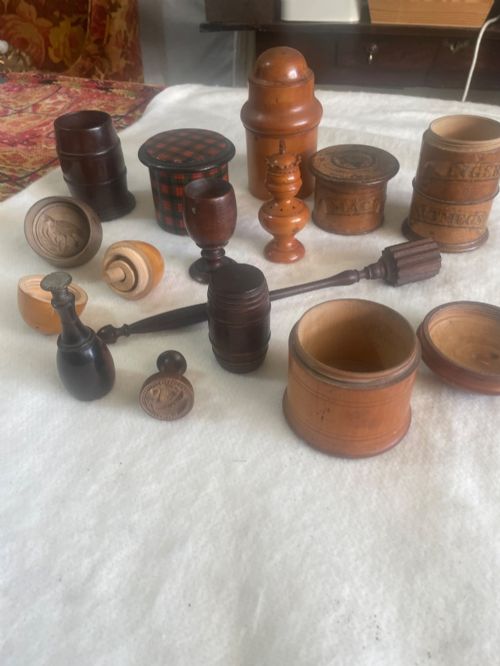
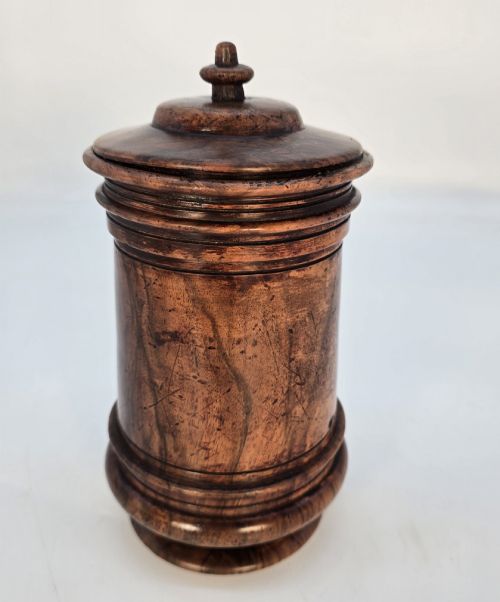
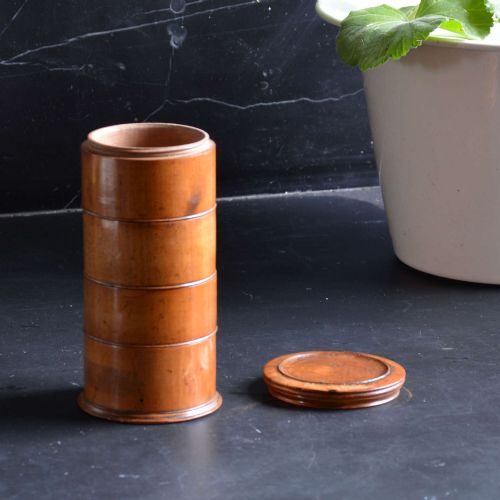
Turned wood pots encompass utilitarian treen vessels, small containers, and storage pieces shaped on a lathe. Buyers searching for turned wood pots find items ranging from spice towers and tobacco jars to lidded jars and stacking containers.
The pieces appearing here span the eighteenth and nineteenth centuries, including Georgian and Victorian examples. Common forms include turned wooden vases, covered jars, and multi-piece container sets.
Materials represented in these turned wood pots include boxwood, yew wood, fruitwood, sycamore, and walnut. Many carry origins tied to treen and kitchenalia traditions, reflecting practical domestic storage uses of the past.
How they were made
Makers shaped these turned wood pots on a lathe using dense hardwoods like boxwood, walnut, yew, and fruitwood. The process relied on sharp gouges and chisels to pare away timber while the piece spun rapidly.
Lids and bodies were turned to precise tolerances so that covers fitted snugly over matching containers. Grain orientation mattered greatly, with turners selecting timber that exhibited pleasing concentric rings and figure once polished.
Turned Wood Pots Retail Price Guide 2026
Typical asking prices for turned wood pots among the pieces listed under this phrase on Sellingantiques today, from the lower quarter to the upper quarter. They describe what is for sale here now, not the wider market.
Listings feature eighteenth and nineteenth-century items including Georgian and Victorian treen containers, spice towers, and lidded jars made from boxwood, walnut, yew, and fruitwood.
What varies in quality
Quality in turned wood pots lies in the crispness of the turning profiles and the balance of the vessel's proportions. Superior examples display fine wall thickness, smooth surfaces, and tight-fitting original lids.
The choice of timber heavily influences the character of the piece, with dense exotic or native hardwoods showing superior figure compared to plain utility pine or generic softwoods. Well-preserved surface patination built up through handling also distinguishes better pieces.
The Turned Wood Pots Glossary
- Treen
- Small handmade wooden domestic objects. These items were produced for everyday utility in the home before mass production.
- Lathe
- A woodworking machine that rotates timber against cutting tools. This apparatus is essential for turning symmetrical cylindrical vessels and pots.
- Spice tower
- A tiered wooden container used for holding various culinary spices. These stacked vessels screw or fit together securely.
- Pounce pot
- A small perforated shaker used for sprinkling gum sandarac powder onto paper. This substance prepared rough parchment surfaces for ink writing.
Turned Wood Pots: Frequently Asked Questions
What are turned wood pots used for?
These vessels historically served practical storage roles for dry goods, spices, tobacco, or small personal items. Today, collectors display them as decorative treen pieces on shelves, sideboards, or cabinets.
Their compact scale makes them straightforward to integrate into various room settings without requiring dedicated furniture space.
How do I date an old wooden pot?
Dating relies on identifying the wood species, tool marks left by the lathe, and overall wear patination. Georgian and Victorian examples often exhibit specific timber choices and historical finish characteristics.
Comparing the form and construction methods to documented treen references helps narrow down the period of manufacture.
How should I care for wooden pots?
Keep wooden vessels away from direct heat sources, bright sunlight, and extreme humidity fluctuations to prevent splitting or warping. Occasional application of suitable wax helps maintain the surface sheen.
Avoid using water or chemical cleaners on antique treen surfaces, preferring a dry microfiber cloth for dusting.