

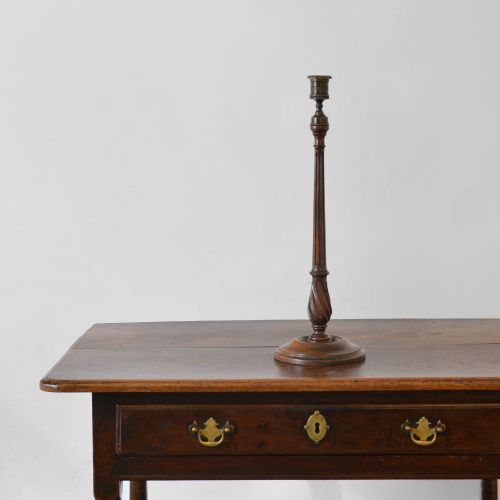


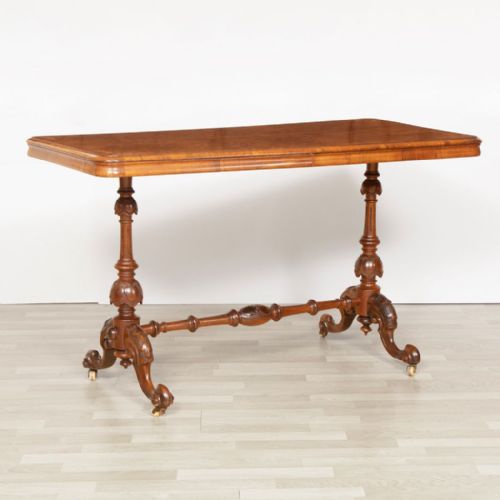


Turned Wood Pillar
These turned wood pillar pieces offer a solid architectural presence and rich grain, making them a practical choice for period interiors.
Turned Wood Pillar
A turned wood pillar encompasses items shaped on a lathe, ranging from architectural columns and bed posts to candlesticks and side table supports. These objects date across several eras, with examples appearing from the Georgian and Victorian periods through to the early twentieth century.
Buyers seeking turned wood pillar items will find forms such as torcheres, tripods, and wall shelves alongside structural elements. The selection frequently includes candlesticks and occasional tables where the turned column forms the central visual feature.
Origins span English workshops of the eighteenth and nineteenth centuries as well as continental European pieces, notably Italian carved works. The timber varies from native oak and mahogany to burr walnut and pinewood.
Materials and construction
Makers utilised dense hardwoods like mahogany, oak, and walnut, alongside softer pinewood for larger items like torcheres and architectural columns. Selected pieces incorporate brass sconces or inlay work to add contrast to the turned timber surfaces.
Lathe turning shaped the central pillars and columns, often complemented by hand carving on capitals, bases, or tripod legs. Joinery methods varied by object type, connecting sturdy columns to supporting bases or table tops.
Turned Wood Pillar Retail Price Guide 2026
Typical asking prices for turned wood pillar among the pieces listed under this phrase on Sellingantiques today, from the lower quarter to the upper quarter. They describe what is for sale here now, not the wider market.
Object types range from practical candlesticks and side tables to decorative architectural salvage and wall shelves.
Assessing quality in turned elements
Quality rests in the crispness of the lathe work and the balance of the proportions across the pillar. Superior examples display confident turning lines and careful selection of timber grain, particularly in burr walnut and mahogany.
The integration of hand-carved details differentiates standard utility items from more ambitious architectural pieces and torcheres. Well-executed joints and stability in structural elements like bed posts and table supports indicate superior craftsmanship.
The Turned Wood Pillar Glossary
- Torchere
- A tall decorative stand or candlestick holder designed to support a light source. These pieces often feature an elaborately turned wooden pillar and a carved base.
- Tripod table
- A small occasional table supported by a pillar above three legs. The central column is frequently turned from mahogany or other dense timbers.
- Architectural salvage
- Elements recovered from buildings, including columns and bed posts repurposed for interior display. These items showcase structural turning from past centuries.
- Burr walnut
- A prized timber veneer exhibiting swirling grain patterns formed from tree growths. It appears on Victorian table tops paired with turned supports.
- Sconce
- A holder fixed to a pillar or wall for a candle or lamp. Brass versions frequently top turned wooden candlesticks.
Turned Wood Pillar: Frequently Asked Questions
What are turned wood pillar items used for today?
These pieces serve both functional and decorative roles in modern rooms. Candlesticks provide lighting accents, while torcheres and side tables function as display surfaces for plants or objects.
Larger architectural columns and bed posts are often integrated into interior schemes as sculptural statements. They bring historical texture and vertical emphasis to contemporary spaces.
How do I date a turned wood pillar?
Dating relies on identifying the timber species, the turning style, and construction methods. Georgian and Victorian pieces often utilise solid mahogany or oak with characteristic hand-finished details.
Later items from around nineteen hundred or the nineteen twenties may display different surface treatments and machine assistance. Comparing the profile of the turning to known period styles helps narrow the origin.
Where should I place a torchere in a room?
A torchere suits corners or empty wall spaces where its height can draw the eye upward. Because these stands are relatively narrow, they fit well in hallways and beside seating areas.
Ensure the base rests on a stable, level floor, particularly with taller or heavier examples. Pairing them with a complementary object enhances their visual impact.
How do I care for antique turned wood?
Maintain the timber by keeping it away from direct heat sources and strong sunlight, which can dry out the wood. Regular dusting with a soft, dry cloth prevents grime accumulation.
Occasional application of appropriate wax preserves the polish of mahogany, walnut, and oak surfaces. Avoid heavy liquid cleaners that might damage older finishes.