

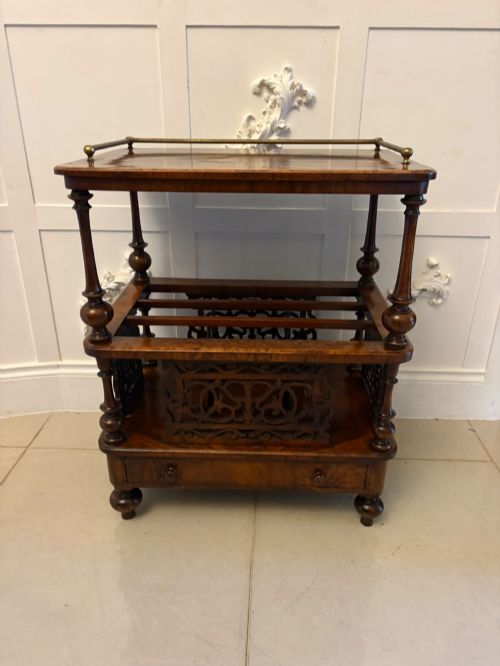
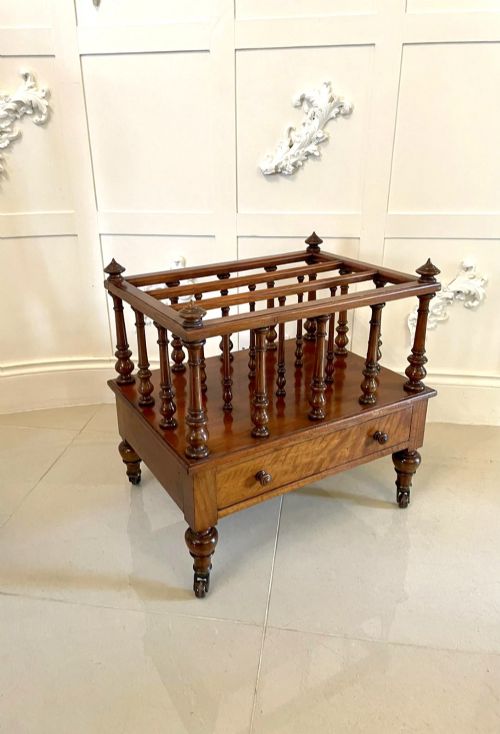
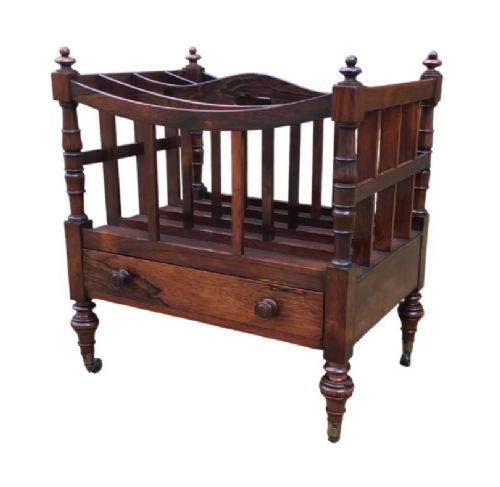
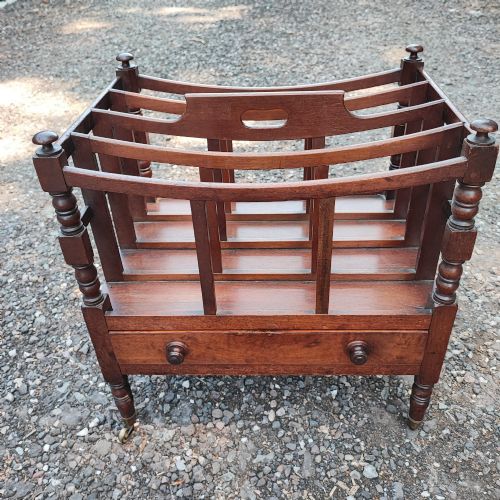





Turned Wood Magazine Rack
These turned wood magazine racks and canterburys offer divided tiers and sturdy uprights to hold periodicals, sheets of music, and newspapers in order.
Turned Wood Magazine Rack
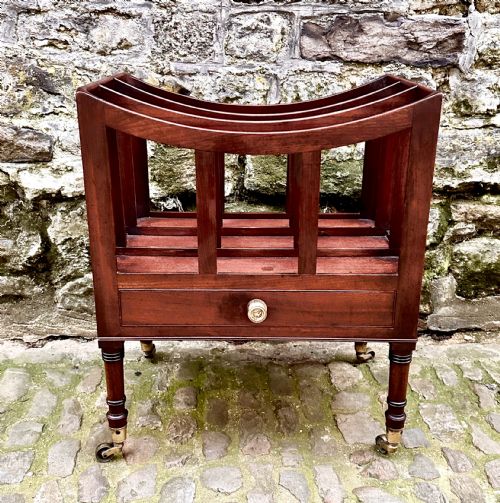
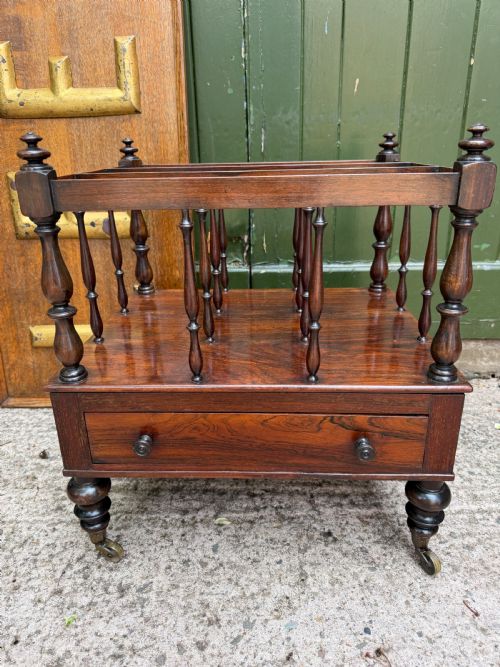
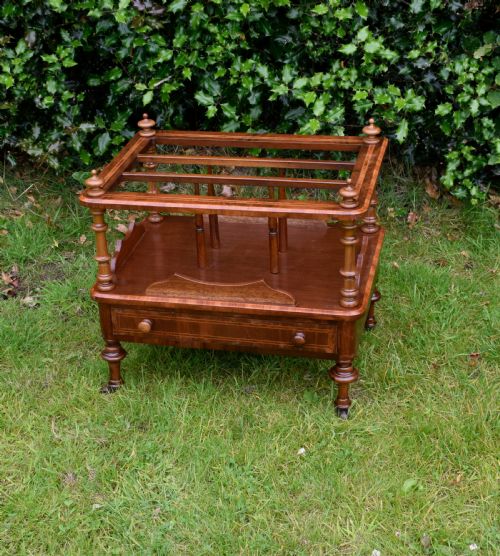
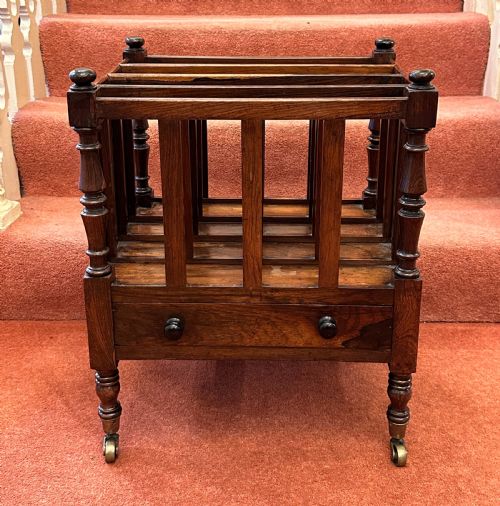
A turned wood magazine rack primarily appears on this page under the traditional name of a canterbury, dating across the Georgian, Regency, William IV, and Victorian periods. These pieces serve to hold newspapers, journals, and music sheets upright in divided compartments, often featuring a low carrying handle and sometimes a single drawer beneath.
The prevailing forms on this page span boat-shaped frames, four-division stands, and combined music racks or what-nots. They emerge in materials such as mahogany, rosewood, and walnut, reflecting the cabinet-making standards of the nineteenth century.
Assessing quality and proportion
The distinction between tiers rests upon the choice of timber and the crispness of the turned spindles and uprights. Figured walnut and richly grained rosewood elevate the visual weight of a piece compared to plain domestic timber.
Proportion and scale dictate the refinement of a design, where compact proportions and integrated drawer construction demonstrate superior craftsmanship. The stability of the divisions and the integration of handles show the maker's attention to daily utility.
Turned Wood Magazine Rack Retail Price Guide 2026
Typical asking prices for turned wood magazine rack among the pieces listed under this phrase on Sellingantiques today, from the lower quarter to the upper quarter. They describe what is for sale here now, not the wider market.
The listings span the Georgian, Regency, William IV, and Victorian periods, with mahogany and rosewood appearing most frequently.
Shoolbred
The Turned Wood Magazine Rack Glossary
- Canterbury
- A low stand with divisions for holding sheet music, newspapers, or periodicals. It typically includes a carrying handle and rests upon castors.
- What-Not
- An open set of tiered shelves used for displaying or storing small items. It frequently combines with a canterbury base in Victorian pieces.
- Boat-Shaped
- A distinctive curved outline given to the trough sides of certain Regency pieces. This profile softens the rectangular geometry of the stand.
- Division
- One of the vertical partitions separating the compartments of a rack. These sections keep publications upright and sorted.
Turned Wood Magazine Rack: Frequently Asked Questions
What is a canterbury?
A canterbury is a low, multi-compartment stand designed specifically to hold sheet music, newspapers, and periodicals off the floor.
Originating in the eighteenth century, the form evolved to serve sitting rooms and music rooms as a movable storage unit.
How were these racks used?
These pieces sat beside seating areas to keep current reading materials and unbound music sheets organised and within reach.
The central handle allowed occupants to move the stand across the room as required for evening reading or musical performances.
How do I date a piece?
Dating relies on identifying timber choices, stylistic markers, and construction methods associated with specific reigns and periods.
Regency examples often feature boat-shaped troughs and sabre legs, while Victorian pieces lean toward turned walnut and ebonised details.
Where should I place it?
These stands fit naturally beside a sofa, armchair, or desk where periodicals and reading materials accumulate.
Their open divisions keep items visible while maintaining a tidy surface in living spaces.