

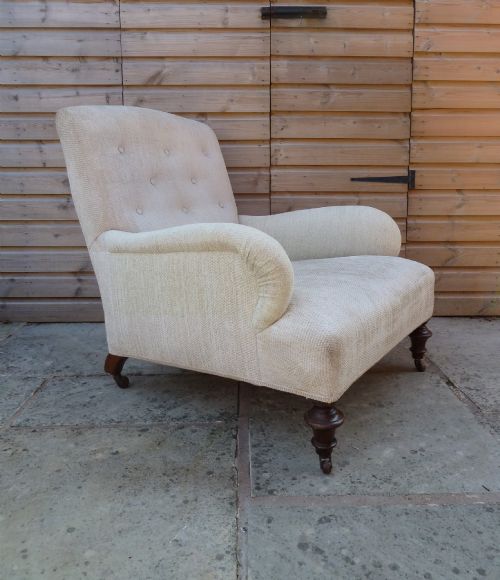


Turned Wood Lounge Chair
A turned wood lounge chair brings warmth to a room through visible grain and substantial framing.
Turned Wood Lounge Chair
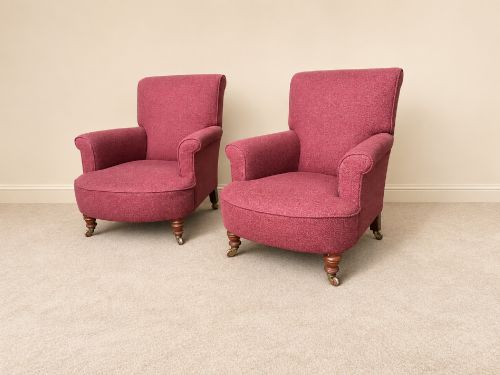
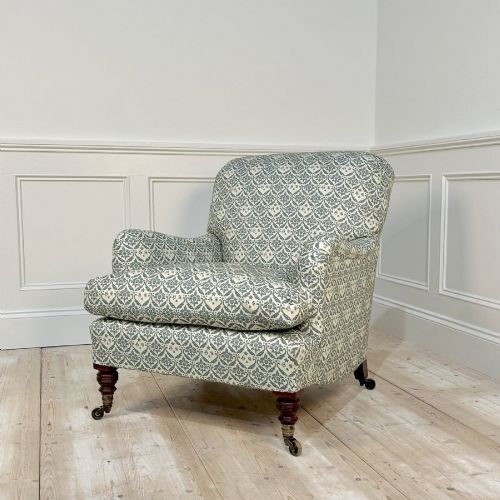
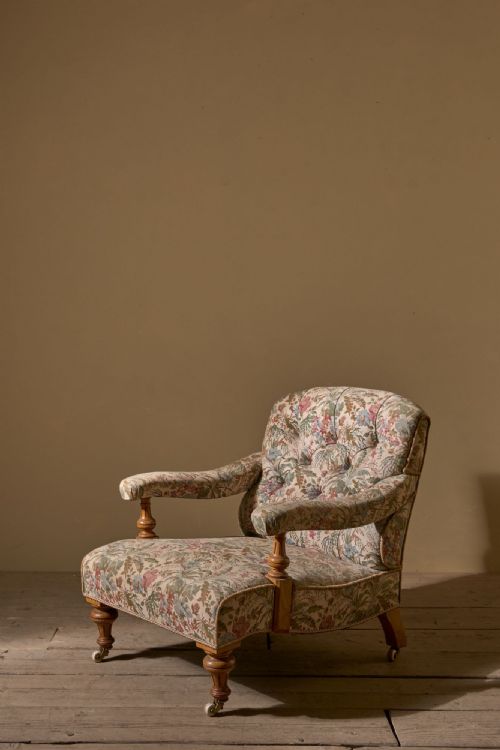
The selections on this page lean heavily towards nineteenth-century examples, spanning Victorian and English country house aesthetics alongside French designs. Buyers frequently encounter open armchairs, spoon back chairs, and occasional rocking variants originating from these distinct periods.
Originating from British and French workshops, these chairs reflect the domestic comforts of nineteenth-century interiors. Their overarching characteristic is the integration of turned wooden structural members supporting upholstered seats or backs.
How they were made
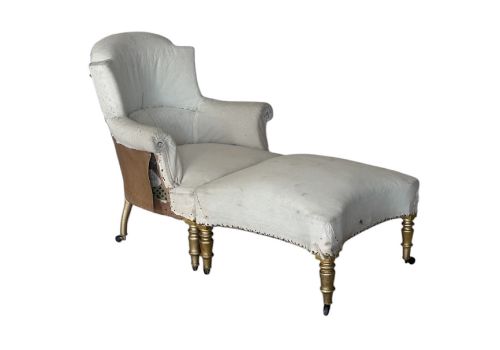
Makers utilised solid timbers such as mahogany and rosewood for the primary frames, turning structural components on a lathe to create decorative bobbin or spindle profiles. These robust wooden skeletons provided the necessary rigidity for deep-seated armchair and day bed designs.
Upholstered elements relied on traditional stuffing covered in fabrics including calico, hessian, and various decorative upholstery textiles. Brass fittings occasionally secured or accented the construction of these nineteenth-century seats.
Turned Wood Lounge Chair Retail Price Guide 2026
Typical asking prices for turned wood lounge chair among the pieces listed under this phrase on Sellingantiques today, from the lower quarter to the upper quarter. They describe what is for sale here now, not the wider market.
Bobbin-turned frames offer endless tactile appeal for anyone who enjoys running a hand down a well-turned wooden spindle.
What varies in quality
The refinement of the lathe turning on the wooden framing separates standard regional work from more ambitious furniture pieces. Crispness in the profile of bobbins and spindles indicates a higher degree of joiner skill.
Proportion and the integrity of the original timber frame dictate the structural success of each chair. Pieces retaining their original show wood without excessive timber replacement hold greater appeal for traditional interiors.
The Turned Wood Lounge Chair Glossary
- Bobbin
- A style of turning where the wood is shaped into a series of rounded spheres resembling bobbins of thread. This decorative woodwork is characteristic of nineteenth-century seating frames.
- Spoon back
- An upholstered chair back shaped in the concave form of a spoon to fit the human spine. It appears frequently in Victorian seating.
- Prie Dieu
- A devotional chair featuring a low seat and a high, narrow top rail designed for kneeling and prayer. Nineteenth-century examples often utilise rosewood.
- Duchess Brisee
- A multi-part day bed or armchair paired with a matching stool to form an extended lounge configuration. French nineteenth-century makers produced these elaborate seating arrangements.
- Wingback
- An armchair with side panels or wings attached to the back frame to shield the occupant from draughts. Victorian versions often feature deep upholstery.
Turned Wood Lounge Chair: Frequently Asked Questions
What defines a turned wood lounge chair?
These seats are identified by their lathe-formed wooden structural members, which often feature bobbin or spindle shaping. They encompass nineteenth-century armchairs, rocking chairs, and day beds.
They combine robust wooden frames with upholstered seats and backs, drawing on Victorian and country house traditions.
How do I care for antique upholstery?
Historic fabrics such as calico and hessian require gentle vacuuming with a low suction attachment and a protective mesh screen. Avoid harsh chemical cleaners to preserve the textile fibres.
Keep the wooden framework nourished with appropriate furniture wax applied sparingly to maintain the finish.
Where were these chairs originally placed?
Nineteenth-century seating of this kind belonged in principal reception rooms, country house drawing rooms, and quiet parlours. They provided relaxed seating for reading or resting.
Day beds and rocking chairs served similar domestic functions in private chambers and nurseries.
How can I distinguish French from English pieces?
French nineteenth-century examples often exhibit lighter proportions and stylistic influences associated with duchess brisee forms or distinct open armchair profiles. English country house variants tend towards heavier, deeper seating.
Timber choices and upholstery styles also offer clues to the regional origin of each piece.