





Turned Wood Kitchenalia
Turned wood kitchenalia brings tactile warmth to a worktop, offering practical vessels and implements shaped by the lathe during the Georgian and Victorian eras.
Turned Wood Kitchenalia
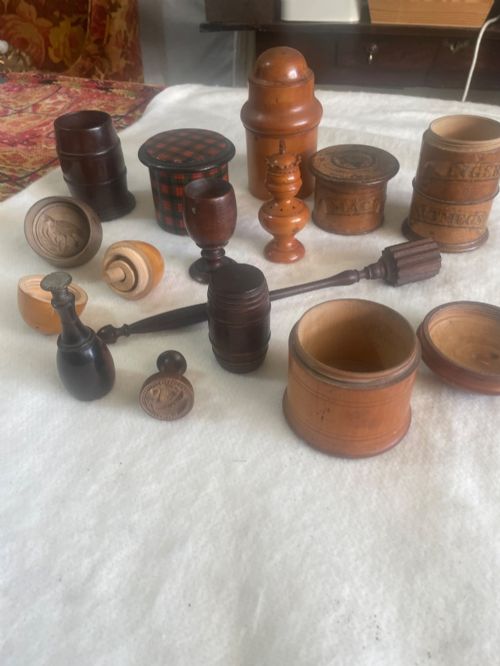
When you search for turned wood kitchenalia, you encounter functional items shaped on a lathe for domestic food preparation and storage during the Georgian, Victorian, and early twentieth centuries. These pieces range from dairy bowls and lemon squeezers to spice towers and nutmeg graters.
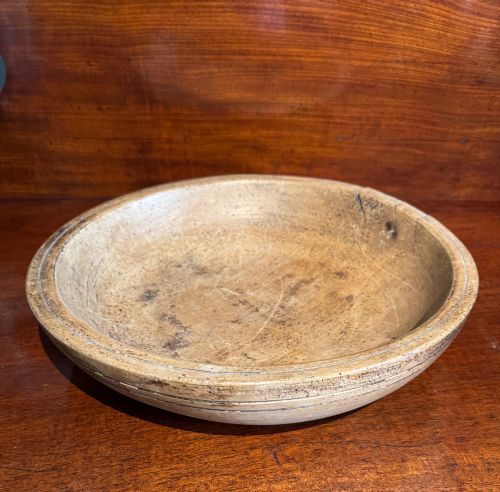
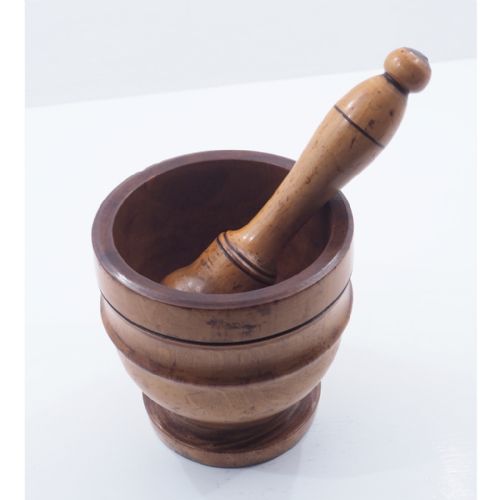
The objects most frequently met on this page are utilitarian vessels and grinding implements fashioned from dense hardwoods. Examples include French sycamore dairy bowls, chemists' mortars, and multi-tiered spice containers.
Origins span British and European traditions, incorporating styles such as Victorian folk art, rustic European, and traditional treen. Each piece reflects the everyday domestic requirements of past households through domestic turning.
Materials and turning methods
Objects in this category are fashioned using manual lathes, relying on hardwoods selected for their density and resistance to splitting during heavy kitchen use. Sycamore, fruitwood, boxwood, mahogany, and olive wood provide the foundational material for these bowls, mortars, and spice towers.
Makers shaped the green or seasoned timber while spinning on a lathe, employing gouges and chisels to achieve symmetrical vessels, threaded lids, and hollowed interiors. Secondary elements such as paper labels or cork occasionally supplement the turned wooden structure.
Turned Wood Kitchenalia Retail Price Guide 2026
Typical asking prices for turned wood kitchenalia among the pieces listed under this phrase on Sellingantiques today, from the lower quarter to the upper quarter. They describe what is for sale here now, not the wider market.
Listings feature items spanning the Georgian, Victorian, and 1930 periods, incorporating materials such as boxwood, fruitwood, mahogany, sycamore, and olive wood.
Distinctions in execution and wear
Quality in turned wood kitchenalia rests upon the precision of the lathe work and the balance of the proportions. Superior pieces display crisp architectural details on items like spice towers or elegant wall thickness on dairy bowls.
The character of the timber grain and the depth of the patina accumulated through active kitchen use separate ordinary examples from finer specimens. Handling reveals whether the turning remains true and how gracefully the wood has aged.
The Turned Wood Kitchenalia Glossary
- Treen
- Small, functional wooden household objects made by turning, carving, or joining. The term derives from the Middle English word for tree.
- Sycamore
- A pale, close-grained hardwood traditionally favoured for dairy vessels because it imparts no taste or colour to milk.
- Mortar and pestle
- A bowl and heavy club-like tool used to crush and grind spices, medicines, or dried herbs. Turned iterations appear frequently in nineteenth-century kitchens and chemists.
- Spice tower
- A multi-tiered turned wooden container designed to hold various individual spices within a single stacked column. Sections typically screw together securely.
Turned Wood Kitchenalia: Frequently Asked Questions
What is turned wood kitchenalia?
Turned wood kitchenalia comprises utilitarian household implements and vessels shaped on a lathe for culinary tasks. These include spice containers, bowls, and graters.
Items date predominantly from the Georgian and Victorian periods, reflecting historical domestic food preparation before mass-produced metal and plastic utensils became common.
How were spice towers used?
Spice towers served as compact storage vessels for multiple culinary powders within a single stacked unit. Each threaded tier held a different seasoning.
They allowed cooks to keep various flavours organised and accessible on a shelf or worktop while occupying minimal kitchen space.
How do I date turned wood items?
Dating relies on identifying the timber species, the turning style, and the construction methods used for threads or joinery. Georgian and Victorian pieces often exhibit distinct tool marks and patination.
Comparing the form to documented examples of treen and kitchenware helps narrow down the period of manufacture.