


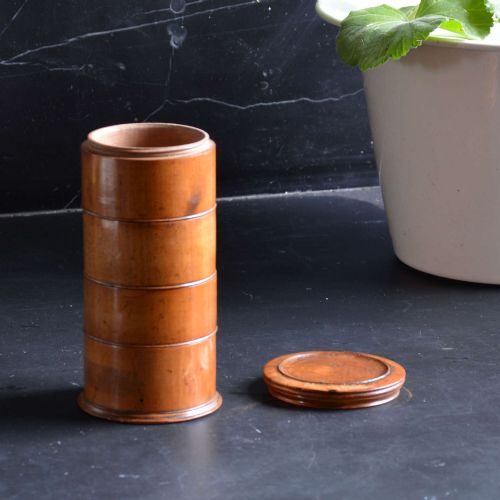


Turned Wood Grinder
These turned wood grinder examples are heavy, tactile treen implements shaped by the lathe for domestic and apothecary tasks, built to endure.
Turned Wood Grinder
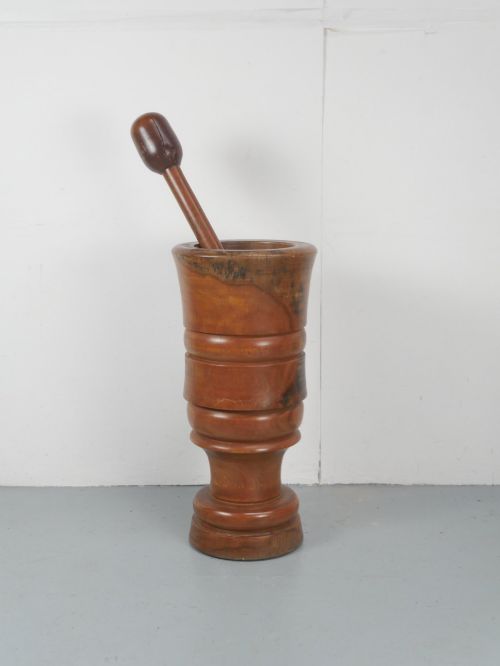
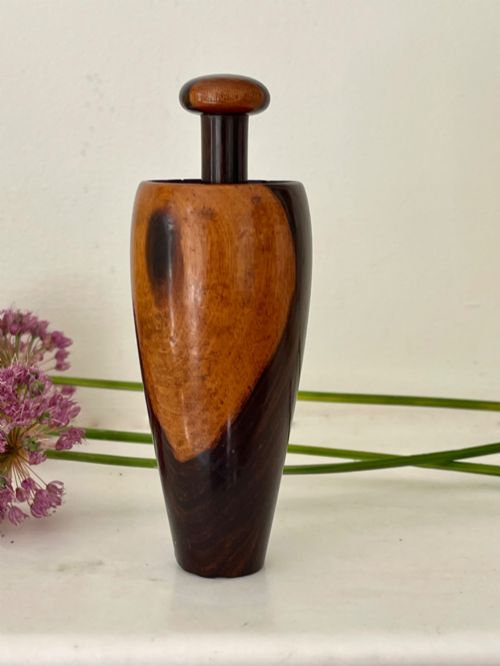
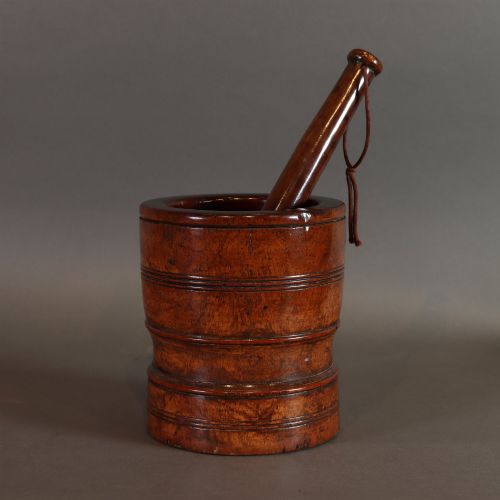
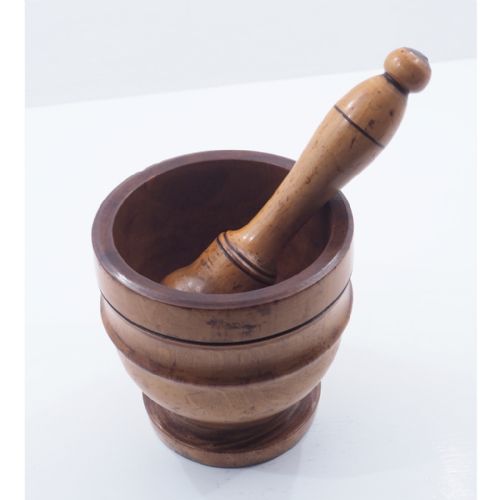
A turned wood grinder on this page typically takes the form of a mortar and pestle, spice tower, or snuff mortar fashioned from dense timber. Buyers exploring this phrase encounter utilitarian vessels dating from the seventeenth century through to the early twentieth century.
The domestic and apothecary kitchenalia found here reflect traditional treen forms used for grinding spices, herbs, and resins. Most examples show the distinct concentric rings and balanced proportions left by the woodturner's chisel.
How they were made
Craftsmen utilised heavy, close-grained hardwoods such as lignum vitae, boxwood, and olive wood to ensure the vessels could withstand heavy pounding without splitting. These dense timbers were mounted on a lathe and shaped while green or seasoned, depending on the period.
The exterior profiles range from simple flared bowls to multi-tiered spice towers, formed entirely through turning rather than joinery. Each pestle was hand-turned to match the internal radius of its corresponding mortar for efficient crushing.
Turned Wood Grinder Retail Price Guide 2026
Typical asking prices for turned wood grinder among the pieces listed under this phrase on Sellingantiques today, from the lower quarter to the upper quarter. They describe what is for sale here now, not the wider market.
The object forms on this page concentrate on traditional treen, apothecary mortars, spice towers, and kitchenalia.
What varies in quality
Quality rests primarily in the choice of timber and the weight of the piece, with dense lignum vitae and well-figured olive wood commanding greater presence than softer hardwoods. The crispness of the original turning lines and the retention of a matching pestle elevate an example significantly.
Proportion and wear tell the story of a piece's utility, where balanced walls and smooth, polished handling surfaces indicate superior craftsmanship. Early seventeenth-century examples display a heavier, more archaic heft compared to lighter nineteenth-century domestic kitchenalia.
The Turned Wood Grinder Glossary
- Treen
- Small handmade wooden objects for domestic use. This broad category covers everything from mortars to spice towers.
- Lignum vitae
- A remarkably heavy and dense dark wood. It was frequently chosen for apothecary mortars because it resists cracking under pressure.
- Mortar and pestle
- A bowl and club-shaped tool used for crushing substances. The mortar provides a heavy basin while the pestle acts as the grinding implement.
- Spice tower
- A multi-sectioned turned wooden container used for holding various seasonings. These tiered pieces demonstrate advanced lathe work from the Georgian era.
Turned Wood Grinder: Frequently Asked Questions
What were turned wood grinders used for?
These implements served households and apothecaries for pulverising dried herbs, spices, and roots into fine powders. Cooks and chemists relied on their heavy weight to crush stubborn ingredients.
The matching pestle provided the leverage needed to grind substances against the interior base of the wooden bowl.
How do I date a turned wood grinder?
Dating relies on timber choice, tool marks, and overall vessel profile. Seventeenth-century pieces often use dense lignum vitae with thick, robust walls, whereas nineteenth-century examples may show lighter walnut or boxwood construction.
Comparing the form to documented kitchenalia and apothecary wares helps narrow the period of manufacture.
Are these grinders still usable today?
Many solid hardwood mortars retain their structural integrity and can handle light culinary tasks. However, collectors often treat older treen as decorative display pieces to protect the aged patina.
Care should be taken with seventeenth and eighteenth-century examples to avoid staining the dry historical wood.