




Turned Wood Etagere
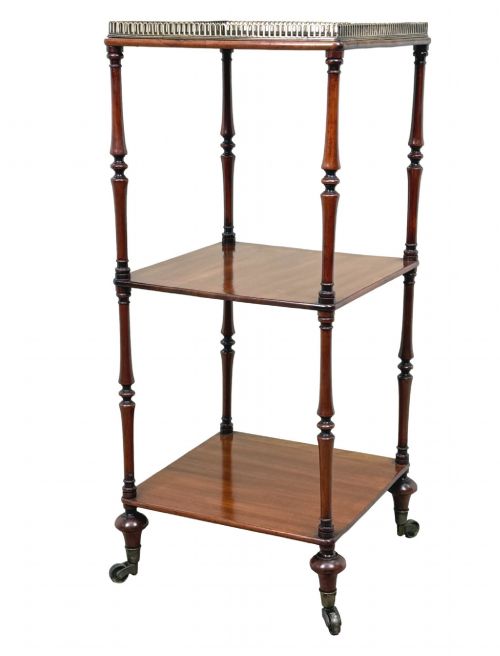
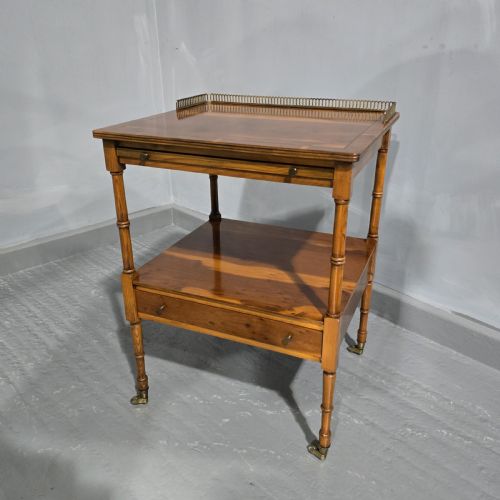
A turned wood etagere offers tiered open display, bringing compact vertical utility and fine timber grain into any room.
Turned Wood Etagere
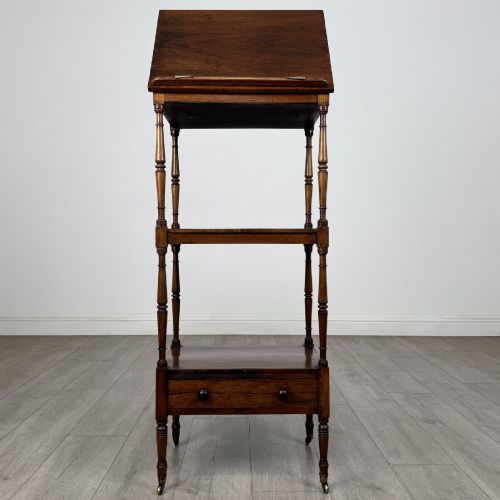
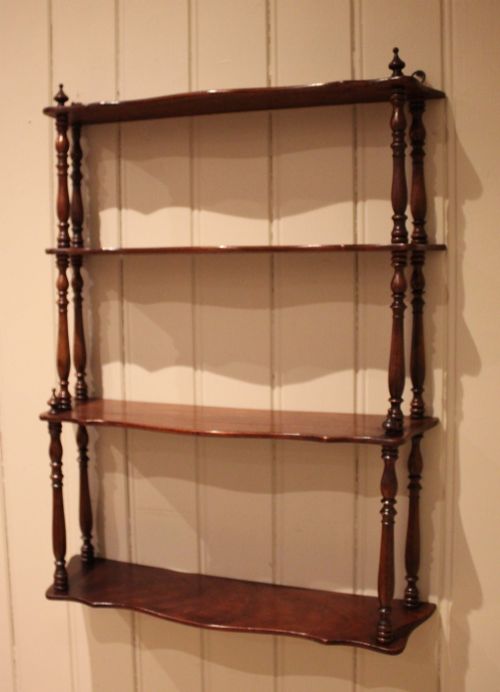
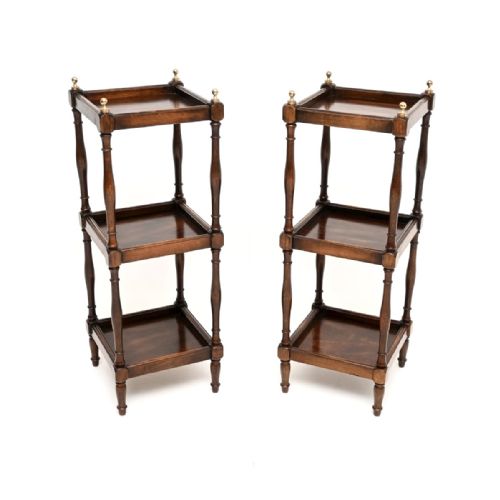
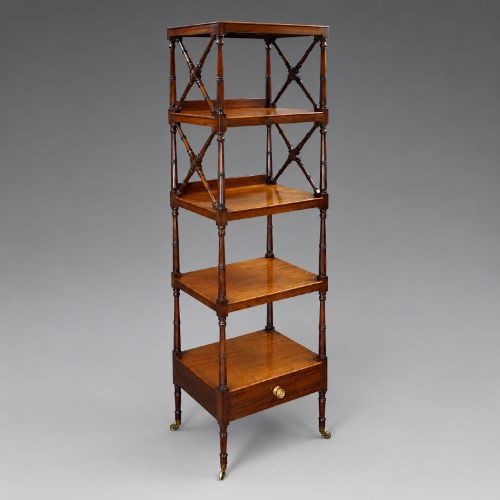
A turned wood etagere encompasses multi-tiered open display units, corner shelves, and whatnots designed for holding books, ornaments, or small objects. When searching for a turned wood etagere, buyers encounter freestanding multi-tier stands, wall-hanging shelves, and side tables dating from the Georgian, Regency, and Victorian periods.
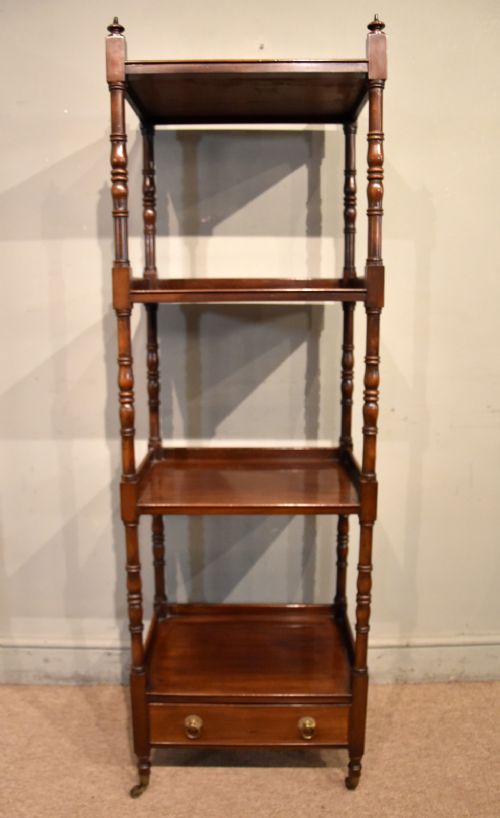
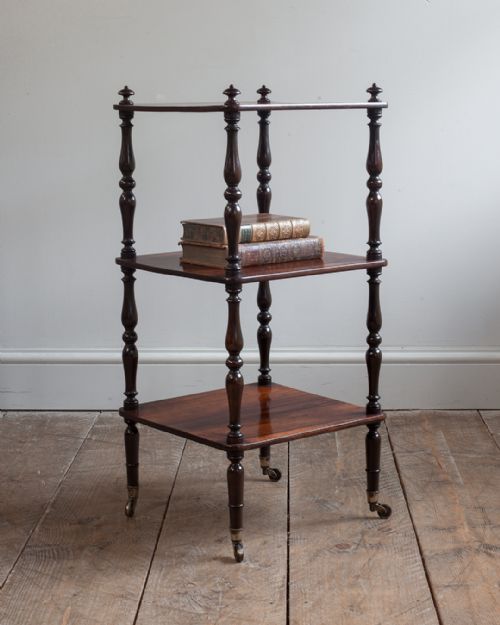
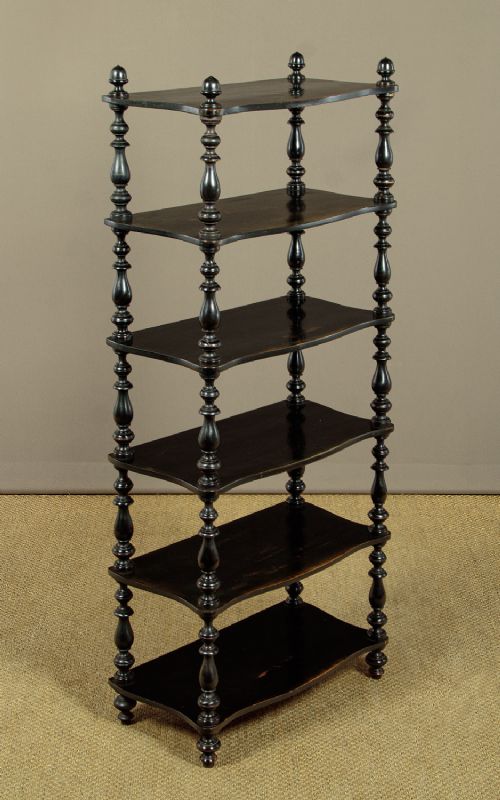
The pieces appearing on this page span from three-tier side tables to six-tier dumb waiters and tall corner units. Mahogany remains the most frequent timber, alongside rosewood, ebonised wood, walnut, satin birch, and cherry wood, often incorporating turned supports and original castors.
What varies in quality
The refinement of the turning on the upright supports distinguishes superior examples from simpler utilitarian pieces. Crisp detailing in the wood carving, the presence of original castors, and well-figured timber veneers indicate higher craftsmanship.
Proportion and structural integrity dictate the standing of a piece within its period. Examples featuring matched sets of tiers, thoughtful scaling between levels, and intact brass hardware achieve greater distinction.
Turned Wood Etagere Retail Price Guide 2026
Typical asking prices for turned wood etagere among the pieces listed under this phrase on Sellingantiques today, from the lower quarter to the upper quarter. They describe what is for sale here now, not the wider market.
Several pieces arrive equipped with their original castors, ready to roll across the parlour floor just as they did in eighteen-fifty.
The Turned Wood Etagere Glossary
- Etagere
- A piece of furniture consisting of a set of open shelves for displaying small objects. These tiered stands developed in France and gained popularity across British drawing rooms.
- Whatnot
- A freestanding piece of furniture with multiple tiers used for storage or display. They emerged in the Georgian period and remained prominent through the Victorian era.
- Bobbin turning
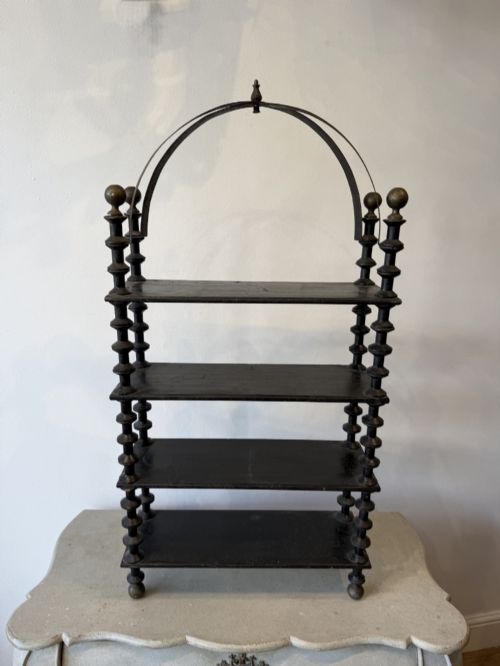
- A form of woodturning characterised by a series of rounded, spool-like shapes resembling bobbins on a thread. This decorative technique appears frequently on nineteenth-century frames and shelves.
- Dumb waiter
- A tiered freestanding stand traditionally used to hold dishes or serving items without the need for attendants. In modern interiors, these serve as multi-level display tables.
- Satin birch
- A pale, lustrous timber derived from birch trees, prized for its golden hue and subtle figure. Cabinet makers utilised it for decorative display shelves during the nineteenth century.
Turned Wood Etagere: Frequently Asked Questions
What is a turned wood etagere used for?
These tiered stands serve primarily for the open display of ornaments, books, and collections in living spaces or hallways. Their vertical design maximises floor space while providing multiple surfaces.
Historically, they held decorative porcelain or tea service items in reception rooms. Today, they function effectively as lamp tables, corner display units, or bedside shelving.
How do I tell a Georgian etagere from a Victorian one?
Georgian pieces tend to exhibit restrained classical proportions, simpler mahogany turning, and structural lightness. They often date from around eighteen hundred.
Victorian examples frequently introduce richer inlays, darker ebonised finishes, or bobbin-turned supports. They also encompass taller multi-tier formats and corner units with varied timber selections.
Where should I place an etagere in my home?
Freestanding etageres and whatnots suit empty corners, alcoves, or flanking positions beside larger pieces of furniture. Corner shelves utilise unused wall angles efficiently.
Wall-hanging versions require secure fixing to support the weight of the timber and displayed objects. Placing them away from direct heat sources protects the antique wood and polish.
What timbers were used for these shelves?
Mahogany forms the majority of the surviving pieces, valued for its stability and rich reddish-brown tone. Rosewood and walnut provide darker, highly figured alternatives with striking grain patterns.
Satin birch offers a significantly paler, golden appearance, while ebonised wood achieves a dense black finish. Cherry wood and oak appear in select regional or period variations.