

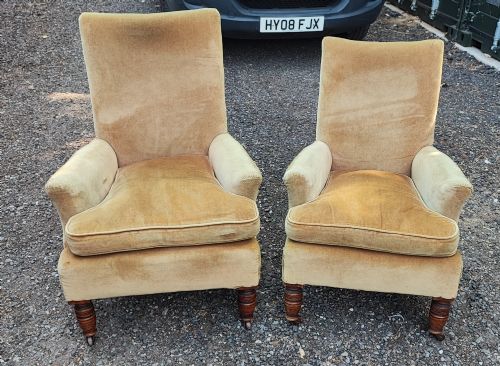
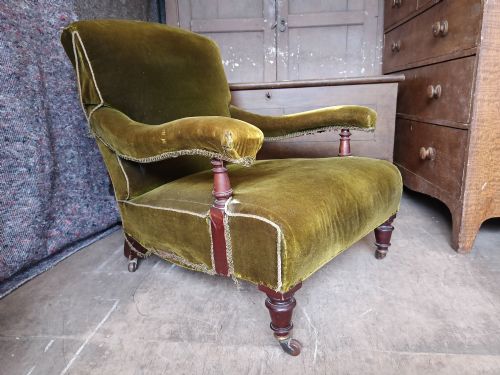
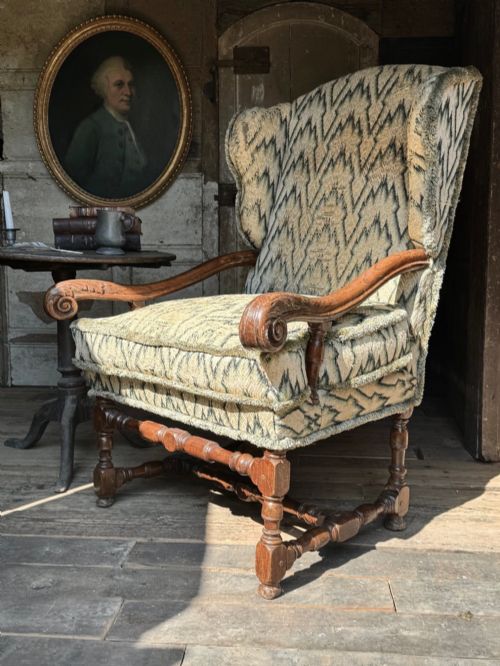
Turned Leg Velvet Armchair
These turned leg velvet armchair selections bring together nineteenth-century seating and tactile upholstery for traditional interiors.
Turned Leg Velvet Armchair
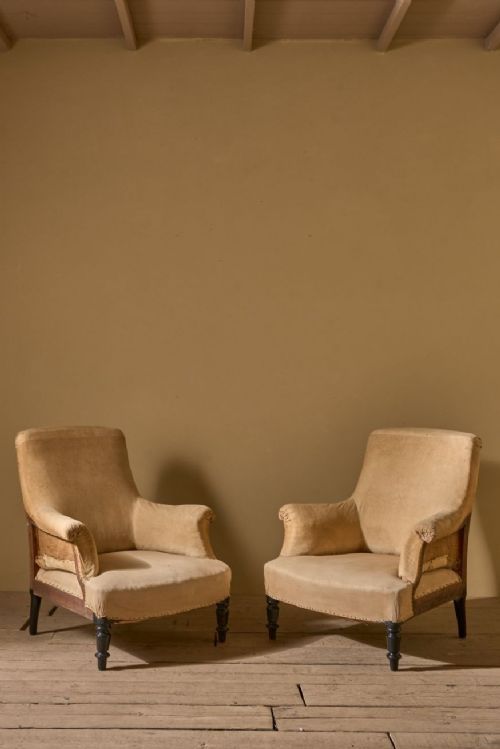
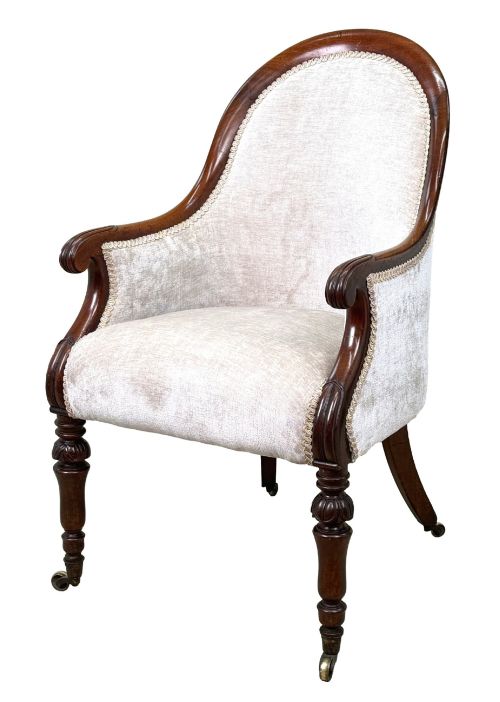
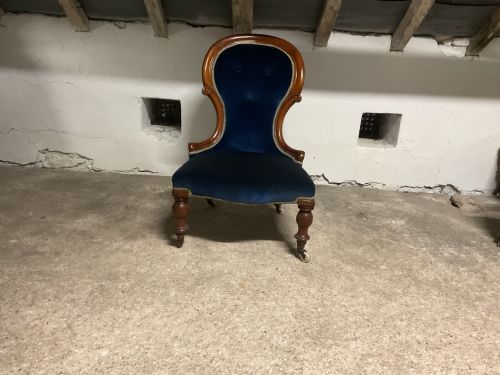
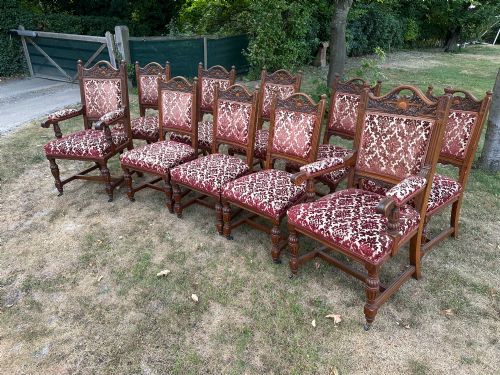
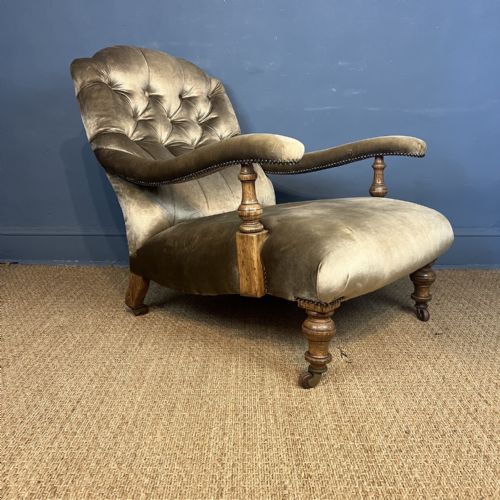
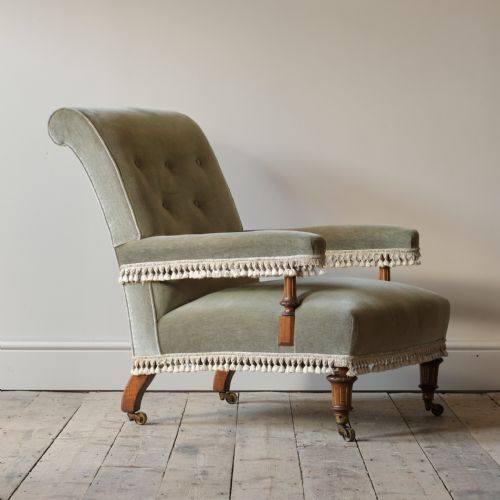
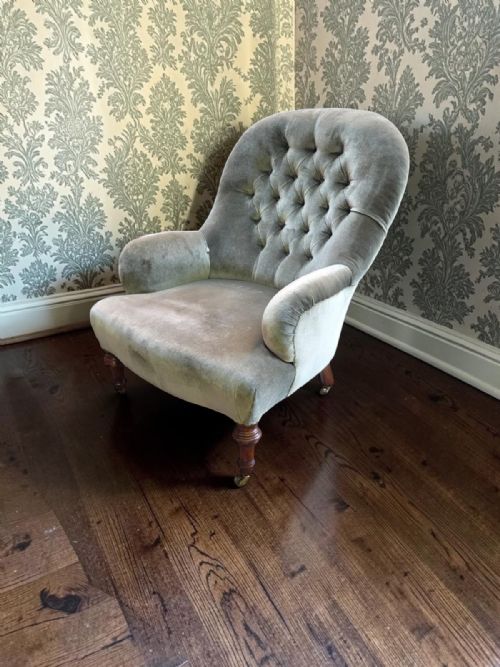
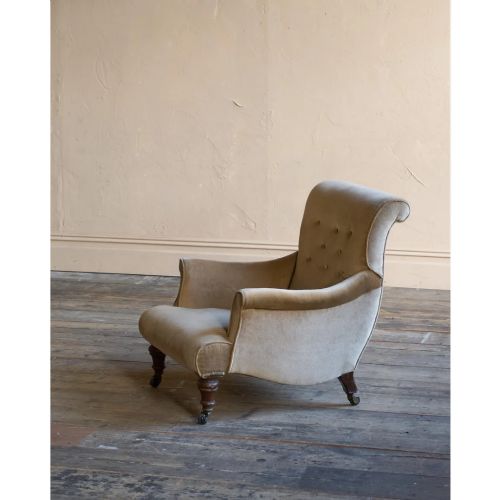
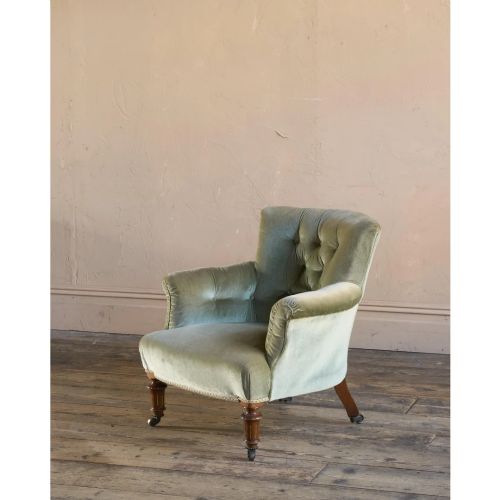
A turned leg velvet armchair combines exposed timber supports shaped on a lathe with soft pile fabric upholstery. These pieces span the nineteenth century, taking forms such as library chairs, nursing chairs, and button-back occasional seating.
Victorian and Edwardian examples dominate the selection, alongside Regency and earlier revival styles. The framework ranges from compact bedroom chairs to substantial open armchairs designed for parlours and libraries.
Makers and retailers such as Gillows, Hampton & Sons, and C. Hindley & Sons appear among the listings, marking pieces with distinct regional and workshop characteristics from England and Scotland.
Materials and construction
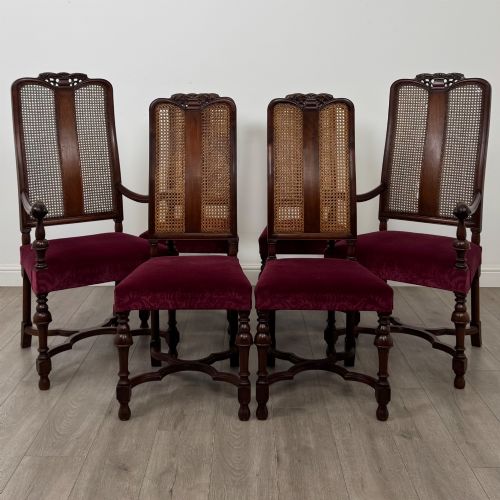
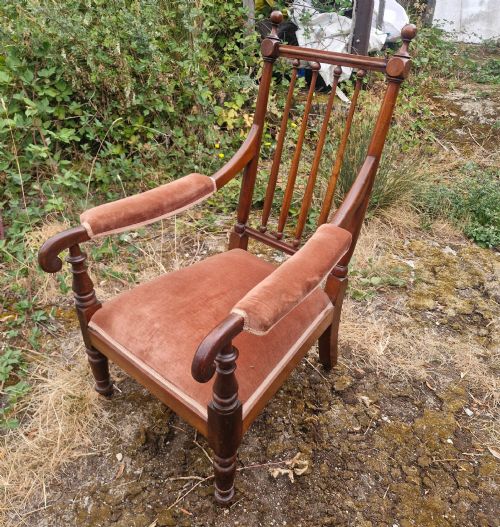
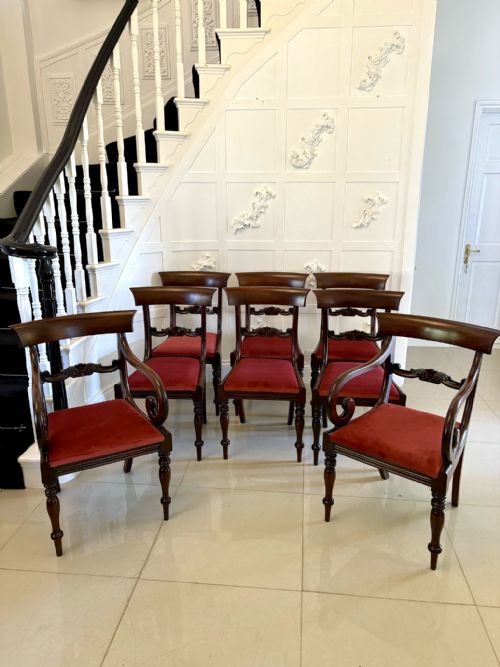
Frames are constructed from hardwoods including mahogany, walnut, oak, and ebonised wood, providing structural integrity for upholstered bodies. Turned wooden legs support the seat frames, occasionally featuring brass castors or ceramic components.
Upholstery relies on traditional textile applications, notably velvet, paired with specialised designer fabrics like Robert Kime and Colefax and Fowler. Button-backing and sprung interiors provide the characteristic cushioned comfort of nineteenth-century seating.
Some chairs retain their original castors, allowing nineteenth-century readers to chase the fireplace draft without leaving their seat.
Assessing quality in turned seating
Quality rests in the precision of the timber turning and the integrity of the underlying hardwood frame. Finer examples display crisp detail in the woodwork and balanced proportions across the arms and back.
The standard of upholstery and the historical accuracy of fabric choices differentiate standard production from high-workshop output. Pieces bearing maker stamps or attribution to notable firms carry distinct provenance that elevates their standing.
Gillows·Hampton & sons·C. Hindley & Sons·J. & T. Scott·Miles & Edward’s
The Turned Leg Velvet Armchair Glossary
- Turned leg
- A wooden support shaped by rotation on a lathe, producing cylindrical, spiral, or baluster profiles.
- Velvet
- A woven tufted fabric with a dense, short pile that yields a soft texture and distinctive light reflection.
- Spoonback
- An upholstered chair back shaped in a concave oval resembling the bowl of a spoon, popular in the Victorian era.
- Fauteuil
- An open-armed wooden-framed armchair originating in France, typically featuring exposed timber mouldings.
- Library chair
- A heavy, comfortable armchair designed for reading rooms, often upholstered in durable fabrics or leather.
Turned Leg Velvet Armchair: Frequently Asked Questions
What is a turned leg velvet armchair?
A turned leg velvet armchair is a nineteenth-century or early twentieth-century seat featuring lathe-shaped wooden legs and pile fabric upholstery.
These pieces encompass forms ranging from compact nursing chairs to large library armchairs in various revival styles.
How do I identify the period?
Period identification relies on timber choice, frame silhouette, and structural characteristics associated with Victorian, Regency, or Edwardian design.
Maker stamps and specific revival styles, such as William & Mary or Carolean, also help date the construction.
Where were these armchairs used?
These armchairs served in domestic spaces including drawing rooms, libraries, and bedrooms as functional and decorative seating.
Smaller formats suited dressing areas, while robust open armchairs furnished formal libraries and parlours.
How do I care for velvet upholstery?
Velvet requires gentle brushing to maintain the direction of the pile and prevent flattening over time.
Professional cleaning preserves the integrity of antique pile fabrics without damaging the underlying structure.